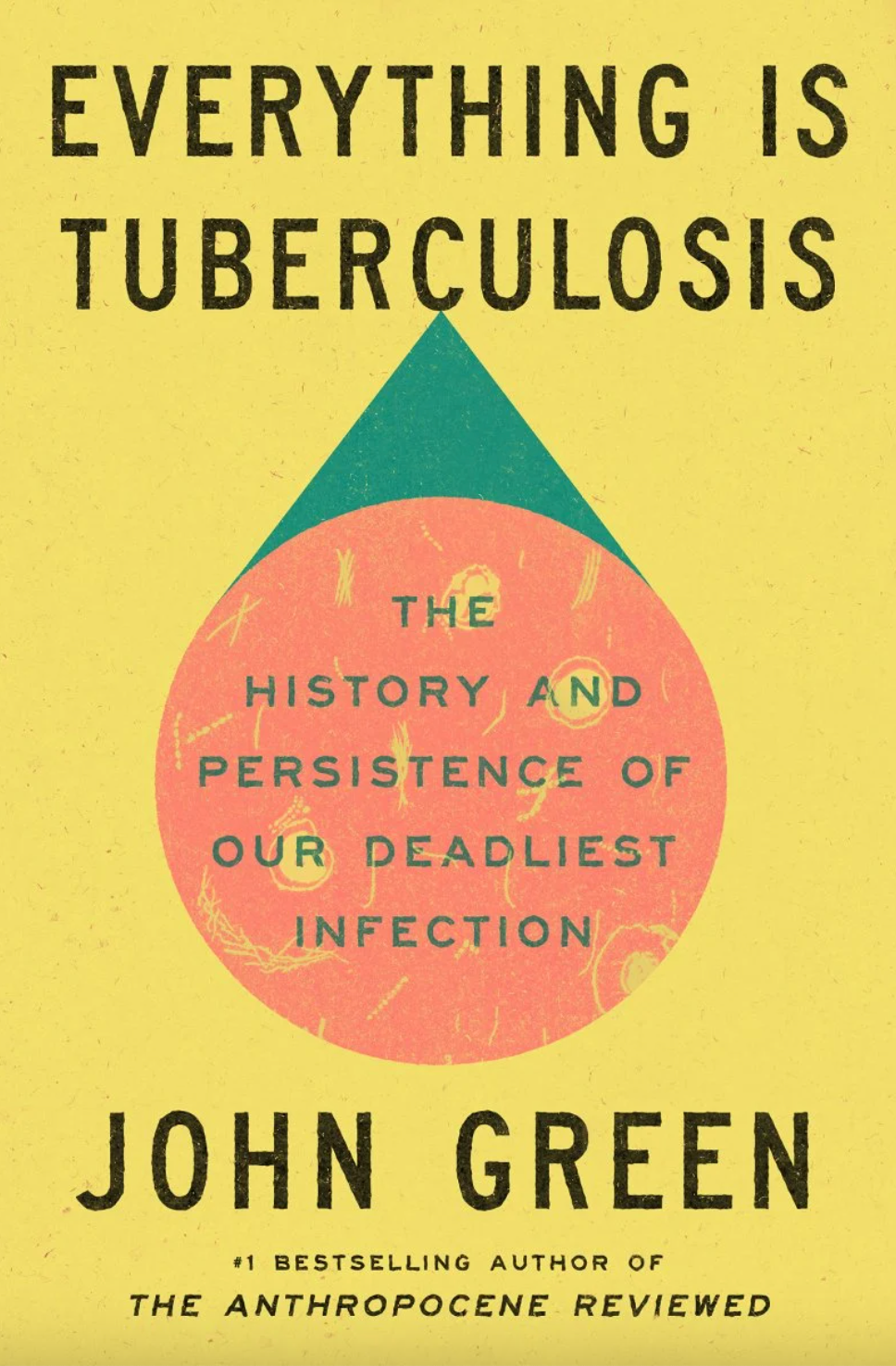
Everything is Tuberculosis Book Summary
The History and Persistence of Our Deadliest Infection
Book by John Green
The Weight Of History
It is common to say that Sierra Leone is a poor country, but this is not the case. It is an exceptionally rich country with vast wealth in metal ores and especially in diamonds, which during centuries of colonialism encrusted many a British crown. After achieving independence in 1961, the new government struggled to transition away from this extraction-based economy.
The Sierra Leonean physician Dr. Bailor Barrie once told me, "If you want to understand why Sierra Leone is poor, you must look at a map of our railroads." The railroads, built during colonial rule, did not connect people to each other. They connected the mineral-rich areas of Sierra Leone to the coast, where those minerals could be exported. The empire's role in Sierra Leone was primarily to take Sierra Leone's wealth, as quickly and efficiently as possible, out of Sierra Leone.
Section: 1, Chapter: 3
How We Imagine Illness
We pay a lot of attention to how we treat illness, and much less to the critical question of how we imagine illness. In Christian Europe, the disfiguring illness leprosy was long heavily stigmatized, but this way of imagining leprosy is not inherent to the disease—in precolonial Africa, leprosy was not especially feared or stigmatized.
When I was initially diagnosed with an anxiety disorder in the late 1980s, it was not seen primarily as a biomedical phenomenon, but instead as an overdeveloped personality trait. Today, in my community, anxiety is more likely to be imagined as an illness to be treated through the healthcare system. I would argue this shift happened largely because the healthcare system got better at treating anxiety. And so we must remember that illness is not only a biomedical phenomenon, but also a constructed one.
Section: 2, Chapter: 5
The Romanticization Of TB
In the eighteenth and nineteenth centuries, Europeans came to romanticize consumption, to see the illness as beautiful and ennobling. I would argue that the proper way to understand the utterly surreal romanticization of TB is that as the disease exploded in cities, stigma alone simply could not answer the "why, why, why" of consumption. Instead, people began to conclude that consumption was caused by a personality especially attuned to the fragile and fleeting loveliness of life.
This romanticization continued for a very long time: In the 1909 book Tuberculosis and the Creative Mind, Dr. Arthur Jacobson maintained that TB offered a "divine compensation" in exchange for illness: TB patients' lives "are shortened, physically, but quickened psychically in a ratio inversely as the shortening." Maybe the nineteenth-century Romantics would die early, but oh, the poems they would write.
Section: 2, Chapter: 6
A Lesson From The Japanese Poet With TB
All I can think of
Is that I am lying
In a house in the snow.
- Masaoka Shiki
Section: 2, Chapter: 6
A Flattering Malady
Women with consumption were believed to become more beautiful, ethereal, and wondrously pure. As Charlotte Brontë put it in a letter she wrote as her sister was dying of the disease, "Consumption, I am aware, is a flattering malady."
- John Green
Section: 2, Chapter: 7
A Disease Of Civilization?
As Frank M. Snowden observes in Epidemics and Society, white physicians in Europe and the U.S. generally agreed that consumption was, as some eighteenth-century observers put it, a disease of civilization. Everyone knew that rural communities were less vulnerable to consumption. But in a highly racialized social order, conceiving of phthisis as a "civilized" disease also meant that it could not be a disease of uncivilized people, which furthered the racialization of consumption.
In Europe and the U.S., most white doctors believed that phthisis—as it was inherited by those with great sensitivity and intelligence—could only affect white people, and it was sometimes known as "The White Man's Plague." One American doctor, for instance, called it, "a disease of the master race not of the slave race." This phenomenon extended to all colonial empires. Many European colonialists believed that TB did not exist in South Asia or Africa, even though physicians working in colonized communities knew otherwise.
Section: 2, Chapter: 7
Koch's Bacillus And The End Of Romanticism
By the end of the nineteenth century, the replication and acceptance of Robert Koch's research meant that the era of consumption, an inherited condition that grew the soul by shrinking the body, ceased to exist. The era of tuberculosis, an infectious disease of the poor and marginalized, had commenced.
In fact, the way we understood "consumption"—that bright, mild, kind disease that Harriet Beecher Stowe described—was so different from the way we understood "tuberculosis" that even though they are the same disease, one could be forgiven for thinking they were entirely different. Consumption, after all, was a flattering malady, a genetic disorder enriching the soul even as it slowly destroyed the body. Tuberculosis was a horror, an invisible contamination proliferating within you and then spreading to anyone near you.
Section: 3, Chapter: 8
The Racialization Of Tuberculosis
We see the profound shift from an inherited disease of intellect to a contracted disease of filth in the racialization of tuberculosis. As late as 1880, white American physicians still argued that consumption did not occur among Black Americans, who, it was claimed, lacked the intellectual superiority and calm temperament to be affected by the White Plague. But after Koch identified Mycobacterium tuberculosis in 1882, all that changed.
Racialized medicine no longer maintained that high rates of consumption among white people was a sign of white superiority; instead, racialized medicine maintained that high rates of consumption among Black people was a sign of white superiority. One white doctor's 1896 treatise asserted that African Americans were disproportionately dying of tuberculosis due to their smaller chest capacity and increased rate of respiration.
Section: 3, Chapter: 9
The Mother Who Stays Closer
Mom you are special and beautiful
You stand closer
When everyone ran away
Especially my cousin ran away
But you stood firm.
- Henry Reider
Section: 3, Chapter: 9
Stigma's Double Burden
Stigma is a way of saying, "You deserved to have this happen," but implied within the stigma is also, "And I don't deserve it, so I don't need to worry about it happening to me." This can become a kind of double burden for the sick: In addition to living with the physical and psychological challenges of illness, there is the additional challenge of having one's humanity discounted.
People living with TB today have told me that fighting the disease is hard, but fighting the stigma of their communities is even harder. Dr. Jennifer Furin once had a patient weep upon learning she had tuberculosis rather than lung cancer. "But we can treat this," Dr. Furin told her patient. "This is curable." Still, the young woman wished she'd been diagnosed with cancer because it would have brought less shame to her family.
Section: 3, Chapter: 9
Angie's Secret Letters
One day, young Gale overheard a terrible secret about her best friend Angie: Angie's sister Pauline, who wrote her weekly, had in fact already died of TB. "But her father didn't want her to know," Gale recalled, because it might cause the kind of emotional shock that was deemed dangerous to the TB patient. So to encourage the daughter he still had, this father wrote letters that mimicked the handwriting and style of the daughter he'd lost.
Having been told that patients could not be exposed to bad news without risking their health, Gale never told Angie that her sister had died. But it didn't matter. "I saw them wheeling a stretcher with a body on it down to the morgue. I knew right away it was my best friend Angie." Gale was eight years old.
Section: 3, Chapter: 11
Related Content
Outlive Book Summary
Peter Attia
In "Outlive: The Science and Art of Longevity," Dr. Peter Attia shares his framework for extending lifespan and optimizing healthspan through the application of leading research in nutrition, exercise, sleep, emotional well-being, and preventive medicine
In "Outlive: The Science and Art of Longevity," Dr. Peter Attia shares his framework for extending lifespan and optimizing healthspan through the application of leading research in nutrition, exercise, sleep, emotional well-being, and preventive medicine
Health
Nutrition
Science