
Hidden Potential Book Summary
The Science of Achieving Greater Things
Book by Adam Grant
Summary
Unlock the secrets of hidden potential and embark on a journey of personal and collective growth. "Hidden Potential" reveals the science of achieving greater things, offering practical strategies and inspiring stories to help you and those around you reach new heights.
I. Skills of Character
Creatures of Discomfort: Embracing Awkwardness
Many people believe that their ability to learn is limited by their innate talents or missed opportunities in childhood. However, research on polyglots – individuals who speak multiple languages – suggests that the key to unlocking learning potential lies in embracing discomfort. This chapter explores three forms of courage that are essential for accelerating growth: abandoning comfort zones, taking action before feeling ready, and making mistakes as a means of learning.
Section: 1, Chapter: 1
Steve Martin's Journey to Comedy Stardom
Steve Martin, a renowned comedian, initially struggled with stand-up comedy despite dedicating countless hours to observing and imitating other comedians. His breakthrough came when he embraced the discomfort of writing his own jokes, a task he initially disliked. Through writing, he learned to refine his humor and develop his unique comedic style, eventually becoming one of the most successful stand-up comedians in America.
Section: 1, Chapter: 1
Speak from Day One: The Polyglot's Secret to Language Learning
Don't wait until you achieve a certain level of proficiency to start speaking a new language. Embrace the awkwardness and start communicating from day one, even if it means making mistakes. This approach mirrors how children learn languages, and research suggests that making mistakes early on can actually enhance learning and retention.
Section: 1, Chapter: 1
Personality vs Character
“personality is how you respond on a typical day, character is how you show up on a hard day.”
- Adam Grant
Section: 1, Chapter: 1
Differences Come From Opportunity and Motivation
“What look like differences in natural ability are often differences in opportunity and motivation.”
- Adam Grant
Section: 1, Chapter: 1
Benny Lewis and the Power of Social Skydiving
Benny Lewis, a polyglot, overcame his shyness and accelerated his language learning through "social skydiving". This involved deliberately putting himself in uncomfortable social situations and making a conscious effort to interact with strangers in their native language, regardless of his proficiency level. Through this process, he not only improved his language skills but also his confidence and comfort in social settings.
Section: 1, Chapter: 1
Human Sponges: The Power of Absorbing
This chapter explores the concept of "sponginess" as a crucial character skill for unlocking potential. It's not just about the amount of information we consume, but rather the quality of information we absorb and our ability to adapt and apply it. The chapter delves into the concept of absorptive capacity and how it can be enhanced through proactivity and a growth mindset.
Section: 1, Chapter: 2
The Protestant Reformation and the Rise of Literacy
Research suggests that the economic growth associated with the Protestant Reformation might not be solely due to the Protestant work ethic. Instead, it may be attributed to increased literacy rates resulting from the emphasis on reading scripture. This highlights the importance of cognitive skills as a foundation for learning and leveraging character strengths effectively.
Section: 1, Chapter: 2
Are you a Rubber, Teflon, Clay, or Sponge?
This framework categorizes individuals based on their approach to absorbing information and their filtering goals.
Reactive and Ego-Driven (Rubber): These individuals passively consume information and reject any feedback that threatens their self-image.
Proactive and Ego-Driven (Teflon): They actively seek feedback but only internalize positive information, dismissing anything critical.
Reactive and Growth-Oriented (Clay): These individuals are open to feedback and willing to learn, but they rely on others to provide guidance.
Proactive and Growth-Oriented (Sponge): They actively seek out information and feedback, and they are adaptable and open to learning and growing.
Section: 1, Chapter: 2
The Imperfectionist: Accepting Flaws on the Path to Greatness
This chapter explores the concept of imperfectionism, challenging the notion that perfection is necessary for achieving greatness. It highlights the importance of accepting flaws, focusing on progress over perfection, and developing the ability to discern which imperfections are acceptable and which ones require attention.
Perfectionism can hinder growth by causing individuals to focus on irrelevant details, avoid challenges, and become overly critical of themselves. Instead of striving for flawlessness, set specific and challenging goals that allow for mistakes and focus on progress over perfection.
Section: 1, Chapter: 3
The Shortcomings of Perfectionism
“In their quest for flawless results, research suggests that perfectionists tend to get three things wrong. One: they obsess about details that don’t matter. They’re so busy finding the right solution to tiny problems that they lack the discipline to find the right problems to solve. They can’t see the forest for the trees. Two: they avoid unfamiliar situations and difficult tasks that might lead to failure. That leaves them refining a narrow set of existing skills rather than working to develop new ones. Three: they berate themselves for making mistakes, which makes it harder to learn from them. They fail to realize that the purpose of reviewing your mistakes isn’t to shame your past self. It’s to educate your future self. If perfectionism were a medication, the label would alert us to common side effects.”
- Adam Grant
Section: 1, Chapter: 3
Tadao Ando: The Self-Taught Architect who Embraced Imperfection
Tadao Ando, a world-renowned architect, did not follow a traditional path to success. He embraced imperfection by utilizing unconventional materials like exposed concrete and designing structures that prioritized aesthetics and durability over comfort. His unique style and ability to accept flaws led him to become one of the most celebrated architects of our time.
Section: 1, Chapter: 3
II. Structures for Motivation
Scaffolding for Motivation
Part 2 of Hidden Potential focuses on building structures to sustain motivation when faced with obstacles such as the daily grind, stagnation, and self-doubt. It introduces the concepts of deliberate play and bootstrapping, offering practical strategies for transforming drudgery into joy, navigating plateaus, and defying gravity to achieve greater things. The key takeaway is that character skills are essential but often insufficient for sustained progress, and that external support systems and motivational structures are crucial for unlocking hidden potential and achieving one's aspirations.
Transforming the Daily Grind: From Drudgery to Joy
This chapter delves into the concept of harmonious passion, which is finding joy in the process of skill development rather than feeling pressured by the outcome. It explores how to cultivate this passion through deliberate play, turning the often monotonous grind of practice into an enjoyable and effective learning experience.
Gamify your practice: Introduce elements of play and competition into your practice routine. Set time limits, track progress, and create challenges to make learning more engaging.
Vary your approach: Avoid monotony by switching between different skills or using various tools and methods to keep your practice sessions fresh and stimulating.
Embrace interleaving: Alternate between different but related skills to enhance learning and retention. For example, a musician might switch between practicing scales and playing pieces, or a writer could alternate between drafting and editing.
Section: 2, Chapter: 4
The Power of Breaks
Schedule regular breaks: Breaks are crucial for preventing burnout, restoring energy, and boosting creativity. Step away from your work to return refreshed and with a renewed perspective.
Use breaks for reflection: During breaks, reflect on your progress, identify areas for improvement, and allow your mind to wander and generate new ideas.
Embrace spaced repetition: Distribute your practice sessions over time, with intervals of rest in between, to enhance long-term learning and memory retention.
Section: 2, Chapter: 4
III. Systems of Opportunity
Part III of "Hidden Potential" delves into the critical role that systems and structures play in creating opportunities for individuals to reach their full potential. It argues that while individual character skills and supportive scaffolding are essential, broader systemic changes are necessary to ensure that everyone has a fair chance to succeed. The section focuses on three key areas: education systems, teams and organizations, and selection processes.
Related Content
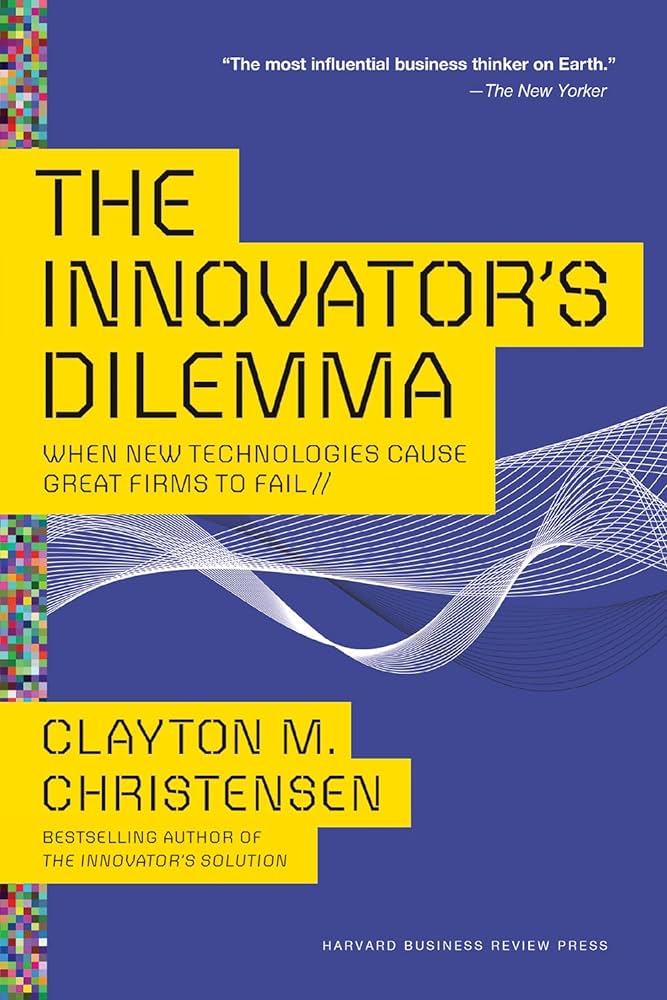
The Innovator's Dilemma Book Summary
Clayton M. Christensen
"The Innovator's Dilemma" unveils a paradoxical truth: successful companies are often perfectly positioned to fail. Established firms can become blindsided by disruptive technologies that reshape industries. This book offers a framework for navigating these disruptive threats, urging companies to embrace new market opportunities and transform themselves to thrive in the face of inevitable change.
"The Innovator's Dilemma" unveils a paradoxical truth: successful companies are often perfectly positioned to fail. Established firms can become blindsided by disruptive technologies that reshape industries. This book offers a framework for navigating these disruptive threats, urging companies to embrace new market opportunities and transform themselves to thrive in the face of inevitable change.
Business
Innovation
Management