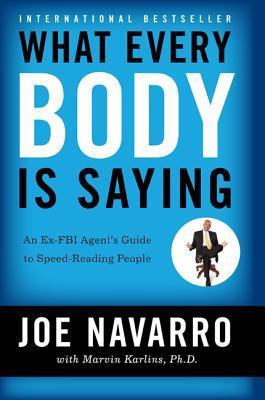
What Every Body is Saying Book Summary
An Ex-FBI Agent's Guide to Speed-Reading People
Book by Joe Navarro
Feeling Lazy?Read 1 Minute Summary
Summary
"What Every Body is Saying" unlocks the secrets of nonverbal communication, teaching you to decode the hidden messages in every gesture, expression, and movement, so you can interact with confidence, detect deceit, and build stronger relationships in all areas of life.
The Honest Feet and Legs
The feet and legs are the most honest part of the body because they react instantly and subconsciously to situations. Since the legs have been critical to human survival by enabling us to run from predators, the limbic brain carefully controls their actions. When people feel uncomfortable, their feet will point away, withdraw, or kick. When they are comfortable, their legs will mirror the other person's posture or point towards them. Paying attention to changes in foot and leg behavior provides key insights into a person's state of mind.
Section: 1, Chapter: 1
Observing Nonverbals in Context is Key
To accurately interpret nonverbal cues, always consider the context in which they occur. The same behavior can mean different things in different situations. For example:
- Crossed arms might indicate discomfort and defensiveness during a tense negotiation, but may simply show a relaxed posture while casually conversing with a friend.
- Lip compression can reveal stress or disapproval when discussing an unpleasant topic, but might just result from concentration while solving a challenging problem. Evaluating cues in light of the circumstances and looking for sudden changes in behavior will enable you to decipher their true meaning. Don't jump to conclusions based on a single tell.
Section: 1, Chapter: 1
Establish a Nonverbal Baseline
To detect meaningful changes in a person's body language, first establish their normal behavioral patterns - their baseline. Observe how they typically use their hands, hold their body, react to stress, etc. Then watch for deviations from this baseline as your interaction unfolds.
For instance, if someone is generally still but suddenly starts fidgeting and tapping their foot after you ask them a question, this abrupt change indicates the topic makes them uncomfortable and bears further exploration. Without having gauged their usual mannerisms, you may miss or misinterpret such telling behavioral shifts. Strive to identify a person's baseline behaviors early in your encounters.
Section: 1, Chapter: 1
The Honest Brain
Of the three "brains" in the head - the neocortex (thinking brain), limbic (emotional brain), and reptilian (stem brain) - the limbic system is the most honest. As the seat of emotions, the limbic brain reacts instantly and subconsciously to perceived threats, controlling the body's built-in survival mechanisms:
- Freeze: Becoming still to avoid detection by predators
- Flight: Distancing from danger through physical or psychological withdrawal
- Fight: Aggressive response when unable to escape
These reflexes produce nonverbal tells that reflect a person's true feelings. While the neocortex censors speech, it has less control over limbic impulses revealed through body language. The limbic brain and its reactions never lie.
Section: 1, Chapter: 2
Pacifying Behaviors Relieve Stress
Stressful events prompt the brain to soothe itself through pacifying behaviors - physical actions that stimulate nerve endings and release calming endorphins. Pacification manifests in self-touching behaviors like:
- Neck stroking
- Nose touching
- Lip pursing or biting
- Rubbing the forehead
- Face touching
- Exhaling deeply
- Leg cleansing
The greater a person's stress, the more actively and frequently they pacify. By learning to recognize pacification displays, you can gauge someone's anxiety level and identify the stressors that provoke it.
Section: 1, Chapter: 2
Spot Liars by Watching for Pacifiers
People typically pacify after being asked a troubling question or hearing information they dislike. Pacifying behaviors often indicate a person feels threatened because:
- They are lying and fear getting caught
- They have done something wrong and feel guilty
- The topic elicits unpleasant thoughts or memories
While normal nervousness also prompts pacification, if you see sudden pacifying directly after someone answers a question, you need to dig deeper. But use caution - while pacification suggests uneasiness, it doesn't automatically mean dishonesty.
Section: 1, Chapter: 2
Knee Clasp Reveals Intention to Leave
During a meeting Juan, a project manager, asked his team for feedback on a challenging stage of their work. One employee, Emily, began expressing concerns about the approach. As she spoke, Juan noticed the other team members placing both hands on their knees in a "knee clasp."
This posture, often seen in interviews and sales calls, shows an intent to end the conversation and leave. Recognizing his team's restlessness, Juan wrapped up the meeting quickly, promising to consider Emily's issues later. By reading this subtle "intention cue," he prevented the discussion from extending too long and losing his team's attention. The knee clasp avoided an awkwardly long meeting.
Section: 1, Chapter: 3
Gravity-Defying Behaviors Signal Positivity
When feeling upbeat and excited, people exhibit "gravity-defying" nonverbals - body language that has a bouncy, rising quality. Positive emotional states cause us to defy gravity by:
- Walking with a spring in our step
- Gesturing upwards as we speak
- Rising up on the balls of our feet
- Sitting forward in our seat
- Raising our eyebrows
Gravity-defying cues signal happiness and confidence. When you see them suddenly appear in a person's demeanor, especially after something you said or did, you can feel assured your actions pleased them. The notable absence of these behaviors reveals low mood or self-esteem.
Section: 1, Chapter: 3
Related Content

Subliminal Book Summary
Leonard Mlodinow
Subliminal: How Your Unconscious Mind Rules Your Behavior reveals the powerful influence of the unconscious mind on our thoughts, feelings, and actions - from how we perceive the world, to how we interact with others, make decisions, and understand ourselves.
Subliminal: How Your Unconscious Mind Rules Your Behavior reveals the powerful influence of the unconscious mind on our thoughts, feelings, and actions - from how we perceive the world, to how we interact with others, make decisions, and understand ourselves.
Psychology
Neuroscience
Business