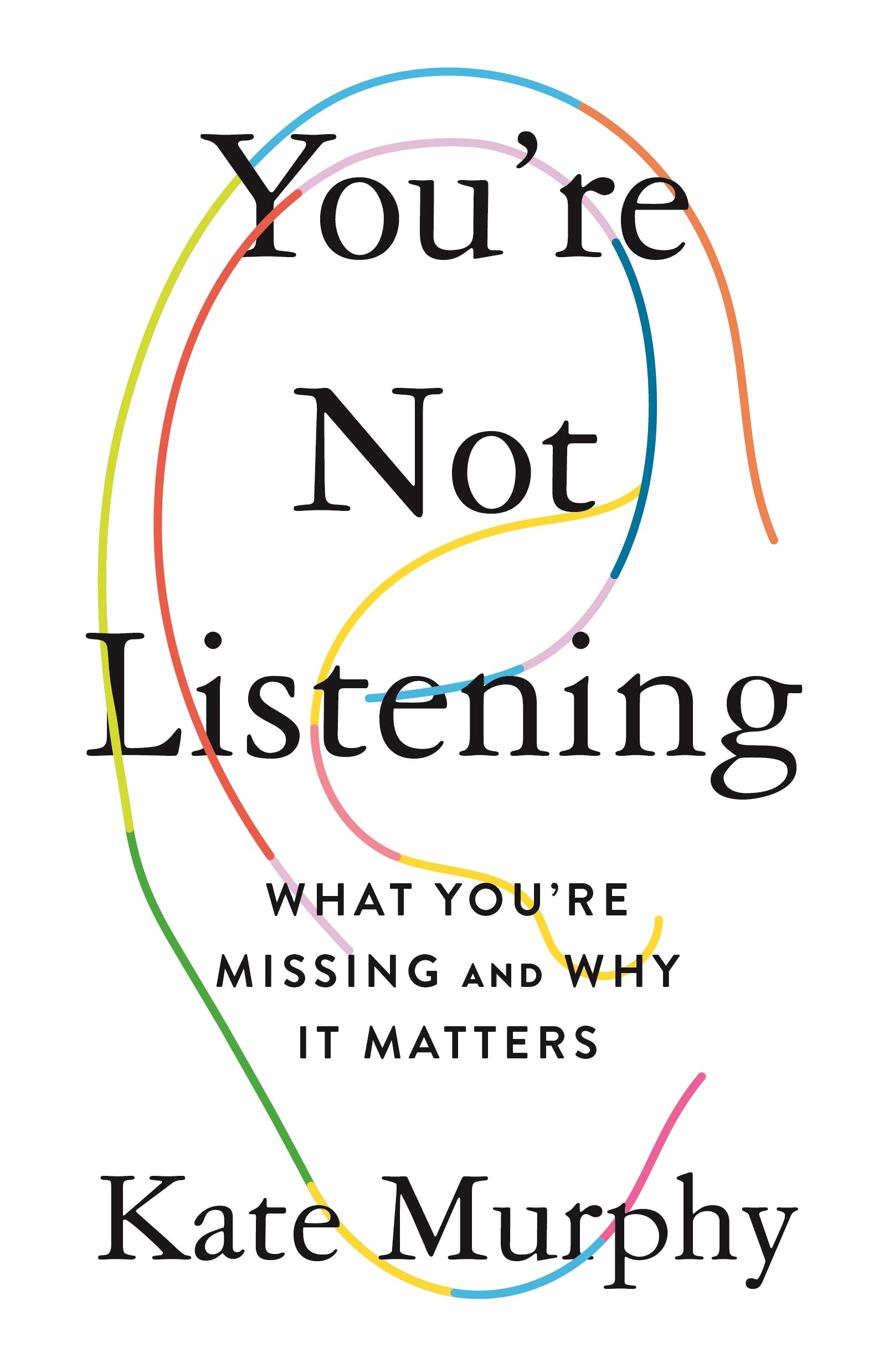
You're Not Listening
What You're Missing and Why It Matters
Book by Kate Murphy
Summary
In You're Not Listening, Kate Murphy illuminates the profound power of listening to enrich our relationships and unlock our creative potential, while offering penetrating insights and practical tips to help us reclaim this lost art in our distracted, disconnected modern lives.
Our Epidemic Of Loneliness Is Partly Due To Not Listening
The author argues that a key reason for the current epidemic of loneliness, isolation and alienation is that people have lost the ability to truly listen to one another. While we may talk to more people than ever before via social media and messaging, few people feel they have anyone who really listens to them in a deep way. This has led to widespread feelings of disconnection.
"Nature hath given men one tongue but two ears, that we may hear from others twice as much as we speak." - Epictetus
Section: 1, Chapter: 1
The Negative Health Impact Of Loneliness
The book cites epidemiological research showing that the health impact of feeling isolated and disconnected is worse than smoking 15 cigarettes a day. Loneliness increases the risk of premature death as much as obesity and alcoholism. It is also linked to heart disease, stroke, dementia, and weakened immunity.
Section: 1, Chapter: 1
Make An Effort To Truly Listen To People In Your Life
Some ways to start being a better listener:
- When someone is talking to you, give them your full attention. Don't look at your phone or let your mind wander.
- Ask open-ended questions to draw the person out and show interest in what they're saying. Don't just wait for your turn to talk.
- Reflect back what you heard the person say, to ensure you understood them correctly.
- Notice the person's body language and tone in addition to their words. There is often meaning beneath the surface.
Section: 1, Chapter: 1
Your Brain Waves Sync Up With Someone When You're Truly Listening
Neuroscientist Uri Hasson conducted a study where he had subjects listen to someone telling a story while undergoing fMRI scans. He found that the greater the overlap between the speaker's brain activity and the listener's brain activity, the better the communication and understanding between them. Good listeners' brain waves literally sync up with the speaker, leading to greater connection.
Section: 1, Chapter: 2
Listening Is An Act Of Love And Generosity
"To really listen is to be moved physically, chemically, emotionally, and intellectually by another person's narrative."
Section: 1, Chapter: 2
The Best Listeners Are Endlessly Curious About Others
While we are born curious, life experiences can diminish our innate inquisitiveness about others. Great listeners maintain a childlike curiosity and fascination with other people's thoughts, feelings and experiences, even those very different from their own. They are eager to learn something new from every interaction. Examples include Studs Terkel, who interviewed people from all walks of life for his book Working, and IKEA founder Ingvar Kamprad, who made a habit of querying both customers and employees to better understand their needs and perspectives.
Section: 1, Chapter: 3
People Love Talking About Themselves
In a study, commuters on Chicago trains were assigned to either talk to a stranger, sit in solitude, or do whatever they normally do. While subjects expected to be least happy talking to strangers, the opposite was true - those who engaged with strangers were most satisfied with their commute. The study suggests that people welcome the opportunity to talk about themselves and have someone take an interest in their lives, even if it's a stranger. But social norms discourage us from these interactions.
Section: 1, Chapter: 3
Curious Listening Means Parking Your Ego And Being Open To Surprises
Tips to listen with more curiosity:
- Approach conversations with an attitude of openness and discovery. Assume the other person has something novel and interesting to share.
- Ask questions that allow the speaker to share new information, not ones that confirm what you already know or think. Avoid leading questions.
- When someone shares something, dig deeper to understand their values, motivations and feelings - not just the surface facts. Ask them to elaborate.
- Notice when your mind starts to wander or judge. Bring your focus back to the speaker with fresh curiosity.
Section: 1, Chapter: 3
We Overestimate How Well We Know Our Loved Ones
There's an assumption that we know our romantic partners, family members and close friends very well. But research shows that closeness leads us to overestimate our insight into loved ones' inner lives. Because we feel so familiar with them, we stop really listening. We think we already know what they'll say or how they'll react. Psychologist Judith Coche sees this often with the distressed couples she counsels, who have stopped genuinely attending to one another. The lesson is that understanding loved ones is an ongoing process that requires continual curious listening, not a one-time achievement.
Section: 1, Chapter: 4
Social Thirst Makes People Signal Their Identity And Values More
Before social media, overt signaling of one's identity, values and group affiliations was most common among teenagers - think goths, jocks, stoners, etc. But in today's fractured world, more adults engage in such social signaling, online and off. People advertise their diets, political leanings, and cultural tastes. While this allows quick assessment of others, it can discourage real listening. We may assume that someone flaunting their veganism or gun rights bumper sticker can be summed up by that single thing. But there are always more complex motives, experiences and dimensions to people when we get curious.
Section: 1, Chapter: 4
Listen To Understand People's Multitudes, Not To Label Them
Ways to listen beyond assumptions and tribes:
- Notice when you mentally slot someone into a category after learning some basic fact about them. Catch and question that assumption.
- Get curious to discover what lies beneath the labels and social signals people project. What are their individual stories, motivations, doubts? -Consider how your own unique backstory has shaped your views and identity. Allow that people with different affiliations/beliefs also have complex underpinnings.
- Remember that you can't know someone's mind from group demographics. Listen to hear their particular thoughts and experiences.
Section: 1, Chapter: 4
Hostage Negotiators Listen For The Feelings, Not Just The Facts
Gary Noesner, a former FBI hostage negotiator, describes the inner emotional world of a hostage-taker as the "doughnut" around the basic facts of the crisis. By listening for this "doughnut" and empathizing with the person's frustrations and grievances, he is able to build rapport and trust. This makes the person more open to his input and de-escalates tensions. In contrast, ignoring the emotional drivers and arguing over demands is likely to backfire and make the situation worse. The same principles apply for lower-stakes conflicts in everyday life.
Section: 1, Chapter: 5
Listen For The Unspoken Feelings And Experiences Behind The Words
To listen for the emotional meaning in a conversation:
- Pay attention to the person's tone of voice, facial expressions, and body language in addition to their words. Notice if their nonverbal cues match what they're saying.
- When someone shares a personal story, consider: Why are they telling me this? What does this experience mean to them? What are they feeling about it?
- Reflect back the underlying emotions you're hearing: "It sounds like that was really frustrating." "I can imagine how scary that must have been." This validates their inner experience.
- If their words and demeanor don't line up, gently check your understanding: "I heard you say X, but you seem upset. What else is going on?"
Section: 1, Chapter: 5
Related Content

Why Has Nobody Told Me This Before Book Summary
Julie Smith
In "Why Has Nobody Told Me This Before?", Dr. Julie Smith shares practical insights and tools from therapy to help you navigate life's challenges, build resilience, and create a meaningful life aligned with your values.
In "Why Has Nobody Told Me This Before?", Dr. Julie Smith shares practical insights and tools from therapy to help you navigate life's challenges, build resilience, and create a meaningful life aligned with your values.
Psychology
Therapy
Self-Help
Personal Development