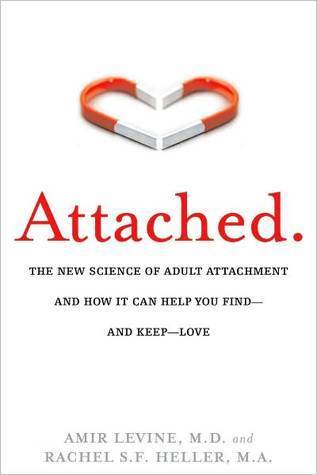
Attached Book Summary
The New Science of Adult Attachment and How It Can Help You Find—and Keep—Love
Book by Amir Levine, Rachel Heller
Feeling Lazy?Read 1 Minute Summary
Summary
"Attached" uses science and psychology to show you how to find and keep love by understanding the fundamental attachment needs that drive all romantic relationships.
0. The New Science of Adult Attachment
Attachment Theory Explains Romantic Relationship Patterns
Attachment theory, originally developed to explain the bond between infants and caregivers, also applies to adult romantic relationships. It provides a powerful framework for understanding people's behaviors, emotions and relationship patterns. The three main attachment styles are Secure, Anxious and Avoidant. Understanding your own and your partner's attachment style is key to building a happy, secure relationship.
Section: 1, Chapter: 1
What Happiness Depends On
"All happiness or unhappiness solely depends upon the quality of the object to which we are attached by love." - Baruch Spinoza.
Your choice of romantic partner and the patterns that play out in your relationship have an enormous impact on your overall happiness and well-being in life. Attachment styles provide a roadmap for making wise relationship choices.
Section: 0, Chapter: 1
Attachment Styles Are Stable But Plastic - They Can Change Over Time
While attachment styles tend to remain fairly stable, they can change over time, especially in response to major life events or an extremely good or bad relationship experience. If you're unhappy with your current attachment style, you can take steps to become more secure by:
- Gaining insight into your attachment patterns and how they formed
- Choosing a partner with a secure attachment style
- Working to develop more security within your existing relationship
Don't feel you're doomed to repeat unhealthy patterns - change is possible with awareness and effort.
Section: 0, Chapter: 1
Dependency is Not a Bad Word
The dependency paradox refers to the finding that accepting and meeting your partner's attachment needs actually fosters greater independence and confidence in both partners. It follows these steps:
- Partner expresses need for closeness, reassurance, etc.
- You meet the need sensitively and consistently
- Partner feels secure and is able to focus outward rather than worry about the relationship
- Both of you are able to be more independent and pursue your goals with a "secure base"
Conversely, responding inconsistently or negatively to your partner's dependency needs leads to a vicious cycle of clinging and pushing away.
Section: 0, Chapter: 2
Evolution Has Programmed Us to Be Dependent on a Romantic Partner
From an evolutionary perspective, we are wired to be dependent on a romantic partner. In prehistoric times, close attachments provided safety and survival advantages. When we become attached to someone, our brain's attachment system gets activated, causing us to seek their proximity and use them as a "secure base" from which to explore the world. Accepting rather than denying these innate needs is essential to a happy relationship.
Section: 0, Chapter: 2
Emotional and Physical Health Suffer When Attachment Needs Are Not Met
Studies by Dr. Jim Coan and colleagues demonstrate the powerful impact of close relationships on regulating emotions and stress responses:
- Happily married women showed less stress response in their brain when holding their husband's hand during a mildly painful experience
- Unhappily married individuals showed higher blood pressure in their spouse's presence compared to being alone
When our innate attachment needs are not met, both our emotional and physical health are compromised. The lesson is to choose a partner carefully as they will literally shape our mind and body.
Section: 0, Chapter: 2
1. Your Relationship Toolkit
What is My Attachment Style?
The Experience in Close Relationships (ECR) questionnaire is the gold standard for identifying your attachment style across two dimensions:
- Anxiety in relationships - fear of abandonment and preoccupation with the relationship
- Avoidance of intimacy - discomfort with closeness and dependency Based on your scores you fall into one of four "quadrants":
- Low anxiety + Low avoidance = Secure
- High anxiety + Low avoidance = Anxious
- Low anxiety + High avoidance = Avoidant
- High anxiety + High avoidance = Disorganized (rare)
Knowing your style provides a starting point for understanding your relationship patterns.
Section: 1, Chapter: 3
Secure Attachment - "Being Warm and Loving Comes Naturally to You"
If you have a secure attachment style:
- You feel comfortable with intimacy and don't worry too much about the relationship
- You effectively communicate your needs and pick up on your partner's cues
- You share successes and problems with your partner
- You can depend on your partner and allow them to depend on you
Secure people have an internalized sense of self-worth and expect their partner to be loving and responsive. They enjoy closeness without becoming anxious about the relationship.
Section: 1, Chapter: 3
Anxious Attachment - "You Want to Be Very Close but Worry Your Partner Doesn't Reciprocate"
The anxious attachment style is characterized by:
- A desire for extreme closeness and "merging" with romantic partners
- Sensitivity to small changes in a partner's moods and behaviors
- Tendency to take a partner's actions too personally
- Acting out to get a partner's attention when feeling insecure
- Difficulty being alone and feeling incomplete without a relationship
- Relationships consume a large part of mental energy and emotional focus
However, with the consistent reassurance and support of a secure partner, the anxious person can become more secure over time.
Section: 1, Chapter: 3
2. The Three Attachments Styles in Everyday Life
3. When Attachment Styles Clash
4. The Secure Way - Sharpening Your Relationship Skills
Related Content
How to Not Die Alone Book Summary
Logan Ury
How to Not Die Alone is a practical guide that uses behavioral science and real-life examples to help you find and maintain a fulfilling long-term relationship by identifying self-sabotaging dating patterns, practicing intentional love, and making deliberate choices.
How to Not Die Alone is a practical guide that uses behavioral science and real-life examples to help you find and maintain a fulfilling long-term relationship by identifying self-sabotaging dating patterns, practicing intentional love, and making deliberate choices.
Relationships
Psychology