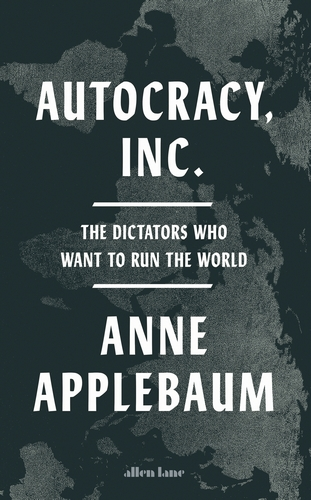
Autocracy, Inc. Book Summary
The Dictators Who Want To Run The World
Book by Anne Applebaum
Summary
In "Autocracy, Inc.," Anne Applebaum exposes the global web of dictators and their enablers who have formed a corrupt, mutually-supporting network to undermine democracy, repress their citizens, and rewrite the rules of international politics in their favor.
The New Face Of Autocracy In The 21st Century
Modern autocracies are no longer run by a single dictator, but by sophisticated networks relying on kleptocratic financial structures, security services, and technological experts providing surveillance, propaganda and disinformation.
These networks are connected across autocratic countries and sometimes in democracies too. Autocratic regimes share a determination to repress their citizens, push back against transparency and accountability, and undermine anyone who challenges them.
Section: 1, Chapter: 1
Autocracies Are Run by Sophisticated Networks
"Nowadays, autocracies are run not by one bad guy but by sophisticated networks relying on kleptocratic financial structures, a complex of security services---military, paramilitary, police---and technological experts who provide surveillance, propaganda, and disinformation."
Section: 1, Chapter: 1
The Origins Of East-West Economic Ties In Europe
In the late 1960s, Austrian and West German capitalists met with Soviet communists to discuss building gas pipelines from the communist East to capitalist West. West German Foreign Minister Willy Brandt believed deeper economic ties would make future military conflict unthinkable and promoted "change through rapprochement" (Wandel durch Annäherung).
Not everyone agreed. U.S. presidents Nixon, Carter and Reagan worried the pipelines would enrich the Soviets, increase European energy dependence on Moscow, and empower the regime the West was supposed to be countering. But Brandt's policy largely prevailed, morphing into "change through trade" (Wandel durch Handel) after the Cold War.
Section: 1, Chapter: 1
The Naive Western Embrace Of Russian And Chinese Market Reforms
In the 1990s, Western leaders optimistically assumed trade and globalization would inevitably spread democracy to Russia and China. They underestimated how:
- Russian "capitalism" was designed from the start to favor insiders, with no real free markets. Wealth came from connections and theft, not innovation.
- Chinese companies, even in the era of economic opening, still ultimately served the interests of the Communist Party and its hold on power.
In practice, Western trade and investment often fueled kleptocracy and dictatorship rather than reforming them. But few wanted to acknowledge the moral hazards at the time.
Section: 1, Chapter: 1
How Putin's Kleptocracy Took Shape With Help From The West
As deputy mayor of St. Petersburg in the early 1990s, Vladimir Putin oversaw schemes to steal city funds and launder money through shell companies in Europe, enabled by Western banks and lawyers. In one case, his partners registered the St. Petersburg Real Estate Holding Company in Germany, took it public, then used it to launder funds before German police finally raided it in 2003.
The political system that became Putinism emerged from the nexus of the KGB's experience with clandestine finance and the amorality of the international business community. Even as Western leaders preached "rule of law" to Russia, Western enablers helped build the opposite.
Section: 1, Chapter: 1
The Gaps Between Russia's Democratic Rhetoric And Autocratic Reality
In his first years as president, Putin paid lip service to democracy, declaring in speeches that only a democratic state could balance interests and ensure rule of law, free elections and human rights in Russia.
In practice, he constructed a Potemkin democracy designed to fool foreigners while allowing him to monopolize power. Elections featured no real competition. The market operated only within Kremlin-set limits. Putin could destroy any company that crossed him, as the expropriation of Yukos by state-owned Rosneft showed. Yet Rosneft still attracted major Western investment, showing the willful blindness of those who profited from the charade.
Section: 1, Chapter: 1
Venezuela's Slide Into Kleptocracy Under Hugo Chávez
When former coup leader Hugo Chávez was elected Venezuela's president in 1998, he vowed to replace the corrupt old elite. But when his chief of police first presented evidence of graft by Chávez allies, the president fired the whistleblower.
The incident taught officials that loyalty would be rewarded with impunity to steal. Over time, Venezuela's Bolivarian socialist system enabled massive embezzlement, siphoning billions from the state oil company PDVSA into foreign accounts. Currency manipulation spawned a "boligarchy" of regime cronies who exploited distorted exchange rates. As in Russia, corruption metastasized from an aberration into the regime's operating system.
Section: 1, Chapter: 2
The Staggering Scale Of Venezuelan Kleptocratic Extraction
The scale of graft under Chávez and successor Nicolás Maduro is astounding:
- Of $1.2 trillion in oil revenues during the Chávez era, as much as $300 billion was reportedly stolen
- Transparency International documented over 125 cases of corruption at PDVSA, with 17 exceeding $1 billion each
- Investigations from Andorra to Switzerland revealed billions in accounts linked to Venezuelan officials
- U.S. authorities charged Venezuelan elites with laundering billions through American banks and real estate
This kleptocratic extraction helped tank Venezuela's economy, sparking humanitarian catastrophe and mass exodus. But high oil prices and lingering sympathy for Chávez's socialist rhetoric abroad helped delay international reckoning.
Section: 1, Chapter: 2
Related Content
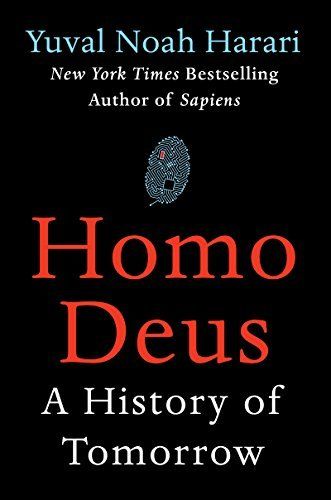
Homo Deus Book Summary
Yuval Noah Harari
Homo Deus explores the future of humanity in a world where the old challenges of famine, plague, and war have been largely conquered, and new godlike technologies of artificial intelligence and bioengineering are on the horizon, forcing us to confront fundamental questions about the nature of consciousness, free will, and what it means to be human in an age of algorithms.
Homo Deus explores the future of humanity in a world where the old challenges of famine, plague, and war have been largely conquered, and new godlike technologies of artificial intelligence and bioengineering are on the horizon, forcing us to confront fundamental questions about the nature of consciousness, free will, and what it means to be human in an age of algorithms.
Futurism
Technology
Humanity
Society