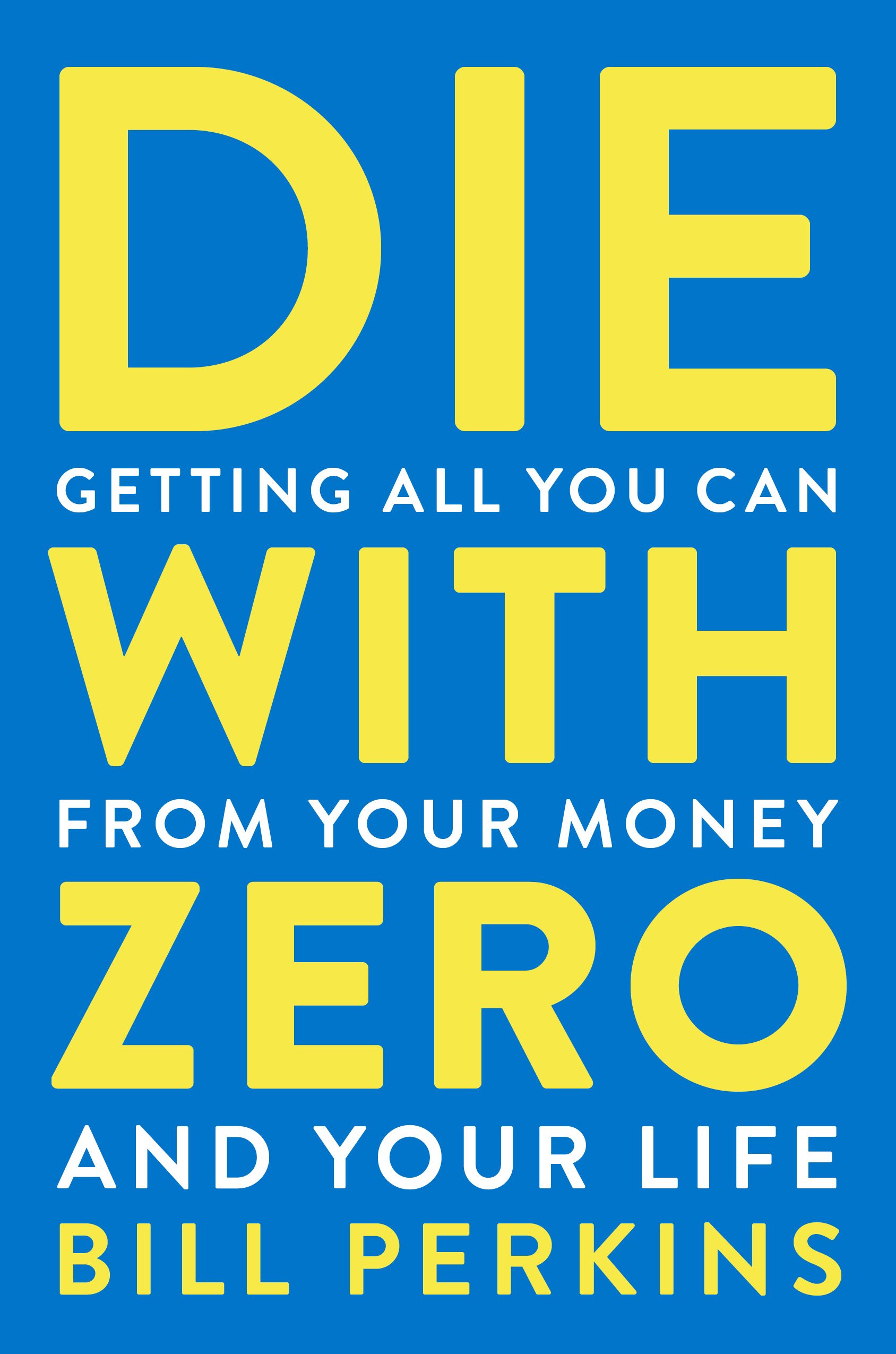
Die With Zero Book Summary
Getting All You Can from Your Money and Your Life
Book by Bill Perkins
Feeling Lazy?Read 1 Minute Summary
The Lunch That Changed Everything
When Perkins was in his early 20s, making $18,000 a year as a junior trader, he proudly told his boss Joe Farrell that he had managed to save $1,000. Instead of praise, Farrell called him a "f***ing idiot." Farrell pointed out that Perkins was on a high-earning career path, so his future self would be much richer.
By saving so much now, Perkins was depriving his poor current self just to pad the pockets of his wealthy future self. This blew Perkins' mind. He realized the importance of balancing present enjoyment with delayed gratification. Overdoing either one would lead to a life of regret. This lunch conversation set Perkins on the path of trying to optimize his money and time for the most fulfilling life possible.
Section: 1, Chapter: 1
Your Money Or Your Life Energy?
Early in his career, Perkins read the book "Your Money or Your Life" by Vicki Robins and Joe Dominguez. It completely transformed his relationship with money and work. The key ideas:
- Every dollar you earn represents life energy spent to get that dollar
- So spending money is actually spending precious hours of your one life
- The goal is to maximize fulfillment from those hours, not to maximize dollars
This means not wasting life energy on meaningless purchases, but also not hoarding life energy (money) so long that you never get to enjoy the fruits of your labor. Perkins started calculating the true hours of life energy each purchase cost and whether it was worth it. This allowed him to better optimize his life energy, not just his money.
Section: 1, Chapter: 1
The Fulfillment Curve
To visualize optimizing your life, Perkins introduces the "fulfillment curve." Here's how it works:
- Write down the experiences you want to have in life (e.g. traveling, learning an instrument, going back to school).
- Assign each experience "fulfillment points" based on how much it would enrich your life. More meaningful experiences get more points.
- Chart out the total points you could earn each year/decade of your life.
- Optimize your curve. Rearrange your experiences and spending to maximize the area under the curve (your total lifetime fulfillment).
Most people's curves are suboptimal - with too much unfulfilled potential (area above the curve). By shifting spending earlier and converting unspent dollars into experiences, you can create a taller, fuller fulfillment curve.
Section: 1, Chapter: 1
Start Early, Start Now
Many people put off meaningful life experiences until retirement - only to find their health limits their options. To avoid this:
- Create a "time bucket list" - what experiences do you want to have in each coming decade of life?
- Be realistic about age restrictions. Aim for physical adventures while you're young and save less active experiences for later.
- Start investing in experiences ASAP, even if it means going into (responsible) debt like Perkins' friend Jason did. The earlier you start, the more you can improve your fulfillment curve.
- If you have unfulfilled dreams now, don't put them off. Find a way to pursue them before the window of opportunity closes. Your 80-year-old self will thank you.
Section: 1, Chapter: 2
Experiences Accrue Compound Interest
Just like financial investments, experiences can generate compounding returns over time. Perkins calls these "memory dividends." Here's how it works:
- You have an experience (the initial investment)
- You reflect on the experience over time, gaining intrinsic enjoyment (the dividends)
- You share the experience with others, gaining connection and relational equity (compounding the dividends)
- The experience becomes part of your identity, paying ongoing existential dividends
Because memory dividends often accrue for decades, long after the upfront cost is paid, experiences can have immense long-term ROI. And the earlier in life you invest in an experience, the longer you have to reap the dividends.
Section: 1, Chapter: 2
The Three Deathbed Regrets
Bonnie Ware, a palliative care nurse, recorded the top 5 regrets of the dying. Three of them relate directly to Perkins' "Die with Zero" philosophy:
- I wish I'd had the courage to live a life true to myself, not what others expected of me. (i.e. I wish I'd honored my dreams)
- I wish I hadn't worked so hard. (i.e. I wish I'd better balanced work and life)
- I wish I had let myself be happier. (i.e. I wish I'd given myself permission to enjoy)
Perkins sees these regrets as tragic wastes of human potential. He argues that by following the "Die with Zero" mindset - aggressively investing in life experiences, optimizing your fulfillment curve, giving yourself permission to enjoy - you can live a life free of these regrets.
Section: 1, Chapter: 3
The Gazillionaire With No Ability To Enjoy
"Let's say you're on your deathbed and you're a gazillionaire. You have all the money in the world but you have no ability to enjoy that money. You are no longer a gazillionaire; you are merely a person who is about to die. All that money is now meaningless to you. It has no value because you have no ability to exchange it for positive life experiences. If you find yourself in this position, you have made a huge mistake."
Section: 1, Chapter: 3
Every Dollar Unspent Is A Memory Unmade
To avoid deathbed regrets and unfulfilled potential, Perkins offers these suggestions:
- Calculate how much life energy (working hours) each dollar represents for you
- For each big financial decision, quantify the hours of life energy at stake
- Weigh those hours against the life experiences/memories that money could create
- Lean towards spending now vs. saving excessively for an uncertain future
- Give yourself permission to enjoy your money guilt-free
- Aim to die with zero dollars and zero dreams left on the table
Remember, the goal isn't to maximize net worth, it's to maximize net fulfillment - and that means aggressively investing your life energy in experiences while you still can.
Section: 1, Chapter: 3
Sailing Off The Edge vs. Dying With Too Much
Perkins acknowledges that actually dying with exactly zero dollars is impossible, since you can't predict your exact date of death. The key is to get close to zero, leaving just enough buffer to ensure you don't run out before you die. This takes careful planning. If you're too conservative and save too much, you'll sacrifice experiences and die with wealth unspent. But if you're too aggressive and spend too fast, you risk running out of money prematurely. The goal is to walk the fine line between these extremes - to spend as much as possible on experiences while still safeguarding your minimum needs.
Section: 1, Chapter: 4
Longevity Risk - The Reason We Oversave
One of the biggest barriers to spending more aggressively is what Perkins calls "longevity risk" - the possibility that you live much longer than expected. Most people oversave because they overestimate this risk. They imagine worst-case scenarios where they live to 110 and need 40+ years of savings. In reality:
- Less than 0.02% of people live to 100
- A 65-year-old man has a 3% chance of living to 95
- A 65-year-old woman has a 5.9% chance of living to 95
While some buffer is prudent, massively overestimating your lifespan (and undersaving for experiences) due to longevity risk is a costly error.
Section: 1, Chapter: 4
Related Content
Everything is F*cked Book Summary
Mark Manson
In a world where everything seems fcked, Manson provides a provocative exploration of the human condition, offering a counterintuitive perspective on the nature of hope, the illusion of self-control, and the quest for meaning amongst uncertainty
In a world where everything seems fcked, Manson provides a provocative exploration of the human condition, offering a counterintuitive perspective on the nature of hope, the illusion of self-control, and the quest for meaning amongst uncertainty
Personal Development
Philosophy