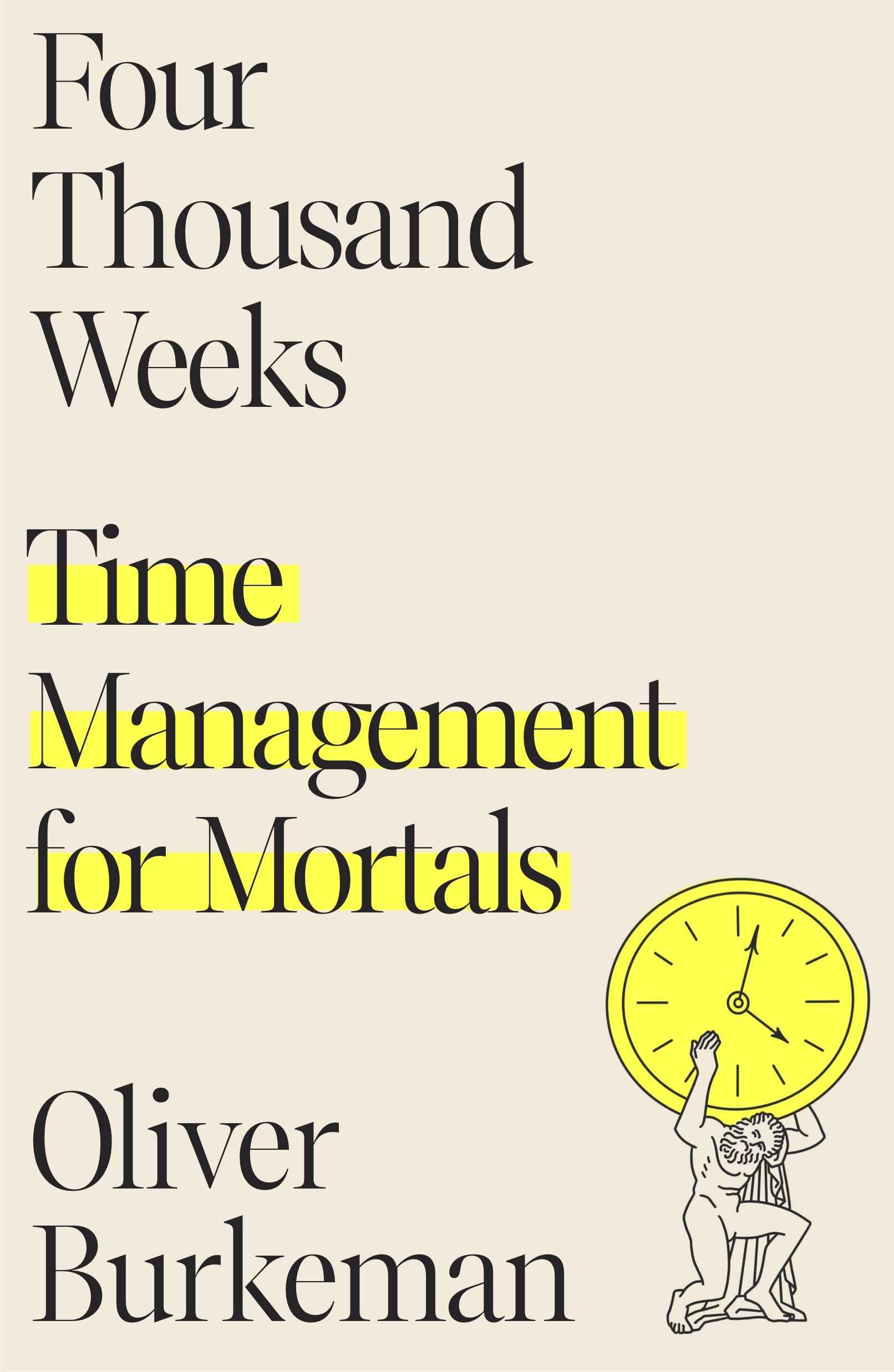
Four Thousand Weeks Book Summary
Time Management For Mortals
Book by Oliver Burkeman
Summary
"Four Thousand Weeks" offers a radical perspective on time management, urging us to abandon the futile quest for control and embrace our finite existence. By accepting our limitations and making conscious choices, we can discover a more meaningful and fulfilling way to spend our brief time on this planet.
Choosing to Choose
Part 1 of "Four Thousand Weeks" challenges conventional time management wisdom, arguing that our obsession with productivity and efficiency is a futile battle against the reality of our finite existence. Instead, Burkeman proposes a "limit-embracing life" where we accept our constraints and make conscious choices about how to spend our limited time.
From Fluid Experience to Abstract Commodity
Before the invention of clocks, time was experienced as a fluid and expansive medium, deeply intertwined with the rhythms of daily life and nature. Medieval peasants, for instance, didn't experience "busyness" or "boredom" because their lives were structured around concrete tasks rather than abstract schedules. However, the Industrial Revolution and the rise of clock-time transformed our relationship with time. It became an external resource to be managed, measured, and maximized, leading to the anxieties and pressures we face today.
Section: 1, Chapter: 1
The Efficiency Trap: A Cycle of Futility
The efficiency trap describes the paradoxical cycle where our efforts to become more productive often lead to feeling busier and more overwhelmed.
Increased Efficiency: We adopt tools and techniques to get more done.
Rising Demands: Our capacity to do more leads to greater expectations and workload.
Feeling Overwhelmed: Increased demands result in feeling busier and more stressed.
Renewed Drive for Efficiency: The cycle begins again as we seek even more efficient solutions.
Section: 1, Chapter: 2
The Tyranny of Convenience: Losing the Meaningful
The pursuit of convenience, while seemingly helpful, can erode the meaning and value of our experiences. By eliminating "friction" in everyday tasks, we lose opportunities for connection, reflection, and appreciation. Here's how to resist the allure of convenience:
Be mindful of your choices: Choose the inconvenient option when it aligns with your values and fosters connection.
Embrace the "friction": Recognize that inconvenience can be an opportunity for mindfulness and appreciation.
Prioritize experiences over efficiency: Seek activities that offer depth and meaning, even if they require more effort.
Section: 1, Chapter: 2
The Allure of Convenience
“Convenience culture seduces us into imagining that we might find room for everything important by eliminating only life’s tedious tasks. But it’s a lie. You have to choose a few things, sacrifice everything else, and deal with the inevitable sense of loss that results.”
Section: 1, Chapter: 2
Existential Overwhelm: The Burden of Infinite Possibilities
The modern world presents us with an overwhelming array of options and experiences, leading to a sense of "existential overwhelm." This feeling arises from the gap between the limited time we have and the seemingly infinite possibilities available. Social media further exacerbates this by constantly exposing us to new desires and experiences.
Section: 1, Chapter: 2
We Are Time: Embracing Finitude
"Our limited time isn't just one among various things we have to cope with; rather, it's the thing that defines us, as humans, before we start coping with anything at all."
Section: 1, Chapter: 3
Heidegger and the Authentic Life
Heidegger's philosophy emphasizes the importance of confronting our finitude to live authentically. He argues that our existence is defined by our limited time, and we must acknowledge this reality to fully embrace life. He contrasts authentic living with "falling," where we distract ourselves and avoid taking ownership of our choices.
Section: 1, Chapter: 3
The Joy of Missing Out
Accepting our limitations allows us to experience the "joy of missing out." This means recognizing that every choice involves sacrifice, and it is this sacrifice that gives our decisions meaning. We can find fulfillment in embracing the present moment and the choices we make, rather than lamenting the countless possibilities we miss out on.
Section: 1, Chapter: 3
The Procrastination Equation: Choosing What to Neglect
We often view procrastination as a negative habit, but Burkeman suggests it's inevitable and can be a tool for prioritizing tasks. The key is to become a "good procrastinator" by:
Paying yourself first: Dedicate time to your most valued activities before tackling other demands.
Limiting work in progress: Focus on a small number of projects at a time to avoid feeling scattered and overwhelmed.
Resisting middling priorities: Avoid the trap of "good enough" options that distract from what truly matters.
Section: 1, Chapter: 4
Perfectionism and Procrastination
Procrastination can stem from perfectionism and the fear of failing to meet unrealistic expectations. We avoid starting projects because we anticipate falling short of our idealized vision. By accepting that our creations will always be imperfect, we can overcome this paralysis and begin taking action.
Section: 1, Chapter: 4
Kafka and the Fear of Commitment
The author Franz Kafka's tumultuous relationship with Felice Bauer exemplifies how the fear of commitment can be a form of procrastination. By keeping their relationship confined to letters, Kafka avoided the limitations and compromises of a real-world partnership. This allowed him to maintain the illusion of infinite possibilities while ultimately hindering his ability to experience genuine intimacy.
Section: 1, Chapter: 4
Settling: An Inevitable and Liberating Truth
The fear of "settling" in relationships and careers stems from the belief that we can find a perfect option if we search long enough. However, Burkeman argues that settling is unavoidable due to our finite time and the inherent limitations of reality. By embracing this truth, we can commit to our choices without the anxiety of missing out on some imagined ideal.
Section: 1, Chapter: 4
Attention: The Currency of Life
"Your experience of being alive consists of nothing other than the sum of everything to which you pay attention."
Section: 1, Chapter: 5
The Illusion of Indistractibility
While we often strive for complete control over our attention, it's essential to recognize that we are inherently distractible beings. Instead of seeking to become indistractible, we can manage our attention by:
Understanding the attention economy: Recognize how digital platforms exploit our attention for profit.
Making conscious choices: Be deliberate about what you choose to focus on.
Accepting limitations: Acknowledge that distractions are inevitable and develop strategies to minimize their impact.
Section: 1, Chapter: 5
Beyond Control
Part 2 of "Four Thousand Weeks" goes deeper into the illusion of control we often seek over time. Burkeman explore the pitfalls of obsessive planning, the limitations of our "ownership" of time, and the importance of rediscovering genuine rest in a culture that prioritizes productivity. We then look into the power of patience, the benefits of synchronizing our time with others, and the pitfalls of excessive individual autonomy.
Related Content
Atomic Habits Book Summary
James Clear
Atomic Habits reveals the surprising power of small habits, demonstrating how tiny changes can compound into remarkable results over time. By focusing on systems over goals and building identity-based habits, you can create lasting change and unlock your full potential.
Atomic Habits reveals the surprising power of small habits, demonstrating how tiny changes can compound into remarkable results over time. By focusing on systems over goals and building identity-based habits, you can create lasting change and unlock your full potential.
Productivity
Personal Development
Psychology