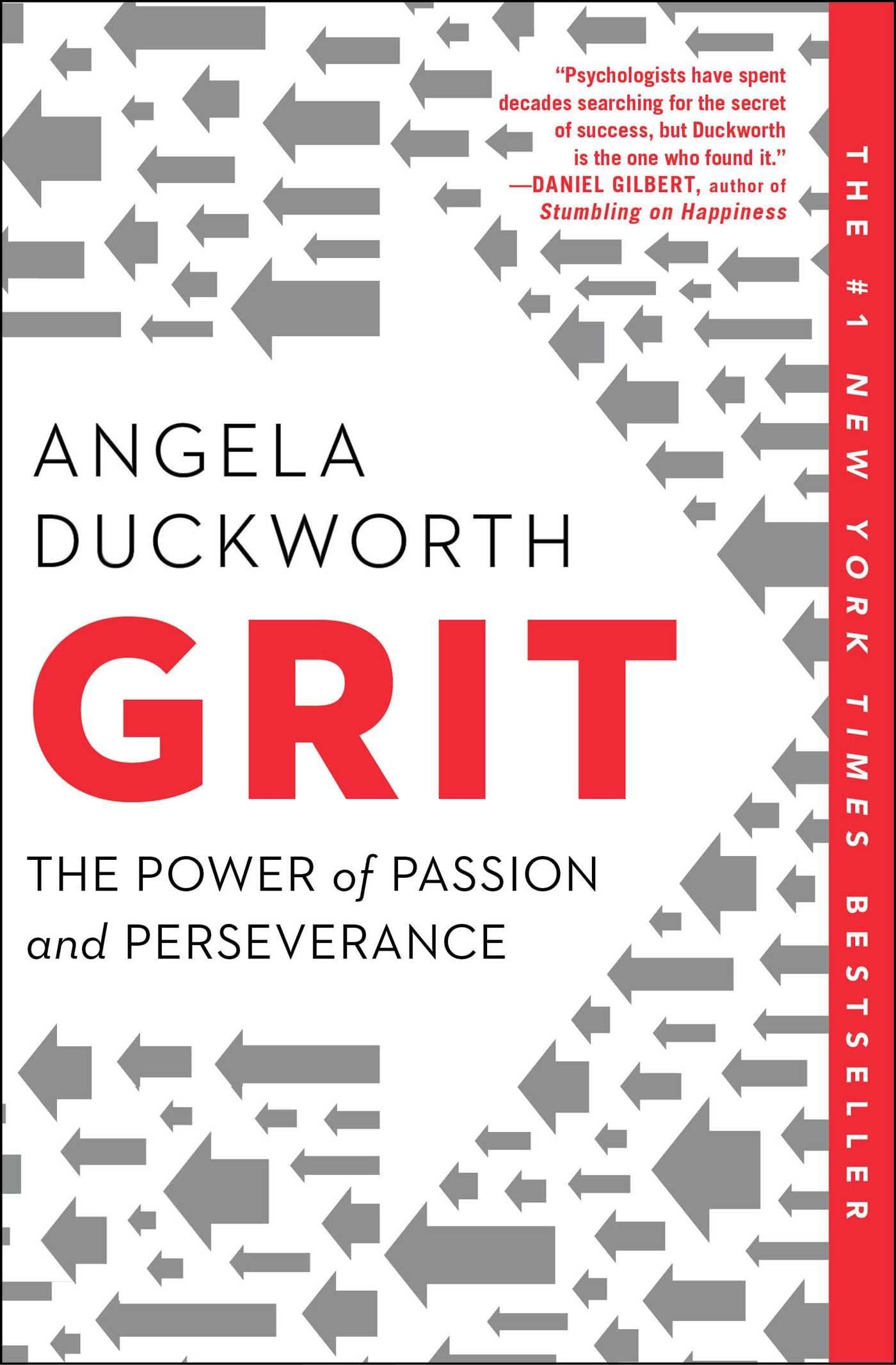
Grit Book Summary
The Power of Passion and Perseverance
Book by Angela Duckworth
Feeling Lazy?Read 1 Minute Summary
Summary
In "Grit: The Power of Passion and Perseverance," Angela Duckworth argues that the secret to outstanding achievement is not talent, but a special blend of passion and persistence she calls "grit."
1. What Grit Is And Why It Matters
West Point Cadets And The Grit Test
The author studied West Point cadets and found that those who scored higher on her Grit Scale were more likely to make it through the grueling "Beast Barracks" training than cadets with lower grit scores.
Grit mattered more for retention than things like SAT scores, high school rank, leadership experience or athletic ability. The Grit Scale was a better predictor of who would make it through the intensive 7-week training program than any other factor. This was true even when controlling for things like physical fitness and aptitude test scores. It demonstrated that inner traits like passion and perseverance can be more important than raw talent.
Section: 1, Chapter: 1
Grit Predicts Success In Varied Domains
The author found grit predicted success in diverse areas like the National Spelling Bee, sales jobs, Chicago public high schools, and graduation from two-year colleges.
- In a study of Spelling Bee contestants, grittier kids practiced more and performed better in the actual competition. In a study of salespeople, grit was the best predictor of job retention.
- For Chicago high school juniors, grit scores predicted graduation rates more than how much students cared about school, their conscientiousness, and even their feelings of safety at school.
- Grit also predicted which students would graduate from two-year colleges, a context where the dropout rate can be as high as 80%.
- Across various populations, grit accounted for significant variance in success outcomes over and beyond IQ, conscientiousness, and other variables.
Section: 1, Chapter: 1
"The Mundanity Of Excellence"
The author discusses a study by Daniel Chambliss titled "The Mundanity of Excellence" which found that top swimmers achieved excellence through aggregating mundane, ordinary actions. There was no dramatic moment or superhuman ability that led to their success - just consistently doing the small things right, day after day, year after year.
The best swimmers had developed a strong work ethic, logged more hours of purposeful practice, and had refined small but important details of their technique. Chambliss argued that talent was overrated and that "superlative performance is really a confluence of dozens of small skills or activities, each one learned or stumbled upon, which have been carefully drilled into habit and then are fitted together in a synthesized whole."
Section: 1, Chapter: 2
Talent And Effort Are Not Enough
The author proposes two equations that explain how talent and effort lead to achievement:
- Talent x Effort = Skill
- Skill x Effort = Achievement
Talent is how quickly your skills improve when you invest effort. People may start out with different levels of talent, but it's the amount and consistency of effort that determines growth in skill over time.
Achievement is what happens when you take your acquired skills and use them in a focused way. You can be tremendously talented, but if you don't put in the effort to develop and apply your skills, you won't achieve much. Effort is the amplifier that converts talent into skill, and skill into achievement. In other words, effort counts twice!
Section: 1, Chapter: 2
Will Smith's Relentless Work Ethic
"The only thing that I see that is distinctly different about me is: I'm not afraid to die on a treadmill. I will not be outworked, period. You might have more talent than me, you might be smarter than me, you might be sexier than me. You might be all of those things. You got it on me in nine categories. But if we get on the treadmill together, there's two things: You're getting off first, or I'm going to die. It's really that simple." - Will Smith
Section: 1, Chapter: 3
Strengthen Your Grit With A Growth Mindset
Grit depends on having a "growth mindset" - the belief that your abilities can be developed through sustained effort over time. Stanford psychologist Carol Dweck has shown that people with a growth mindset tend to achieve more than those with a "fixed mindset" who believe their abilities are static.
- With a growth mindset, you're more likely to embrace challenges, persist in the face of setbacks, and see effort as the path to mastery. You believe that you can get smarter and develop your talents through hard work.
- To cultivate grit, focus on shifting your inner monologue to a growth mindset if you tend to have more of a fixed mindset about abilities. Recognize that getting better at anything takes patience, struggle, and persistence - not just raw aptitude. Reframe challenges as opportunities to learn and improve. Celebrate the process, not just the outcome.
Section: 1, Chapter: 3
This concept is also discussed in:
Mindset
The Grit Scale: Measuring Passion And Perseverance
The author developed a 10-item self-report questionnaire called the Grit Scale to measure an individual's passion and perseverance for long-term goals. The scale includes items like "I finish whatever I begin" and "Setbacks don't discourage me" rated on a 5-point scale. Scores range from 1 (not at all gritty) to 5 (extremely gritty).
The Grit Scale has been validated in numerous studies and is a reliable way to quantify grit. It can be broken down into two subscores - one for passion (consistency of interests) and one for perseverance (persistence of effort). The author found that in most samples, perseverance scores tend to be slightly higher than passion scores, suggesting that sustaining consistent interests over time is harder than maintaining effort in the face of adversity.
Section: 1, Chapter: 4
Grit Paragons Have Passion For A Top-Level Goal
In interviews with grit paragons, the author found they all framed their work in terms of a top-level, life-organizing goal.
This top-level goal acts as a compass that guides and motivates gritty people. All their mid-level and low-level goals support this ultimate aim. Having a unifying passion brings coherence and meaning to day-to-day efforts.
Grit paragons aren't just performance machines - they're also deeply motivated by the significance of what they do. They believe their work has purpose and meaning beyond themselves. Passion for a top-level goal and a sense of purpose go hand in hand for the grittiest people.
Section: 1, Chapter: 4
Prioritize Goals To Cultivate Passion And Grit
To cultivate grit, it's not enough to have multiple mid-level goals. You need to have a clear hierarchy of goals, with a top-level passion that connects your efforts. Ask yourself: To what extent do my goals serve a common purpose?
Use investor Warren Buffett's "2 List Strategy" to prioritize your goals. Write down your top 25 goals, circle the 5 most important to you, and focus on those while avoiding the others. Gritty people are highly selective about where they direct their efforts.
Remember that your low-level and mid-level goals can change as you progress. It's your top-level, ultimate goal that should remain consistent over time. Be willing to quit goals that no longer serve your core interests and values. Passion is about dedication to an abiding, top-level goal - not blind allegiance to any one path.
Section: 1, Chapter: 4
2. Growing Grit From The Inside Out
3. Growing Grit From The Outside In
Related Content
Mindset Book Summary
Carol Dweck
Mindset reveals the power of our beliefs to shape our lives, and shows how adopting a growth mindset - the belief that abilities can be developed through dedication and hard work - can help us achieve more than we ever thought possible in every area of life.
Mindset reveals the power of our beliefs to shape our lives, and shows how adopting a growth mindset - the belief that abilities can be developed through dedication and hard work - can help us achieve more than we ever thought possible in every area of life.
Learning
Education
Psychology
Personal Development