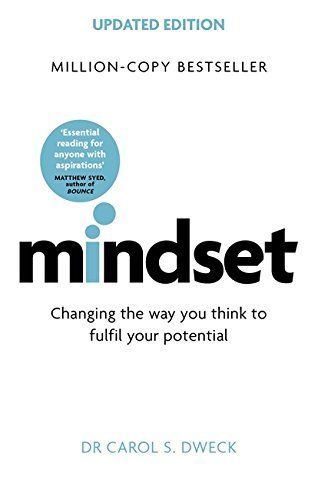
Mindset Book Summary
The New Psychology of Success
Book by Carol Dweck
Feeling Lazy?Read 1 Minute Summary
Summary
Mindset reveals the power of our beliefs to shape our lives, and shows how adopting a growth mindset - the belief that abilities can be developed through dedication and hard work - can help us achieve more than we ever thought possible in every area of life.
Two Mindsets That Shape Our Lives
Dweck proposes that there are two basic mindsets that profoundly influence how we lead our lives - the fixed mindset and the growth mindset. In the fixed mindset, people believe that their qualities and abilities are carved in stone and cannot be changed in any meaningful way. The growth mindset is based on the belief that your basic qualities are things you can cultivate and develop through effort and practice. The view you adopt for yourself profoundly affects the way you lead your life.
Section: 1, Chapter: 1
The Power Of Yet
"Not yet. That's the point. You can still learn. It's not about immediate perfection. It's about learning something over time: confronting a challenge and making progress."
Section: 1, Chapter: 1
Mindsets Influence Relationships And Personal Development
Be aware of how your mindset is influencing your relationships. A growth mindset allows you to appreciate your partner's (or friend's, family member's etc.) ability to grow and change. It also allows for more open communication and ability to deal with conflict.
Recognize that you have a choice in which mindset to adopt. Even if you tend towards a fixed mindset, you can consciously choose to take a growth mindset approach to your abilities, relationships and life in general. Regularly reflect on your mindset and course-correct as needed.
Section: 1, Chapter: 2
Growth-Minded People Embrace Challenges
People with a growth mindset eagerly take on challenges and view failures and setbacks as opportunities for learning and development. They understand that effort and practice are the path to mastery. On the other hand, fixed mindset people shy away from challenges and feel discouraged and defensive in the face of failure. To them, failure indicates lack of ability rather than a need for more learning and effort.
Section: 1, Chapter: 2
Mindset And Relationships Case Study
eck shares the example of Charlene and Max, a couple with compatible interests and attraction but differing expectations in relationships.
- Charlene had a fixed mindset about relationships, believing that a good relationship should be perfect and effortless.
- When Max's moody tendencies emerged, Charlene saw it as an inherent flaw rather than something they could work through together.
- They broke up because they believed their incompatibilities meant the relationship wasn't "meant to be", rather than an opportunity for understanding and growth.
This case study illustrates how a fixed mindset can sabotage relationships.
Section: 1, Chapter: 2
The Dangers Of The Fixed Mindset
Be careful of falling into the traps of the fixed mindset:
- Avoid viewing your abilities and traits as permanent and unalterable. Just because you failed or struggled with something doesn't mean you are "no good at it" now and forever.
- Don't let a need to prove yourself stop you from learning and growing. Prioritize improving your abilities over protecting your ego.
- Don't get discouraged by failure or let it define you. Failure is an event, not a permanent identity.
Section: 1, Chapter: 2
The Myth Of Natural Talent
Many people believe in "naturals" - people endowed with abilities that unfold effortlessly. However, research shows this is largely a myth:
- Prodigies like Mozart had put in extraordinary effort and practice from a very early age. Their special status came from focused early training, not from being born special.
- Charles Darwin was viewed as an ordinary child and only became the revolutionary scientist through years of dedicated work and overcoming challenges.
- "Natural talent" perpetuates a fixed mindset that actually limits the potential of talented people by making them risk-averse and vulnerable to failure.
The truth is, great accomplishment comes through extraordinary effort and persistence, not innate ability. But the myth of natural talent persists because people prefer the idea of giftedness to the "drudgery" of effort
Section: 1, Chapter: 3
Praise The Process, Not Innate Ability
How we praise children profoundly influences their mindset. Praising children's innate abilities ("You're so smart!") reinforces a fixed mindset, while praising their effort, strategies and progress cultivates a growth mindset. Effects of different praise on children:
Ability praise:
- Makes children feel good in the moment but discourages risk-taking and learning
- Leads kids to fear failure and quit in the face of challenges
- Makes kids dishonest about their mistakes in order to maintain the "smart" label
Process praise:
- Encourages kids to seek challenges and persist despite failures
- Makes kids more resilient and likely to improve after setbacks
- Fosters intellectual honesty and openness to feedback
Section: 1, Chapter: 3
Related Content

David and Goliath Book Summary
Malcolm Gladwell
In David and Goliath, Malcolm Gladwell challenges our assumptions about power, advantage, and success, showing how underdogs can triumph by turning their weaknesses into strengths and exploiting the hidden vulnerabilities of the powerful.
In David and Goliath, Malcolm Gladwell challenges our assumptions about power, advantage, and success, showing how underdogs can triumph by turning their weaknesses into strengths and exploiting the hidden vulnerabilities of the powerful.
Psychology
Business
Sociology