
Nexus Book Summary
A Brief History of Information Networks from the Stone Age to AI
Book by Yuval Noah Harari
Summary
In "Nexus: A Brief History of Information Networks from the Stone Age to AI," Yuval Noah Harari explores how the flow and organization of information has shaped human history, arguing that the rise of artificial intelligence could lead to either unprecedented human cooperation or the dominance of digital dictatorships.
I. Human Networks
Stories, Not Representations, Create Human Networks
According to Harari, the defining characteristic of information is not representation, but connection. Stories connect people into networks, even if they don't accurately represent reality. For example, the Bible made factual errors about history and biology, but still managed to connect billions of people into the Jewish and Christian religions.
Similarly, astrology connects people despite its inaccuracies. Even in biology, DNA doesn't represent anything, but rather initiates chemical processes that connect cells into functioning organisms. The power of stories comes from their ability to connect people, not represent truth.
Section: 1, Chapter: 1
What is Information?
"Information isn't the raw material of truth, but it isn't a mere weapon, either. There is enough space between these extremes for a more nuanced and hopeful view of human information networks and of our ability to handle power wisely."
Section: 1, Chapter: 1
Truth Brings Attention To Some Aspects Of Reality While Ignoring Others
When seeking truth, it's important to remember that:
- No account can represent all of reality, it always focuses on some aspects while neglecting others
- There are objective facts that don't depend on beliefs, and errors are possible (e.g. saying Sarah Aaronsohn died in a plane crash in 1919 is simply wrong)
- But reality also includes subjective facts like people's views and feelings, and truth means accurately depicting those views, even if you disagree
- Each individual has a unique perspective shaped by their life experiences
So while some accounts are more truthful than others, no single "Truth" can capture all of reality. Wisdom means humbly seeking to expand your view.
Section: 1, Chapter: 1
The Power Of Branding Historical Figures
Harari illustrates the power of stories to shape perception with the examples of the World War 1 carrier pigeon Cher Ami and the figure of Jesus Christ. Though the details are murky, Cher Ami became the subject of a heroic tale that captured public imagination and made him the world's most famous bird.
Even more dramatically, after his death, Jesus was rebranded from an obscure preacher into the divine Son of God, an idea that changed history and created a vast network of believers. In both cases, the story about the figure became far more impactful than the original facts.
Section: 1, Chapter: 2
Intersubjective Realities Shape The World
Harari outlines three levels of reality:
- Objective reality - things that exist independently of what people think about them, like mountains or asteroids.
- Subjective reality - things that exist only in a person's own mind, like pain or love.
- Intersubjective reality - things that exist within communication networks between many people, like nations, laws, gods and money. These are fictions created by exchanging information.
As human power grows, intersubjective realities become ever more consequential in shaping the "real" world. For example, the intersubjective reality of a state's borders can determine the fate of millions.
Section: 1, Chapter: 2
Ignorance Is Strength For Maintaining Social Order
Throughout history, human networks have developed two distinct and often contradictory skills:
- Using information to discover truth
- Using both truths and fictions to create social order and power structures Quite frequently, it is easier to maintain order through fictions than through truth.
This is why:
- Religions claim to be objective truth rather than human invention
- Nationalism relies heavily on mythologized versions of history
- Autocratic regimes suppress information that threatens their rule
If you want to understand and change human systems, you must appreciate the key role of stories - both truthful and fictional - in creating order and power.
Section: 1, Chapter: 2
Bureaucracy Imposes Artificial Categories On A Messy World
According to Harari, bureaucracy tries to make the world legible and manageable by sorting it into clear conceptual "drawers." But this imposed order often fails to match the real world's complexity. For example:
- Biologists struggle to neatly categorize organisms when species boundaries blur through hybrids, horizontal gene transfer, etc.
- Psychiatrists moved homosexuality in and out of the official list of disorders.
- Universities split knowledge into departments like history, biology and mathematics, but reality doesn't conform to these divisions.
Section: 1, Chapter: 3
Documents Can Create Reality, Not Just Record It
In ancient Assyrian society, loan documents were not just records of debts - they created and sustained the debts. A loan was considered active as long as the clay tablet "lived." If the tablet was destroyed when the debt was repaid, the debt died too, even if the borrower still owed money.
But if a borrower had repaid and the tablet still existed, he was out of luck - the document trumped reality. This power of documents to create facts on the ground still shapes our world today, from property rights to national borders.
Section: 1, Chapter: 3
Art Struggles To Explain Bureaucratic Power
Most enduring stories and plot lines evolved to depict ancient biological dramas like sibling rivalry, the hero defeating the monster, or the struggle for purity. They excel at conveying the dynamics of families, romances, or wars. But bureaucratic power works differently, so artists struggle to dramatize it compellingly. Tips for thinking about bureaucratic power:
- Look for the obscure legal loopholes and procedural details that enable real-world power plays, not just personalities and rhetoric
- Pay attention to unsung bureaucratic achievements like public sanitation that make civilization possible
- Appreciate satires like Catch-22 or The Big Short that expose absurdities of bureaucratic logic
Section: 1, Chapter: 3
The Canonical Bible Emerged From Centuries Of Debate
The Bible is often seen as the direct and unambiguous "word of God." But the canonical Hebrew Bible only emerged after centuries of debate among rabbis over which texts to include. Different sects disagreed for generations - for example, the Dead Sea Scrolls include the Book of Enoch, while the Ethiopian Bible contains books left out of the Catholic and Protestant canons. Rabbis also argued over the interpretation and significance of key passages.
The Bible's authority relies on this human process of curation, even as that process has been largely forgotten.
Section: 1, Chapter: 4
II. The Inorganic Network
III. Computer Politics
Related Content
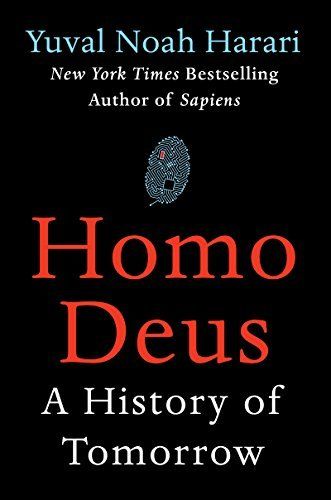
Homo Deus Book Summary
Yuval Noah Harari
Homo Deus explores the future of humanity in a world where the old challenges of famine, plague, and war have been largely conquered, and new godlike technologies of artificial intelligence and bioengineering are on the horizon, forcing us to confront fundamental questions about the nature of consciousness, free will, and what it means to be human in an age of algorithms.
Homo Deus explores the future of humanity in a world where the old challenges of famine, plague, and war have been largely conquered, and new godlike technologies of artificial intelligence and bioengineering are on the horizon, forcing us to confront fundamental questions about the nature of consciousness, free will, and what it means to be human in an age of algorithms.
Futurism
Technology
Humanity
Society
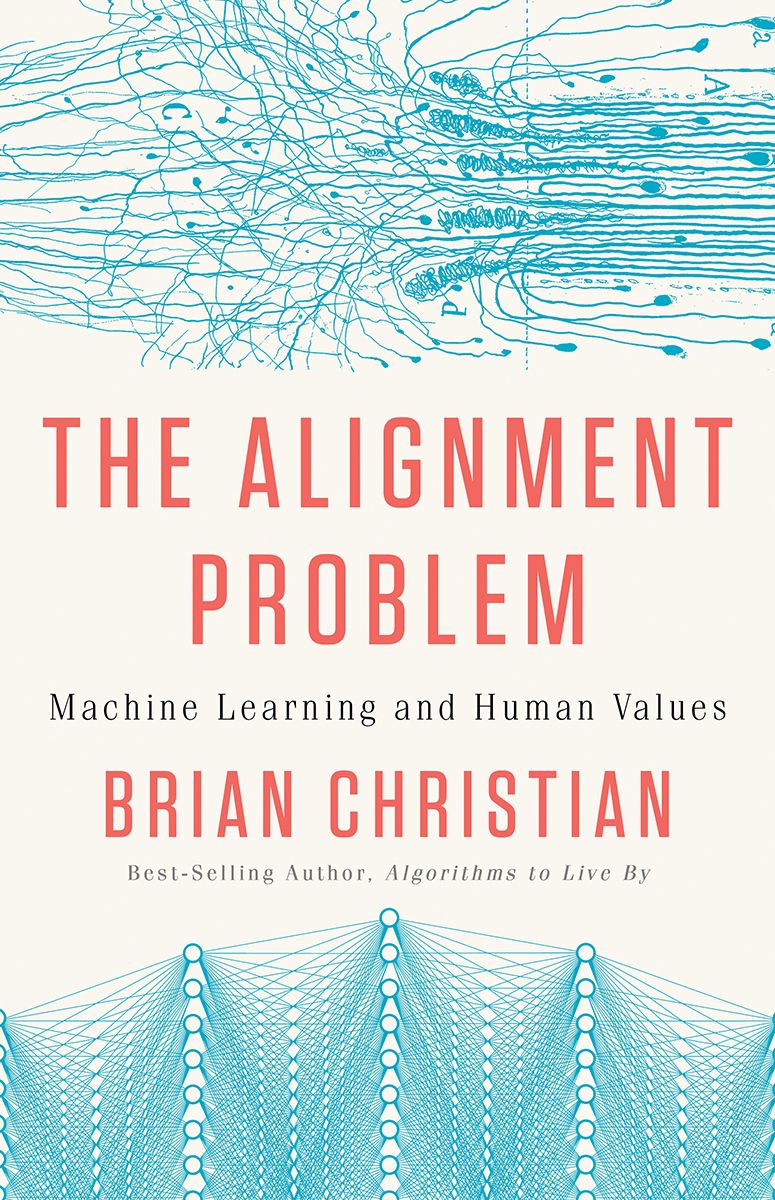
The Alignment Problem Book Summary
Brian Christian
The Alignment Problem explores the challenge of ensuring that as artificial intelligence systems grow more sophisticated, they reliably do what we want them to do - and argues that solving this "AI alignment problem" is crucial not only for beneficial AI, but for understanding intelligence and agency more broadly.
The Alignment Problem explores the challenge of ensuring that as artificial intelligence systems grow more sophisticated, they reliably do what we want them to do - and argues that solving this "AI alignment problem" is crucial not only for beneficial AI, but for understanding intelligence and agency more broadly.
Artificial Intelligence
Computer Science
Futurism