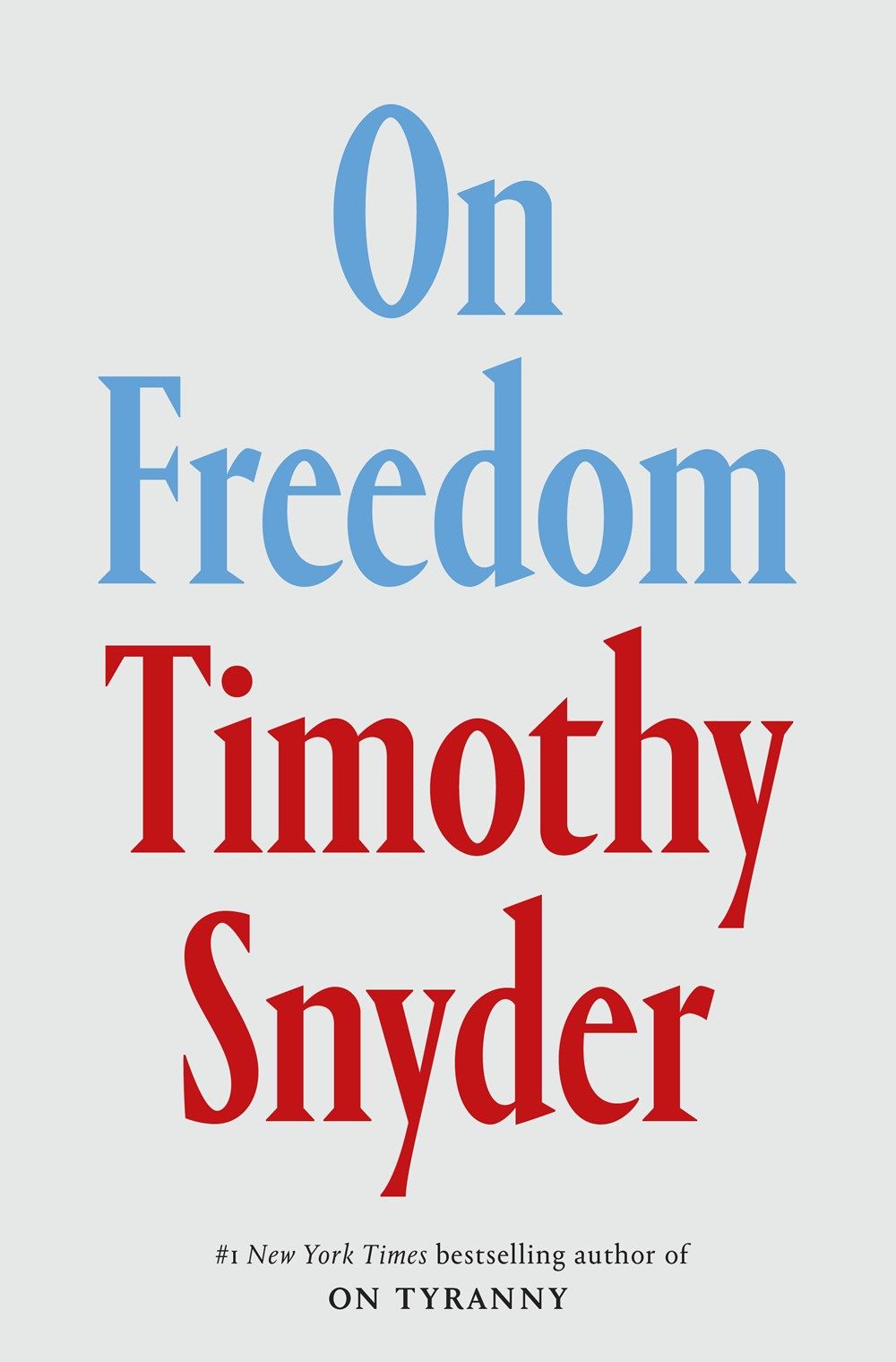
On Freedom Book Summary
Book by Timothy Snyder
Summary
In "On Freedom," Timothy Snyder argues that true freedom is not simply the absence of barriers, but the positive presence of the conditions and capabilities that allow individuals to make meaningful choices, realized through the five interdependent forms of sovereignty, unpredictability, mobility, factuality, and solidarity.
Our Bodies Enable Empathy And Knowledge
According to philosopher Edith Stein, recognizing others as having a living human body (Leib) like our own enables empathy. This empathy is essential for gaining objective knowledge about the world and ourselves. Some key points:
- Seeing others as subjects with their own "zero point" creates a new web of understanding
- Empathy allows us to see ourselves as others see us, giving us knowledge we can't gain alone
- Recognizing others' Leib is key to freedom; seeing them just as objects (Körper) leaves us unfree
"We have to see the bodies of others as subjects, because otherwise we cannot see ourselves as subjects. And if we fail to do that, we cannot be free."
Section: 1, Chapter: 1
The Creation Of Capabilities Belongs To Freedom
Edith Stein argued that developing people's capabilities is essential to freedom. Supporting young children's development - through physical contact, trusting relationships, play, and choices - allows them to gain the attributes needed to be free. Since we can't develop these capacities alone as babies, we owe our freedom to others. "The attributes we need to be free individuals are available to us only through coordinated action. Babies can be raised and educated to become free, but babies cannot create for themselves the setting where this is possible."
Section: 1, Chapter: 1
America's History Of Racism Hinders Freedom For All
The author nearly died in a hospital because doctors dismissed a Black friend who advocated for him, showing how racism makes everyone less free. Other examples:
- The National Housing Act of 1934 only guaranteed mortgages for white families, leading to segregation
- The Wagner Act of 1935 allowed unions to exclude Black workers
- Mass incarceration disproportionately imprisons Black men, teaching white people to define freedom negatively as not being arrested
When white people ignore the bodies and perspectives of Black people, they lose key knowledge for their own freedom and survival. Racism leads people to support policies against their own interests.
Section: 1, Chapter: 1
Viewing Freedom Negatively Endangers Public Health
Conceiving of freedom as just the absence of government intervention has dangerous consequences for public health.
To become healthier and freer, Americans should:
- Embrace a positive definition of freedom that includes access to healthcare for all
- Understand how lack of universal healthcare coverage constrains freedom by making people fearful and limiting their choices
- Recognize that a right to healthcare has a basis in early American thought, as Jefferson considered health second only to ethics
- Advocate for policies expanding access to preventive care, maternal health services, vaccines and public health
Section: 1, Chapter: 1
Seeing Others' Humanity
"We have to see the bodies of others as subjects, because otherwise we cannot see ourselves as subjects. And if we fail to do that, we cannot be free."
Section: 1, Chapter: 1
Freedom Requires Generations Of Work
Achieving freedom takes generational effort - no one is born free. The author illustrates this by describing ringing a bell on his family's farm in the 1976 bicentennial. The gravel road, maple tree swing, and the bell itself were all the result of ancestors' labors. The stories and books passed down to him were chosen by others.
While in that moment his choice to jump off the swing and ring the bell felt like an individual declaration of freedom, reflecting shows how it was enabled by a multigenerational foundation. For any person to develop the capabilities to make such free choices requires the work of previous generations in both families and society.
Section: 1, Chapter: 2
Havel's Greengrocer Shows The Power Of Living In Truth
In his famous 1978 essay "The Power of the Powerless," Czech dissident Václav Havel demonstrates how ordinary people can resist a system of oppression through small acts of truth. His example:
A greengrocer hangs a sign in his shop window proclaiming "Workers of the world, unite!" He doesn't believe the slogan, but hangs it to avoid trouble. One day, he stops hanging the sign - a tiny act of defiance. By rejecting the ritual and "living in truth," he exposes and threatens the whole oppressive system.
For Havel, the powerless greengrocer shows that we always have a choice, however small, to act freely. And in those choices lies the power to create change.
Section: 1, Chapter: 2
Recognizing the Sources of Predictability
"To throw our weight in that direction, to become free, we have to recognize the sources of predictability and our vulnerability to them."
Section: 1, Chapter: 2
Unpredictability Arises From Sovereign People Pursuing Values
Unpredictability, the second form of freedom, emerges when sovereign individuals make choices based on their own unique combination of values. Key points:
- Values exist in a "fifth dimension" with its own logic that can seep into our world
- As we choose values over time, we gain the capacity to combine them in new ways
- Every sovereign person constantly faces choices between values in their own unique circumstances
- When sovereign people interact, they generate societywide unpredictability
This human unpredictability keeps us free from those who would oppress us by making us predictable. "Free people are predictable to themselves but unpredictable to authorities and machines."
Section: 1, Chapter: 2
Related Content
On Tyranny Book Summary
Timothy Snyder
In "On Tyranny," Timothy Snyder draws urgent lessons from the 20th century's bitter experience with tyranny to equip ordinary citizens today with the tools to recognize encroaching authoritarianism and fight back before it's too late.
In "On Tyranny," Timothy Snyder draws urgent lessons from the 20th century's bitter experience with tyranny to equip ordinary citizens today with the tools to recognize encroaching authoritarianism and fight back before it's too late.
History
Politics
Philosophy
Autocracy, Inc. Book Summary
Anne Applebaum
In "Autocracy, Inc.," Anne Applebaum exposes the global web of dictators and their enablers who have formed a corrupt, mutually-supporting network to undermine democracy, repress their citizens, and rewrite the rules of international politics in their favor.
In "Autocracy, Inc.," Anne Applebaum exposes the global web of dictators and their enablers who have formed a corrupt, mutually-supporting network to undermine democracy, repress their citizens, and rewrite the rules of international politics in their favor.
History
Society
Politics
This Changes Everything Book Summary
Naomi Klein
In "This Changes Everything," Naomi Klein argues that the climate crisis challenges us to abandon the core "free market" ideology of our time, restructure the global economy, and remake our political systems - and that in the process, we have the chance to create a safer and more just world.
In "This Changes Everything," Naomi Klein argues that the climate crisis challenges us to abandon the core "free market" ideology of our time, restructure the global economy, and remake our political systems - and that in the process, we have the chance to create a safer and more just world.
Sustainability
Climate Change
Economics
Politics