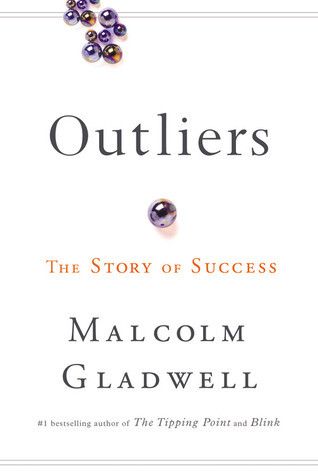
Outliers Book Summary
The Story of Success
Book by Malcolm Gladwell
Summary
Outliers looks into the lives of exceptional individuals, uncovering the often-overlooked factors that contribute to their success. It challenges the notion of the "self-made" individual, highlighting the crucial role of opportunity, cultural legacies, and hidden advantages in shaping the path to achievement.
Forget the simplistic narratives of self-made individuals and innate talent. Success is not solely determined by personal attributes. It's deeply intertwined with the context in which we are born and raised. Our opportunities, cultural background, and even birthdates play a significant, and often underestimated, role in shaping our achievements. This book delves into the hidden advantages and legacies that propel certain individuals to the top, challenging conventional notions of success.
1. Opportunity
The Matthew Effect: How Advantage Accumulates and Creates Outliers
The Matthew Effect, inspired by a biblical verse, highlights the phenomenon of accumulative advantage. Individuals who demonstrate early success are often granted further opportunities that amplify their initial edge, leading to even greater achievements. This creates a snowball effect, where small initial differences are magnified over time, resulting in the emergence of outliers. Examples like Canadian hockey illustrate how arbitrary factors, such as birth month and age cut-offs, can significantly impact long-term success.
Section: 1, Chapter: 1
January Babies and Hockey Success
In Canadian hockey, a disproportionate number of elite players are born in the early months of the year. This is due to the January 1st age cut-off for youth hockey leagues. Players born closer to this date have a physical advantage over their younger peers, leading to increased selection for all-star teams, better coaching, and more practice time. This accumulative advantage compounds over time, resulting in a significant over-representation of January-born players at the highest levels of the sport.
Section: 1, Chapter: 1
10,000 Hours to Mastery: The Role of Practice in Achieving Expertise
Extensive research across various domains, from music to chess to sports, reveals a common thread: achieving world-class expertise requires approximately 10,000 hours of deliberate practice. This challenges the notion of innate talent as the primary driver of success and emphasizes the importance of consistent, dedicated effort in developing mastery.
Section: 1, Chapter: 2
Practice
“Practice isn't the thing you do once you're good. It's the thing you do that makes you good.”
Section: 1, Chapter: 2
The Beatles and the Hamburg Crucible
The Beatles' early success can be attributed, in part, to their extensive performance experience in Hamburg, Germany. Playing for long hours in demanding conditions honed their musical skills, stage presence, and teamwork, laying the foundation for their later achievements. This period of intense practice exemplifies the 10,000-hour rule and demonstrates the crucial role of opportunity in shaping success.
Section: 1, Chapter: 2
Bill Gates and the Lakeside Advantage
Bill Gates's path to success was paved with a series of extraordinary opportunities. Attending Lakeside School, one of the few institutions with a time-sharing computer terminal in the late 1960s, granted him early access to programming and thousands of hours of practice. This unique environment, coupled with his talent and drive, played a pivotal role in his rise to prominence in the software industry.
Section: 1, Chapter: 2
Beyond IQ: Rethinking Our Obsession with Genius
Our fascination with geniuses often leads us to equate intelligence with success. However, research suggests that while IQ is important up to a certain threshold, beyond that point, other factors play a more significant role in determining achievement. This challenges the notion that exceptionally high IQ guarantees success and encourages a broader perspective on the qualities that contribute to outstanding accomplishments.
Section: 1, Chapter: 3
Smart Enough is All You Need
Studies have shown that the correlation between IQ and success diminishes beyond an IQ of around 120. This suggests a threshold effect, where individuals above this level possess sufficient intelligence to excel, and additional IQ points do not translate into a significant advantage in real-world achievements.
Section: 0, Chapter: 3
Where Nobel Prize Winners Went to College
Contrary to popular belief, Nobel Prize winners in science do not exclusively come from the most prestigious universities. A significant number of laureates received their undergraduate degrees from lesser-known colleges, highlighting that attending an elite institution is not a prerequisite for achieving the highest levels of success in these fields.
Section: 1, Chapter: 3
2. Legacy
Related Content
Range Book Summary
David Epstein
"Range" challenges the conventional wisdom that early specialization is the key to success. Instead, Epstein argues that in our increasingly complex and unpredictable world, it is those with broad experience and diverse skills who are best equipped to thrive.
"Range" challenges the conventional wisdom that early specialization is the key to success. Instead, Epstein argues that in our increasingly complex and unpredictable world, it is those with broad experience and diverse skills who are best equipped to thrive.
Personal Development
Learning
Psychology