Summary
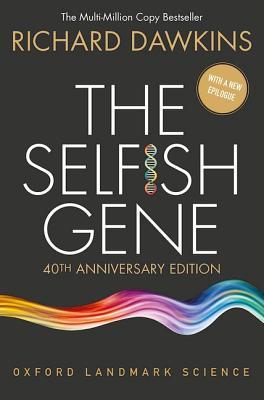
"The Selfish Gene" revolutionizes our understanding of evolution by arguing that genes, not individuals or species, are the fundamental units of natural selection, driving the behaviors and adaptations we observe in living organisms through their relentless pursuit of self-replication.
The Primacy of Natural Selection
Darwin's theory of evolution by natural selection is the only known explanation for the existence of life that can account for its complexity. The chapter argues that natural selection operates at the level of genes, not species or groups. This gene-centric view helps explain behaviors that may seem altruistic but actually serve to propagate an organism's genes.
Section: 1, Chapter: 1
Misconceptions About Group Selection
Dawkins systematically dismantles the theory of group selection, which suggests that organisms act for the good of their species. He points out several flaws in this thinking, such as the inability to explain how altruistic traits would initially spread within a population.
The author argues that selfish individuals would invariably outcompete altruistic ones within a group, and there's no clear mechanism to prevent "cheating" in a group-selection model. Instead, Dawkins proposes that gene-level selection provides a more robust and logically consistent explanation for observed behaviors in nature, including those that appear altruistic on the surface.
Section: 1, Chapter: 1
The Power of Cumulative Selection
To illustrate the power of cumulative selection versus pure chance, Dawkins employs the analogy of monkeys typing Shakespeare. While the odds of monkeys randomly producing a coherent phrase from Shakespeare are astronomically low, a process that builds on small improvements each generation can produce complex adaptations relatively quickly.
This analogy serves to demonstrate how natural selection operates to create the appearance of design in nature, without the need for a conscious designer. The author uses this example to bridge the gap between the seemingly impossible complexity of life and the gradual, cumulative power of natural selection acting on genes over millions of years.
Section: 1, Chapter: 1
The Origin of Life
This chapter delves into the hypothetical origins of life on Earth, exploring how the first self-replicating molecules might have arisen in the "primordial soup" of the early planet. Dawkins describes how these simple replicators would have competed for resources, with more efficient replicators outcompeting others. Over time, these replicators developed increasingly complex "survival machines" (bodies) to help them reproduce more effectively. The author draws a direct line from these primordial replicators to modern genes, establishing them as the fundamental units of evolution and the driving force behind all life on Earth.
Section: 1, Chapter: 2
Qualities of Successful Replicators
Dawkins identifies three key characteristics that define successful replicators: longevity, fecundity, and copying-fidelity. Longevity refers to the ability to persist for long periods, allowing more opportunities for replication. Fecundity is the capacity to make many copies of itself, increasing the replicator's presence in the population.
Copying-fidelity ensures that the replicator can be copied accurately, preserving its structure and properties across generations. The author argues that replicators possessing these qualities would inevitably come to dominate the gene pool over time, driving the evolution of increasingly complex and efficient survival machines.
Section: 1, Chapter: 2
The Mechanics of Genetic Inheritance
Chapter 3 provides a detailed exploration of how genes are passed down through generations. Dawkins explains key concepts such as chromosomes, alleles, and the process of meiosis, which creates gametes with unique genetic combinations.
He emphasizes that while individual bodies are temporary vehicles, genes have the potential for immortality by being copied and passed on indefinitely. This chapter lays the groundwork for understanding the complex interplay between genes and the organisms they construct, setting the stage for later discussions on gene cooperation and competition.
Section: 1, Chapter: 3
Introducing the Extended Phenotype
In this chapter, Dawkins introduces the groundbreaking concept of the extended phenotype, which will be fully developed later in the book. This idea challenges the traditional view that genes only affect the body they're in, proposing instead that a gene's effects can extend far beyond the individual organism.
The author provides examples such as beaver dams, which can be seen as extended phenotypes of beaver genes, and parasites that manipulate host behavior. This concept has profound implications for our understanding of how natural selection operates, encouraging readers to consider the broader environmental impacts of genetic evolution. The extended phenotype idea serves as a powerful tool for reframing our perspective on the relationship between genes, organisms, and their environments.
Section: 1, Chapter: 3
The Body as a Survival Machine
Dawkins introduces the concept of the body as a "survival machine" for genes. He explains that organisms are intricate, purposeful constructions designed to propagate the genes they contain. The chapter explores how genes influence behavior through their effects on the nervous system, drawing analogies between animal bodies and man-made machines. While genes "program" the overall structure and function of the body, they do not directly control moment-to-moment actions.
Section: 1, Chapter: 4
The Illusion of Central Control
The author challenges the notion of a centralized "self" controlling the body. Instead, he proposes that behavior emerges from the complex interactions of genes, neurons, and environmental stimuli. This decentralized view of behavior has several implications:
- There is no single "control center" in the brain
- Behavior is the result of competing genetic influences
- The appearance of purposeful action arises from underlying genetic programming
- Consciousness and free will may be illusory byproducts of this system
This perspective encourages us to reconsider their understanding of agency and decision-making in both humans and animals.
Section: 1, Chapter: 4
Related Content

The Sixth Extinction Book Summary
Elizabeth Kolbert
In "The Sixth Extinction," Elizabeth Kolbert takes us on a riveting journey through the tumultuous history of life on Earth, revealing how human activity is driving a catastrophic modern extinction event that may ultimately imperil our own survival.
In "The Sixth Extinction," Elizabeth Kolbert takes us on a riveting journey through the tumultuous history of life on Earth, revealing how human activity is driving a catastrophic modern extinction event that may ultimately imperil our own survival.
Nature
History
Climate Change