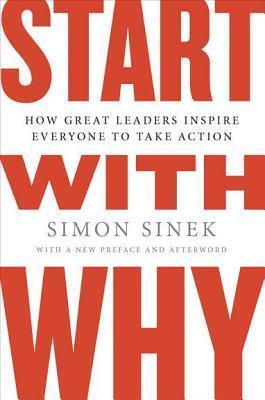
Start With Why Book Summary
How Great Leaders Inspire Everyone to Take Action
Book by Simon Sinek
Summary
Start with Why offers a powerful framework for how leaders and organizations can inspire others, build trust and loyalty, and achieve long-term success by clearly articulating and staying true to their purpose, cause or belief.
1. A World That Doesn't Start With Why
Decisions Based On False Assumptions Can Lead Us Astray
Many of the decisions and assumptions we make are based on incomplete or false information. Our behavior is affected by our assumptions, even when based on incomplete information. This can lead entire companies and organizations to make poor decisions, by starting with flawed assumptions. The key is to understand the true reasons behind why we do what we do.
Section: 1, Chapter: 1
"If I Had Asked People What They Wanted, They Would Have Said A Faster Horse"
"If I had asked people what they wanted," Henry Ford said, "they would have said a faster horse."
Customers don't always know what they want. Truly innovative companies like Apple under Steve Jobs don't just respond to existing customer desires - they create new products that customers didn't even know they needed. Great leaders are able to see what most of us can't see. They give us things we would never think to ask for.
Section: 1, Chapter: 1
Manipulation Through Promotions, Fear, Aspirations And Peer Pressure
Many companies rely on manipulations to motivate customer behavior and drive sales. Typical manipulations include:
- Dropping prices through promotions and rebates
- Using fear-based messaging like "your health is at risk unless you buy our product"
- Aspirational messages that play on fantasies and insecurities
- Leveraging peer pressure by claiming "experts agree" or "everyone else is buying it"
While effective in the short term, manipulations do not breed loyalty and trust. Costs keep increasing as bigger and bigger carrots and sticks are needed over time. It's an unsustainable and stressful strategy for both companies and consumers in the long run.
Section: 1, Chapter: 2
The Price You Pay For The Money You Make
Manipulations like price drops, promotions, fear tactics and peer pressure marketing can certainly drive short-term transactions and sales. But there is always a price to pay for the money you make using these techniques:
- Costs keep increasing as you rely more and more on manipulations
- Loyalty and trust are eroded over time as customers feel tricked
- Stress increases for both company and customer in an unending struggle
- The pattern repeats in a downward spiral as manipulations are the only way forward
If you're just focused on short-term gain, manipulations can work. But to build an enduring and loyal customer base, a deeper sense of purpose and trust is needed beyond carrots and sticks. Starting with WHY provides an alternative path.
Section: 1, Chapter: 2
2. An Alternative Perspective
The Golden Circle - A Naturally Occurring Pattern
The Golden Circle is a naturally occurring pattern grounded in the biology of human decision making. The Golden Circle contains three layers:
- The outside layer is "What" - Every organization knows WHAT they do, the products they sell or services they offer.
- The middle layer is "How" - Some organizations know HOW they do what they do - their unique differentiators, proprietary process or value proposition.
- The innermost layer is "Why" - Very few organizations can clearly articulate WHY they do what they do. WHY is a purpose, cause or belief. It provides a clear answer to: Why do you get out of bed in the morning? Why should anyone care?
Most organizations communicate from the outside-in, telling people WHAT they do, HOW they are better, then expecting a behavior like a purchase. But inspired organizations start with WHY at the center, then flow outward to HOW and WHAT. When WHY is clearly communicated, WHAT you do serves as tangible proof of that belief.
Section: 1, Chapter: 3
People Don't Buy What You Do, They Buy Why You Do It
Consider an advertising message from Apple if they started with their WHAT: "We make great computers. They're user friendly, beautifully designed, and easy to use. Want to buy one?" It's not very compelling.
But Apple actually communicates from the inside out, starting with their WHY: "With everything we do, we aim to challenge the status quo. We aim to think differently. Our products are user friendly, beautifully designed, and easy to use. We just happen to make great computers. Want to buy one?"
The second version is more compelling because it starts with WHY - a purpose or belief. The products (WHAT Apple makes) serve as tangible proof of the WHY. For people who share those beliefs, Apple products become a symbol of their own values and desires.
Section: 1, Chapter: 3
Why Did The Wright Brothers Succeed Where Others Failed?
Samuel Pierpont Langley had a goal in the early 1900s to be the first man to fly an airplane. He was given $50,000 in grants, had a dream team of the best minds money could buy, and the market conditions were perfect. But we don't remember him because ultimately, he failed to get a flying machine off the ground.
On the other hand, Orville and Wilbur Wright had none of Langley's resources or funding. What they did have was a burning passion and belief - they inspired the public and their team with a dream that if they could create this flying machine, it would change the world. With an inspired team who shared their beliefs, the Wright brothers persevered through failure after failure, and ultimately did change the world.
The Wright brothers started with WHY - a purpose and cause that drove them. Langley started with WHAT - the fame and riches that success would bring. That's why today we remember the Wright brothers and have never heard of Samuel Pierpont Langley.
Section: 1, Chapter: 3
Apple And The Celery Test
Apple not only communicates from the inside out, starting with WHY, but everything they do - their products, packaging, advertising, stores, etc - all serve as further proof of their WHY. Let's apply The Celery Test - if you're buying celery and rice milk at the grocery store, it's clear that you value health. Everything you say and do "proves" that you believe in healthy eating.
Similarly, Apple believes in challenging the status quo and thinking differently. Every product they release, from computers to iPods to iPhones, challenges the conventional thinking in that industry. Apple's marketing and messaging is aspirational and iconoclastic. Even their stores, with open layouts and approachable staff, aim to make technology less intimidating. Regardless of WHAT Apple makes, it always starts with WHY - and that clear sense of purpose inspires loyalty from customers and employees alike.
Section: 1, Chapter: 3
The Limbic Brain - The Powerful "Feeling" Part Of Our Brain
The limbic brain is the middle section of our brain responsible for all our feelings, like trust and loyalty. It's also responsible for all human behavior and decision making. However, the limbic brain has no capacity for language.
When people make decisions, they rely on their limbic brain much more than the rational neo-cortex. That's why we struggle to put our feelings into words - the part of the brain that controls language is separate from the part that controls behavior.
So when a company communicates from the outside-in, starting with WHAT, they appeal only to the rational neo-cortex. But when a company starts with WHY, they talk directly to the limbic brain that controls decision making. Even if a person can't put their feelings into words, they will still "feel" right about a decision that aligns with their WHY.
Section: 1, Chapter: 4
3. Leaders Need a Following
4. How To Rally Those Who Believe
5. The Biggest Challenge is Success
Related Content
The Innovator's Dilemma Book Summary
Clayton M. Christensen
"The Innovator's Dilemma" unveils a paradoxical truth: successful companies are often perfectly positioned to fail. Established firms can become blindsided by disruptive technologies that reshape industries. This book offers a framework for navigating these disruptive threats, urging companies to embrace new market opportunities and transform themselves to thrive in the face of inevitable change.
"The Innovator's Dilemma" unveils a paradoxical truth: successful companies are often perfectly positioned to fail. Established firms can become blindsided by disruptive technologies that reshape industries. This book offers a framework for navigating these disruptive threats, urging companies to embrace new market opportunities and transform themselves to thrive in the face of inevitable change.
Business
Innovation
Management
Crossing the Chasm Book Summary
Geoffrey Moore
"Crossing the Chasm" unveils the hidden challenges of launching disruptive technologies and provides a proven roadmap for navigating the treacherous gap between early adopters and mainstream markets, enabling companies to achieve market leadership and sustainable growth.
"Crossing the Chasm" unveils the hidden challenges of launching disruptive technologies and provides a proven roadmap for navigating the treacherous gap between early adopters and mainstream markets, enabling companies to achieve market leadership and sustainable growth.
Business
Management
Technology