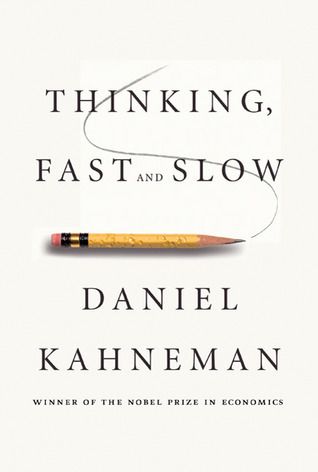
Thinking Fast and Slow Book Summary
Book by Daniel Kahneman
Summary
Kahneman explores the two systems that drive the way we think: the intuitive, automatic System 1 and the deliberate, analytical System 2. It explores how these systems shape our judgments, decisions, and biases, revealing the surprising power of intuition and the pitfalls of overconfidence.
Two Systems
Our minds operate using two distinct systems: System 1 and System 2. System 1 is fast, intuitive, and operates automatically. It's responsible for quick judgments, emotional reactions, and effortless actions like reading words or recognizing faces. System 2 is slower, more deliberative, and requires effort. It handles complex calculations, logical reasoning, and conscious choices. While System 2 may seem like the leader, it often endorses the suggestions of System 1, which does most of the heavy lifting in our daily lives.
Introducing the two systems of your mind
Our minds are governed by two distinct systems, each with its own unique characteristics and functions.
System 1: This system operates automatically and quickly, with little or no effort and no sense of voluntary control. It's responsible for our gut feelings, intuitions, and quick reactions. Examples of System 1 in action include recognizing faces, detecting emotions in voices, and understanding simple sentences.
System 2: This system is slower and more deliberate, requiring attention and effort. It's responsible for complex calculations, reasoning, and decision-making. Examples of System 2 in action include solving math problems, comparing products, and parking in a tight space.
These two systems work together to navigate the complexities of the world, with System 1 constantly generating suggestions for System 2 to either accept or reject.
Section: 1, Chapter: 1
System 2 and Mental Effort
Mental effort, much like physical exertion, comes at a cost. We tend to follow the 'law of least effort,' gravitating toward the least demanding course of action to achieve our goals. Activities that require us to hold multiple ideas in mind, follow rules, compare objects, or make deliberate choices are more effortful and require the engagement of System 2.
System 2 has a limited capacity for effortful activities. When overloaded, it prioritizes the most important activity, allocating 'spare capacity' to other tasks on a second-by-second basis. This is why we may miss seemingly obvious events when focused on a demanding task, like the gorilla walking across the basketball court in the famous experiment.
Section: 1, Chapter: 2
The Power of System 1: The Invisible Gorilla in the Room
The automatic and unconscious nature of System 1 can lead to surprising mental phenomena, such as inattentional blindness. A famous example is the "invisible gorilla" experiment, where viewers were instructed to focus on counting basketball passes in a video. During the video, a person in a gorilla suit walks across the scene, yet many viewers fail to notice it due to their focused attention on the counting task. This demonstrates how we can be blind to the obvious, even when it's right in front of us, highlighting the power and limitations of System 1.
Section: 0, Chapter: 1
Ego Depletion and willpower
Exerting self-control is mentally tiring and depletes a shared pool of mental energy. This phenomenon is known as ego depletion. After a demanding task requiring self-control, we are less willing and able to exert self-control in subsequent challenges. Interestingly, research suggests that replenishing glucose levels can help restore self-control, highlighting the connection between mental energy and physical resources.
Section: 1, Chapter: 3
Priming: The Unseen Forces That Shape Our Thoughts and Actions
Priming refers to the phenomenon where exposure to a stimulus influences our response to a subsequent stimulus, often without our awareness. For example, being exposed to words related to old age can unconsciously prime us to walk more slowly, and reminders of money can make us more individualistic and less helpful to others. These priming effects highlight the hidden influences that shape our thoughts and behaviors, often originating from System 1 processes.
Section: 1, Chapter: 4
Cognitive Ease: Why We Believe What Feels Familiar
Cognitive ease refers to the fluency with which our minds process information. When we experience cognitive ease, we tend to feel good, trust our intuitions, and accept information as true. This can lead to illusions of truth, where repeated exposure to a statement makes it feel more familiar and therefore more believable, even if it's false. Factors like clear fonts, simple language, and positive moods can induce cognitive ease, influencing our judgments and beliefs.
Section: 1, Chapter: 5
The Effect of Repetition
“A reliable way to make people believe in falsehoods is frequent repetition, because familiarity is not easily distinguished from truth. Authoritarian institutions and marketers have always known this fact.”
Section: 1, Chapter: 5
Assessing Normality: How We Recognize the Expected and the Unexpected
Our minds constantly strive to create a coherent and predictable model of the world. System 1 plays a crucial role in this process by:
Building Associations: It links ideas of circumstances, events, actions, and outcomes that frequently co-occur.
Forming Expectations: Based on these associations, it establishes a sense of what is normal and expected in various situations.
Detecting Anomalies: When something doesn't fit the established model, System 1 registers surprise and prompts System 2 to investigate further.
For example, encountering an acquaintance repeatedly in unusual locations may lead System 1 to adjust its expectations, making future encounters seem less surprising. Similarly, witnessing someone wince after tasting soup creates a context that makes subsequent unusual reactions from other diners seem more normal.
Section: 1, Chapter: 6
Seeking Coherence: The Automatic Search for Causes and Intentions
As part of creating a coherent understanding of the world, System 1 automatically seeks to identify causes and intentions behind events.
Causal Reasoning: System 1 excels at finding causal connections, even when they may be spurious. For instance, news headlines often attribute market fluctuations to major events, regardless of the actual cause.
Intentional Reasoning: Similarly, System 1 readily attributes intentions and emotions to agents, even in the absence of concrete evidence. This is evident in our interpretation of simple geometric shapes moving on a screen as displaying aggression, fear, or cooperation.
The Illusion of Causality: We often see causality even where it doesn't exist. Michotte's experiments, where moving squares created an illusion of one square launching another, demonstrate this tendency.
These automatic causal and intentional interpretations contribute to our understanding of stories and events, but they can also lead to biases and misinterpretations.
Section: 1, Chapter: 7
Jumping to Conclusions: The Efficiency and Perils of System 1
"Jumping to conclusions is efficient if the conclusions are likely to be correct and the costs of an occasional mistake acceptable, and if the jump saves much time and effort. Jumping to conclusions is risky when the situation is unfamiliar, the stakes are high, and there is no time to collect more information."
Section: 1, Chapter: 7
Embracing Uncertainty: Why Doubt and Ambiguity
System 1 has a bias toward believing and confirming existing beliefs, while System 2 is responsible for doubt and skepticism. However, System 2's laziness often leads to uncritical acceptance of System 1's suggestions. This can result in:
Confirmation Bias: We tend to seek and interpret information that confirms our existing beliefs, while ignoring or downplaying contradictory evidence.
Overconfidence: We often overestimate the accuracy of our judgments and beliefs, failing to consider the limitations of our knowledge.
The Halo Effect: Our overall impression of a person or situation can bias our evaluation of their specific traits and qualities.
To mitigate these biases, it is crucial to engage System 2 and actively seek out disconfirming evidence, consider alternative perspectives, and acknowledge the limitations of our knowledge.
Section: 1, Chapter: 8
Heuristics: Shortcuts that Guide Our Decisions
When faced with difficult questions, System 1 often employs heuristics, mental shortcuts that provide quick and efficient answers.
Substitution: If a direct answer is not readily available, System 1 substitutes an easier, related question. For instance, when asked about our overall life satisfaction, we might answer based on our current mood.
The Affect Heuristic: Our emotions and feelings of like or dislike often guide our judgments and decisions, leading to biases and inconsistencies.
Representativeness: We judge the probability of something belonging to a category based on how well it matches the typical features of that category, often neglecting base-rate information.
Availability: We estimate the frequency or likelihood of events based on how easily we can recall or imagine similar events.
While heuristics can be useful in many situations, it's important to be aware of their limitations and potential biases. By understanding how heuristics work, we can improve our decision-making and avoid common errors in judgment.
Section: 1, Chapter: 9
Heuristics and Biases
How We Misunderstand Chance and Coincidence
The human mind struggles with truly random events because it yearns for cause-and-effect explanations for everything. We often perceive patterns and meaning where none exist, leading to predictable biases in judgment. This is especially evident when dealing with small sample sizes.
The Law of Small Numbers: We tend to believe that small samples accurately represent the larger population from which they are drawn. This leads to overestimating the reliability of information based on limited data.
Misinterpreting Randomness: We often see patterns and order in random sequences, leading to beliefs like the "hot hand" in basketball or suspicions of hidden causes in seemingly irregular distributions.
Neglecting Base Rates: When presented with specific information about an individual case, we tend to ignore the underlying base rates (the proportion of a particular category within a larger population). This leads us to make inaccurate predictions, such as in the Tom W problem, where we focus on Tom's personality description and neglect the base rates of different graduate specializations.
Section: 2, Chapter: 10
How Our Minds Get Tricked by Anchoring
Anchoring is a cognitive bias where our estimates for an unknown quantity are influenced by an initial value, even if that value is arbitrary or irrelevant. This bias occurs due to two mechanisms:
Anchoring as Adjustment: We start with an initial anchor and make adjustments, but these adjustments are often insufficient, leading to estimates that are biased toward the anchor. For example, estimating the height of a line drawn on a page is influenced by whether you start from the top or bottom of the page.
Anchoring as Priming: The anchor primes related ideas in our minds, leading us to selectively retrieve evidence that is consistent with the anchor. This can explain why we are influenced by even obviously random anchors, such as the spin of a wheel of fortune or the last digits of our social security number.
Section: 2, Chapter: 11
Why we overestimate the likelihood of unlikely events
The tendency to overestimate the likelihood of unlikely events stems from several cognitive biases, including:
Confirmation Bias: When considering the probability of an event, we often search for and focus on information that confirms our existing beliefs while ignoring or downplaying contradictory evidence.
Availability Heuristic: Events that are easily recalled or imagined, often due to their vividness or emotional impact, are judged as more probable than events that are harder to bring to mind.
The Focusing Illusion: We tend to overestimate the importance of the aspects of an event or situation that are currently in focus, while neglecting other relevant factors.
Section: 0, Chapter: 13
The Power of Framing Effects
Framing effects refer to how the way information is presented influences our decisions, even when the underlying options remain the same. For example, ground beef described as "75% lean" appears more appealing than when it is described as "25% fat," even though both descriptions convey the same information.
Section: 2, Chapter: 14
The Availability Heuristic
The availability heuristic is a mental shortcut where we judge the frequency or likelihood of events based on how easily we can recall examples. This leads to predictable biases:
Vividness and Emotional Impact: Events that are vivid, recent, or emotionally charged are more easily recalled and therefore seem more likely or frequent. For example, plane crashes and terrorist attacks receive extensive media coverage, leading us to overestimate their actual risk compared to more common but less dramatic causes of death, such as car accidents or heart disease.
Ease of Retrieval: The ease with which we can retrieve examples also depends on the way we search our memory. For instance, it's easier to think of words that begin with a certain letter than words that have that letter in the third position, leading us to overestimate the frequency of words that begin with that letter.
Section: 2, Chapter: 12
Overconfidence
Choices
For almost 300 years, economists have relied on the work of Daniel Bernoulli to explain how people make decisions. Bernoulli assumed that people are rational and always seek to maximise their wealth. He believed that the more money a person has, the happier they are. However, this view is demonstrably false.
Kahneman's work with Amos Tversky showed that human choices systematically violate the axioms of rational choice in several ways.
People don't think in terms of total wealth: They think in terms of gains and losses, relative to a reference point, usually the status quo.
Loss aversion: People are more sensitive to losses than to gains of the same magnitude. They dislike the idea of losing $100 more than they like the idea of winning $100.
Diminishing sensitivity: People are less sensitive to changes at high levels than to changes at low levels. The difference between $100 and $200 seems larger than the difference between $1,100 and $1,200
Framing effects: How a decision is framed or described influences people’s choices, even if the underlying options are the same. For example, people are more likely to choose a surgery if the outcome is described as having a 90% survival rate than a 10% mortality rate, though both are the same
The certainty effect: People overweight outcomes that are certain, relative to outcomes that are merely probable
The possibility effect: People overweight outcomes that are merely possible, relative to outcomes that are impossible
Two Selves
Related Content
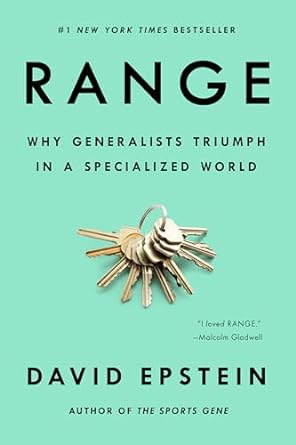
Range Book Summary
David Epstein
"Range" challenges the conventional wisdom that early specialization is the key to success. Instead, Epstein argues that in our increasingly complex and unpredictable world, it is those with broad experience and diverse skills who are best equipped to thrive.
"Range" challenges the conventional wisdom that early specialization is the key to success. Instead, Epstein argues that in our increasingly complex and unpredictable world, it is those with broad experience and diverse skills who are best equipped to thrive.
Personal Development
Learning
Psychology