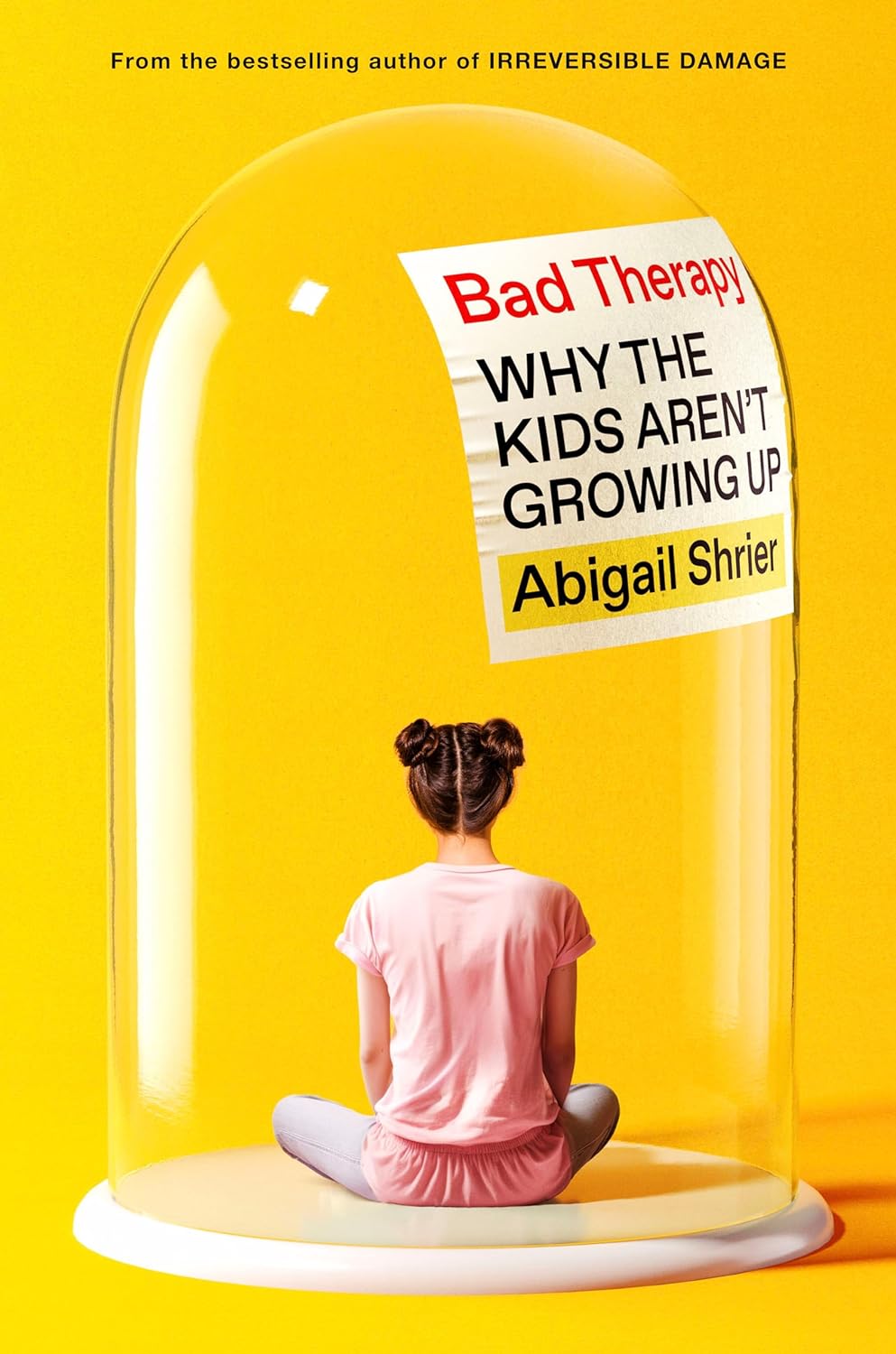
Bad Therapy Book Summary
Why the Kids Aren't Growing Up
Book by Abigail Shrier
Feeling Lazy?Read 1 Minute Summary
Summary
In "Bad Therapy," journalist Abigail Shrier argues that today's pervasive "therapeutic" culture and overzealous mental health interventions are harming young people by promoting learned helplessness, pathologizing normal emotions, and inhibiting the development of resilience.
1. Healers Can Harm
Parenting In An Era Of Widespread Therapy
The introduction discusses how the author's son was subjected to an intrusive mental health screening when taken to the doctor for a stomachache. This incident made the author realize how prevalent therapeutic interventions have become for today's children, even when not clinically indicated.
The author argues that in the past 75 years, mental health treatment has rapidly expanded to now routinely encompass children and adolescents. Despite more therapy than ever before, rates of anxiety, depression and mental illness in young people have paradoxically worsened over recent generations. The introduction sets up the book's core argument that therapeutic culture and overzealous mental health interventions may actually be harming kids.
Section: 1, Chapter: 0
The Loneliest And Most Anxious Generation
The rising generation, despite receiving unprecedented mental health accommodations and resources, has become the loneliest, most anxious, depressed, pessimistic, and helpless cohort on record. 42% have a diagnosed mental illness. Therapists insist this is because young people face more stressors than ever, like smartphones, the pandemic, and climate change. But the author argues youth mental health has been declining for decades before these factors. She believes the real problem may be the mental health system itself - convincing kids they are disordered, inculcating feelings of helplessness, and inhibiting normal development.
Section: 1, Chapter: 0
Therapy Can Help, But Crucially, It Can Also Harm
While therapy has the potential to provide relief for mental health issues, it's critical to recognize it also carries risks of harm (iatrogenesis). Potential negative effects include:
- Convincing a patient they are sick and organizing their identity around a diagnosis
- Encouraging family estrangement and loss of key support systems
- Reducing resilience and self-efficacy
- Retraumatizing a patient
- Fostering excessive dependence on the therapist
Especially for children, the power imbalance between therapist and patient makes them vulnerable to harm. Parents should carefully weigh risks and only pursue therapy for kids if clearly needed.
Section: 1, Chapter: 1
More Treatment Has Not Meant Less Mental Illness
Despite a 75-year surge in mental health treatment availability and sophistication, rates of anxiety and depression in young people have swelled. A "treatment-prevalence paradox" has emerged, where expanded access to therapy and medication has not reduced mental illness prevalence as expected.
Therapists argue this is because today's youth face unprecedented stressors compared to previous generations, such as smartphones, social media, the COVID-19 pandemic and lockdowns, and climate change fears. But the author contends that adolescent mental health has been slipping since the 1950s, long before these modern issues existed. She suggests that perhaps the mental health complex itself, in pathologizing normal stress, inhibiting coping skills, and creating dependence, is part of the problem rather than the solution.
Section: 1, Chapter: 12
Gen Z: The Most Fearful Generation
Psychologist Jean Twenge's research shows Gen Z is radically different from prior generations. They are:
- Far less likely to hit traditional milestones like dating, getting a driver's license, or holding a job
- More obedient to authority and politically radical, favoring far-left positions
- Deeply pessimistic about their personal potential and the world's trajectory; convinced of their own helplessness and an external locus of control
- Uncomfortable with in-person interaction and spend less time socializing
Twenge posits constant monitoring by hovering parents and schools, exposure to an unrelenting stream of negativity, and lack of independence may all be factors in this generation's unprecedented fragility and external locus of control.
Section: 1, Chapter: 2
Don't Look To Feelings As A Reliable Guide
Therapy often teaches kids to see their feelings as a valid and important signal. But feelings can be unreliable and manipulable, according to Dr. Yulia Chentsova Dutton. She argues emotions don't necessarily reflect reality and can lead us astray if followed uncritically.
Asking kids repeatedly how they're feeling has downsides. Dr. Michael Linden argues it inherently elicits negative responses, as most of the time we feel "just okay" while ignoring minor discomforts. Chentsova Dutton says focusing on momentary emotional states promotes an unhelpful "state orientation" vs the "action orientation" needed for achievement. For emotional regulation and success, kids need to be taught to be sometimes skeptical and dismissive of passing feelings.
Section: 1, Chapter: 3
The Proper Response To Trauma May Be Not Talking About It
Dr. Richard Byng runs a program helping ex-convicts, many of whom experienced severe childhood trauma, reintegrate into society. But he's found constantly probing their traumatic memories to be counterproductive. "Quite the opposite," he argues. For those with trauma, the healthiest approach is often to acknowledge it briefly, then pivot to focusing on the present.
Byng criticizes a culture of therapy that assumes everyone benefits from talking through their pain. The insistence on "processing" can make trauma loom larger. Some do best moving forward without dwelling on the past. Even for the traumatized, a level of healthy repression is often necessary to functioning.
Section: 1, Chapter: 3
Good Therapy Doesn't Create Disorder Where None Exists
"Ortiz absolutely believes in the ameliorative power of specific kinds of therapies, especially cognitive-behavioral and dialectical behavior therapies (known as CBT and DBT) for remediating specific ailments like tic disorders, affective disorders, and obsessive-compulsive disorder... But he has enough respect for the power of therapy to reject the idea that everyone should be in therapy, a notion Ortiz likens to a surgeon who ventures: Well, he looks healthy, but let's open him up and see what we find."
Section: 1, Chapter: 3
2. Therapy Goes Airborne
Social-Emotional Learning: Therapy Disguised As Education
Social-emotional learning (SEL) has become a pervasive part of school curricula, aiming to teach kids "self-awareness," "social awareness," "relationship skills," "self-management," and "responsible decision-making." In practice, this often involves teachers eliciting highly personal information from students, documenting it, and providing feedback.
Despite claims it improves behavior and achievement, many teachers report SEL induces emotional dysregulation in students. Lacking therapists' training and ethical boundaries, educators are ill-equipped to manage the fallout. Rather than boosting learning as promised, SEL disrupts it with psychological meddling of dubious benefit.
Section: 2, Chapter: 4
SEL Undermines Parent-Child Relationships
Across SEL curricula, a troubling theme emerges: encouraging students to question their parents' judgment and cast them as obstacles to their well-being. Lesson plans often present conflicts with parents (on issues like screen time or clothing choices) and invite classmates to weigh in on whether the parent or child is being more reasonable. Students are asked to evaluate their parents on metrics like emotional supportiveness and time spent together.
Some programs go further, explicitly coaching students to monitor their home lives and report back concerns to teachers. The implication is that school staff are the real experts on a child's best interests, and parental authority is something to be challenged.
Section: 2, Chapter: 4
The Rise Of The Classroom "Shadow"
A growing number of students now have a dedicated adult aide or "shadow" that follows them throughout the school day. Shadows are now assigned for much broader behavioral issues like distractibility, social difficulties, or to provide emotional support and on-the-spot therapeutic interventions.
While intended to help kids succeed and prevent stigma, many students figure out which classmate a shadow is assigned to. It's unclear whether the constant adult presence and surveillance actually boosts learning and autonomy or hinders kids' self-regulation and problem-solving abilities in the long run.
Section: 2, Chapter: 5
3. Maybe There's Nothing Wrong with Our Kids
Related Content
Why Has Nobody Told Me This Before Book Summary
Julie Smith
In "Why Has Nobody Told Me This Before?", Dr. Julie Smith shares practical insights and tools from therapy to help you navigate life's challenges, build resilience, and create a meaningful life aligned with your values.
In "Why Has Nobody Told Me This Before?", Dr. Julie Smith shares practical insights and tools from therapy to help you navigate life's challenges, build resilience, and create a meaningful life aligned with your values.
Psychology
Therapy
Self-Help
Personal Development