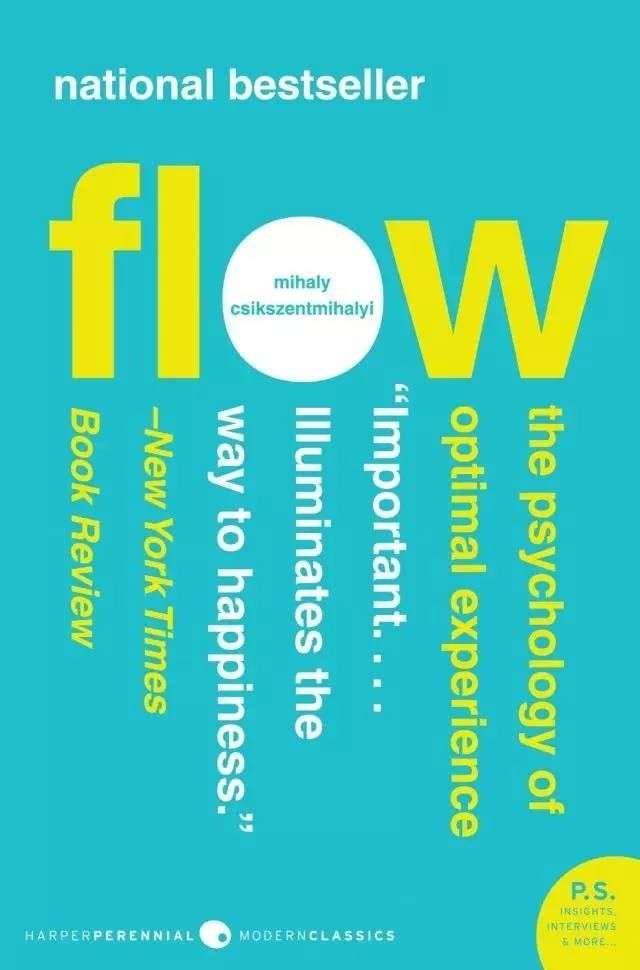
Flow Book Summary
The Psychology of Optimal Experience
Book by Mihály Csíkszentmihályi
Feeling Lazy?Read 1 Minute Summary
Summary
Flow reveals the secrets of optimal experience and shows how to transform even the most mundane moments into a source of enjoyment, creativity and meaning by learning to control consciousness itself.
The Quest For Happiness Is Not New
Aristotle concluded over 2,300 years ago that more than anything else, men and women seek happiness. While much has changed since then, this central yearning has not. What gives life meaning is not money or prestige, but how we feel and experience our lives from within. Despite having more material comforts and luxuries than ever before, people today are often no happier than in the past. The key to happiness lies not in external circumstances, but in how we manage our inner life and consciousness.
Section: 1, Chapter: 1
External Conditions Don't Determine Internal Happiness
Our inner experience is not inevitably determined by external events. We have the power to reshape how we experience and interpret our circumstances through controlling our consciousness.
- Don't rely on external achievements or acquisitions to make you happy. That is outside your direct control.
- Cultivate the ability to find enjoyment in any situation by managing your inner life. Learn to control your attention and the contents of your consciousness.
- Invest energy in experiences and relationships, not just material things. The quality of your experiences determines your quality of life.
Section: 1, Chapter: 1
The Perils Of Unrestrained Pleasure-Seeking
The Marquis de Sade perfected the infliction of pain into a form of pleasure, illustrating that narcissistic individuals who are mainly concerned with protecting their self fall apart when external conditions turn threatening. Pleasure does not lead to happiness, only to the desire for more pleasure.
As Freud said, the two tyrants that fought for control over the mind were the id (servant of genetic desires) and the superego (lackey of society). In contrast, the ego stood for the genuine needs of the self. Eastern disciplines like yoga seek to free consciousness from these external pressures.
Section: 1, Chapter: 1
Consciousness Is An Organizing Force
Consciousness has the vital function of representing information about what is happening inside and outside the organism in a way that allows for evaluation and action. It acts as a clearinghouse for sensations, perceptions, feelings and ideas, establishing priorities among all the diverse information. Without it, we would still "know" what's going on but only react instinctively. With consciousness, we can deliberately weigh what our senses tell us and respond accordingly. It creates order out of chaos.
Section: 1, Chapter: 2
Happiness Through Control Of Consciousness
To achieve mastery over consciousness and enable flow experiences:
- Set clear goals
- Find ways to measure progress
- Keep concentrating on the task at hand
- Develop the skills to interact with available opportunities
- Keep raising the stakes if the activity becomes boring
Following this process turns even mundane tasks and routines into enjoyable flow activities. The key is learning to restructure what happens in consciousness moment by moment.
Section: 1, Chapter: 2
Learn To Control What Happens In Consciousness Moment By Moment
"The function of consciousness is to represent information about what is happening outside and inside the organism in such a way that it can be evaluated and acted upon by the body. In this sense, it functions as a clearinghouse for sensations, perceptions, feelings, and ideas, establishing priorities among all the diverse information. Without consciousness we would still "know" what is going on, but we would have to react to it in a reflexive, instinctive way. With consciousness, we can deliberately weigh what the senses tell us, and respond accordingly."
Section: 1, Chapter: 2
Overcoming Psychic Entropy
Psychic entropy is the disorder we experience when information conflicts with existing intentions or when we don't know what to do with our attention. This causes a lack of focus, procrastination, confusion, and stress.
To overcome psychic entropy and achieve flow:
- Set clear intentions and stick to them. Be very selective with what you pay attention to.
- Develop the ability to concentrate deeply on the task at hand. Limit distractions and interruptions.
- Invest your attention fully in the present moment and current activity. Let go of worries, regrets and rumination.
- Choose activities that have clear goals and provide immediate feedback. Adjust the level of challenge to match your skills.
Section: 1, Chapter: 2
Personal Growth Through Flow
A young boy named Sam Browning had no clear direction in life as a teenager. But during a Christmas holiday in Bermuda with his father, Sam went scuba diving for the first time and was enchanted by the mysterious underwater world he discovered. This chance experience captured his attention and he built it into a structure of goals - to learn more about the ocean, study marine biology in college, and ultimately become a marine scientist.
What started as an accidental flow experience transformed Sam's sense of self by providing a new center of interest around which to organize his psychic energy. The initial spark of curiosity evolved into a lifelong passion through the reciprocal effect of shaping his identity and his actions.
Section: 1, Chapter: 2
The Elements Of Enjoyment
Optimal experiences have several common characteristics:
- They occur when we confront tasks we have a chance of completing
- We must be able to concentrate on what we are doing
- The activity has clear goals
- The activity provides immediate feedback
- One acts with deep, effortless involvement, without worries or frustrations
- There is a sense of control over one's actions
- Concern for the self disappears, yet the sense of self emerges stronger afterwards
- The sense of time is altered; hours pass by in minutes
This describes the phenomenology of enjoyment, the psychological conditions that make leisure and work activities conducive to flow.
Section: 1, Chapter: 3
The Autotelic Experience
"What makes an activity conducive to flow is that it is an end in itself. Even if initially undertaken for other reasons, the activity that consumes us becomes intrinsically rewarding. Surgeons speak of their work: "It is so enjoyable that I would do it even if I didn't have to." Sailors say: "I am spending a lot of money and time on this boat, but it is worth it—nothing quite compares with the feeling I get when I am out sailing.""
Section: 1, Chapter: 3
Transform Any Activity Into An Enjoyable Flow Experience
Even mundane activities can be transformed into something enjoyable by following these steps:
- Set an overall goal, and as many subgoals as realistically feasible. Know what you want to accomplish.
- Find ways to measure your progress and get feedback. Track your achievements in a concrete way.
- Keep concentrating on the activity and make finer and finer distinctions in the challenges involved. Push yourself to higher levels of performance.
- Develop the skills necessary to interact with the available opportunities. Keep learning and growing to meet bigger challenges.
- Keep raising the stakes if the activity becomes boring. Up the difficulty when it gets too easy.
Finding flow in everyday life requires restructuring routines into meaningful, goal-directed, skill-building activities. It's all about your approach.
Section: 1, Chapter: 3
Related Content
Four Thousand Weeks Book Summary
Oliver Burkeman
"Four Thousand Weeks" offers a radical perspective on time management, urging us to abandon the futile quest for control and embrace our finite existence. By accepting our limitations and making conscious choices, we can discover a more meaningful and fulfilling way to spend our brief time on this planet.
"Four Thousand Weeks" offers a radical perspective on time management, urging us to abandon the futile quest for control and embrace our finite existence. By accepting our limitations and making conscious choices, we can discover a more meaningful and fulfilling way to spend our brief time on this planet.
Philosophy
Personal Development
Atomic Habits Book Summary
James Clear
Atomic Habits reveals the surprising power of small habits, demonstrating how tiny changes can compound into remarkable results over time. By focusing on systems over goals and building identity-based habits, you can create lasting change and unlock your full potential.
Atomic Habits reveals the surprising power of small habits, demonstrating how tiny changes can compound into remarkable results over time. By focusing on systems over goals and building identity-based habits, you can create lasting change and unlock your full potential.
Productivity
Personal Development
Psychology