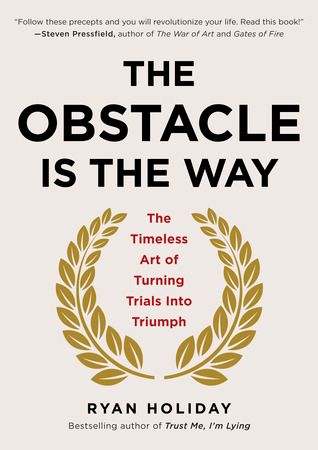
The Obstacle Is the Way Book Summary
The Timeless Art of Turning Trials into Triumph
Book by Ryan Holiday
Summary
The Obstacle Is the Way presents a practical formula for overcoming life's challenges and achieving success by controlling perceptions, taking decisive action, and cultivating an indomitable will.
1. Perception
The Three Critical Steps to Overcoming Life's Obstacles
Overcoming obstacles is a discipline of three critical steps:
- Perceive things as they are (Perception),
- Take appropriate action (Action),
- Cultivate an indomitable will (Will).
Perception involves controlling emotions and objectivity assessing the situation. Action means breaking down problems and acting appropriately. Will is the inner strength and resilience to handle defeat and difficulty.
Section: 1, Chapter: 1
"There Is No Good or Bad Without Us, There Is Only Perception"
"There is no good or bad without us, there is only perception. There is the event itself and the story we tell ourselves about what it means."
Section: 1, Chapter: 2
iques for Steadying Your Nerves During Challenging Times
When faced with obstacles or stress, you can steady your nerves by:
- Catching your mind when it wanders to negative thoughts or worst-case scenarios
- Focusing on the present moment and task at hand, not getting distracted
- Discarding thoughts that aren't constructive
- Reminding yourself that stress and pressure will pass
- Preparing yourself to calmly face challenges without getting rattled
Section: 1, Chapter: 2
How to Control Your Emotions and Keep an Even Keel
Try this exercise when emotions start to get the best of you:
- Acknowledge the emotion you're feeling
- Ask if it is a helpful or constructive emotion
- If not, focus on the logic of the situation
- Walk through a series of rational questions to reframe your perspective
- Remind yourself that while the emotion is real, you don't have to be consumed by it
- Channel your energy into constructive action instead
Section: 1, Chapter: 3
Practicing Objectivity by Describing Events Without Embellishment
Develop the skill of describing events objectively, without exaggeration or embellishment. Stick to the facts of what happened, without ascribing meaning or making judgements. See things for what they are, not how you wish or fear them to be. By separating perception from reality, you can assess situations more accurately and avoid unproductive emotions.
Section: 1, Chapter: 4
Framing - An Individual's Way of Looking at the World
The discipline of perception relies on two key concepts:
- Context - Understanding the larger picture beyond just what is immediately visible
- Framing - An individual's unique perspective and interpretation
Framing is how we look at the world and ascribe meaning. By intentionally choosing frames that are constructive and motivating, we can alter obstacles into opportunities. Reframing a situation can allow us to maintain objectivity and see things in a way that enables forward progress.
Section: 1, Chapter: 5
Focusing on What You Can Control
Wasting energy and attention on things outside your control is unproductive and disempowering. Instead, focus exclusively on the things within your sphere of influence:
- Your emotions
- Your judgements
- Your creativity
- Your attitude
- Your perspective
- Your desires
- Your decisions
By directing your effort to what you can actually impact, you increase your power and ability to navigate difficulties. Everything else is just a distraction.
Section: 1, Chapter: 6
Steve Jobs and the Power of Framing Obstacles as Opportunities
Steve Jobs was famous for pushing people beyond their perceived limits and turning the impossible into reality. When confronted with obstacles like the lack of a computer mouse, or aggressive timetables, Jobs simply refused to accept them. He would reframe challenges as opportunities, enabling his teams to find creative solutions. His mindset turned obstacles into advantages.
Section: 1, Chapter: 7
Finding the Opportunity Within the Obstacle
In any difficult situation, look for the ways it can actually move you forward. What looks like an impediment at first glance might actually be a catalyst if seen differently. Some examples:
- A bad boss is an opportunity to develop patience and people skills
- An aggressive competitor keeps you alert and pushes you to be better
- Getting fired frees you to find a better job or start a business
- Limited funding forces you to be resourceful and creative
Overcoming obstacles requires finding the hidden paths within them. Treat constraints as benefits that enable you to do things you otherwise wouldn't.
Section: 1, Chapter: 8
2. Action
3. Will
Related Content
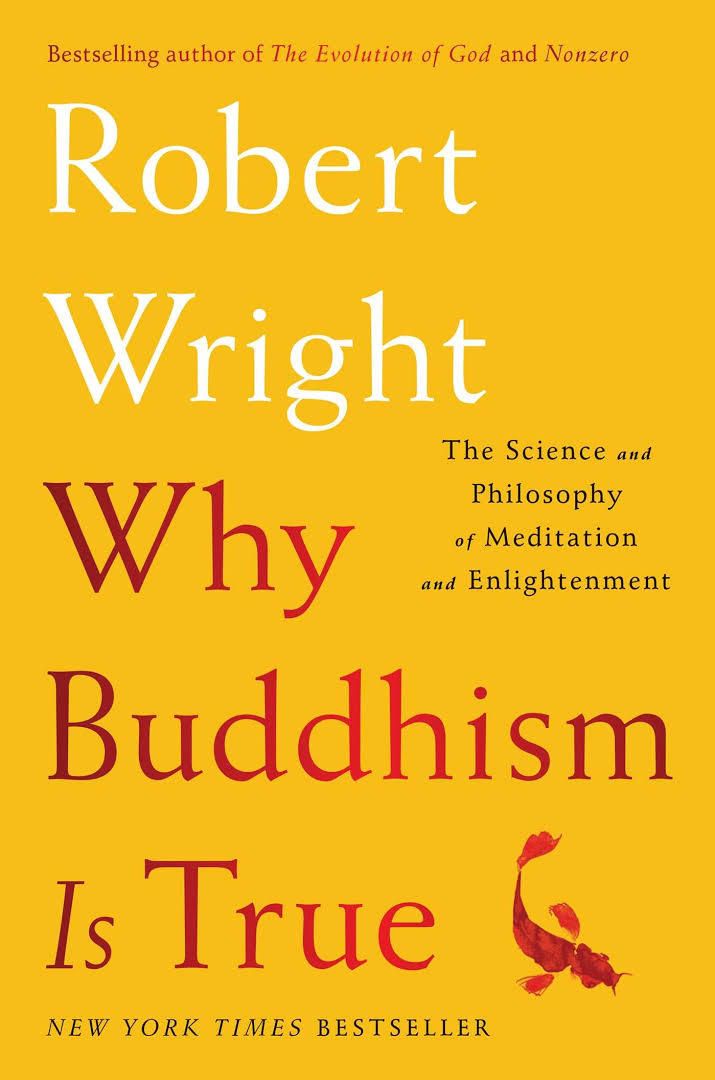
Why Buddhism Is True Book Summary
Robert Wright
Robert Wright explores how Buddhist teachings and meditation practices, particularly from the Vipassana tradition, align with findings from modern psychology and evolutionary theory to diagnose the human condition and provide a path to greater clarity, happiness, and moral progress.
Robert Wright explores how Buddhist teachings and meditation practices, particularly from the Vipassana tradition, align with findings from modern psychology and evolutionary theory to diagnose the human condition and provide a path to greater clarity, happiness, and moral progress.
Mindfulness
Religion
Psychology
Science
Philosophy
Happiness