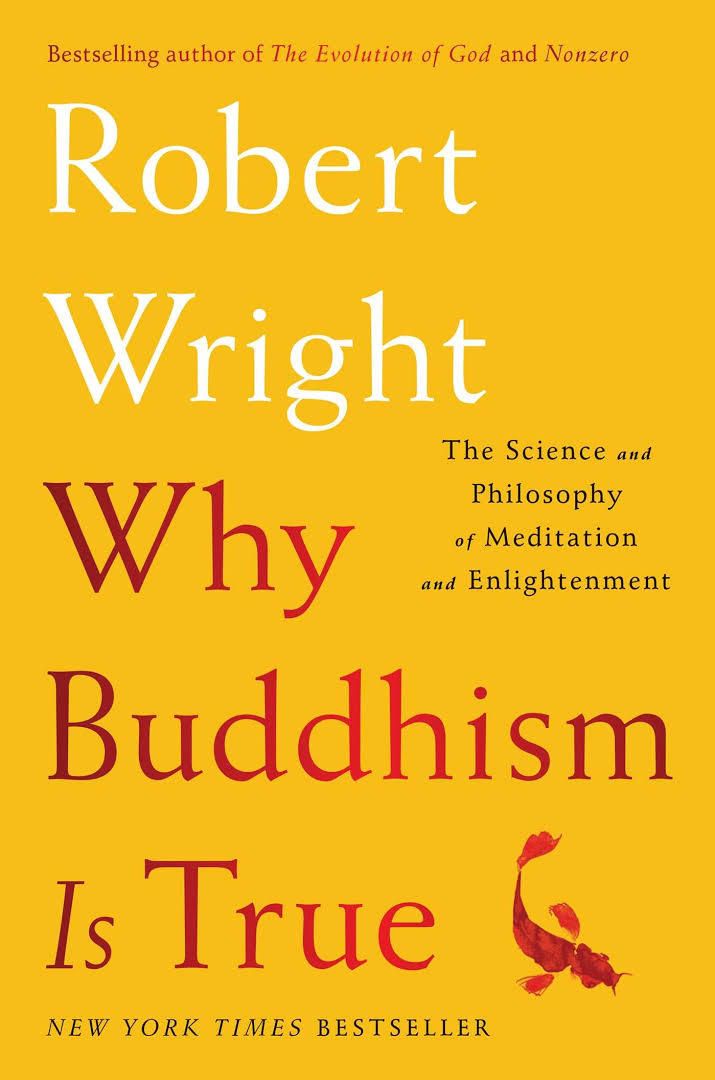
Why Buddhism Is True Book Summary
The Science and Philosophy of Meditation and Enlightenment
Book by Robert Wright
Summary
Robert Wright explores how Buddhist teachings and meditation practices, particularly from the Vipassana tradition, align with findings from modern psychology and evolutionary theory to diagnose the human condition and provide a path to greater clarity, happiness, and moral progress.
The Matrix as a Metaphor For Buddhist Enlightenment
The movie The Matrix serves as an apt metaphor for the Buddhist concept of enlightenment. In the movie, the character Neo is given a choice - remain in his dream world (the Matrix) or take the red pill to "see how deep the rabbit hole goes" and wake up to reality, even if it is painful. Similarly, Buddhist meditation aims to pierce the veil of delusion and see the world as it really is, not as our minds distort it to be. Many Western Buddhists felt The Matrix captured their own transition from delusion to wisdom through meditation.
Section: 1, Chapter: 1
The Default Mode Network - When Our Minds Wander
The default mode network refers to a network in the brain that is active when we're not focused on any particular task - when our mind is wandering. This often involves thoughts about the past, imagining future scenarios, or strategizing. Meditation, by focusing the attention on the breath or other object, aims to quiet the default mode network and keep us in the present moment rather than caught up in these mind wanderings. Brain scans show the default mode network is less active in experienced meditators.
Section: 1, Chapter: 2
Vipassana Meditation - Seeing Reality Clearly
Vipassana meditation, also known as insight meditation, aims to give the meditator insight into the true nature of reality, defined in Buddhism as the "three marks of existence":
- Dukkha (suffering/unsatisfactoriness)
- Anicca (impermanence)
- Anatta (not-self)
By observing the contents of the mind with clarity, the meditator comes to see the pervasiveness of these three marks. In particular, anatta, the realization that there is no fixed, permanent self, is considered crucial for liberation from suffering but is very difficult to grasp intellectually without meditation practice.
Section: 1, Chapter: 2
Take The Ache Out Of Toothache
The author recounts a time on meditation retreat when he had a painful toothache. Sitting down to meditate, he tried viewing the pain mindfully and objectively rather than with aversion. The throbbing became awesome in its intensity, more captivating than unpleasant. Stepping back and observing the pain rather than identifying with it reduced the suffering. This illustrates the Buddhist idea that our sense of an all-important self is an illusion that causes suffering. Experiencing pain as just pain, rather than "my pain", reduces its sting.
Section: 1, Chapter: 2
Emotions As Evolution's Way To Control Us
From an evolutionary perspective, emotions evolved as a way to motivate animals, including humans, to approach things that helped them survive and reproduce (food, mates) and avoid things that threatened survival (predators, toxins). Good and bad feelings are nature's carrot and stick to control behavior.
However, in modern environments, these once-adaptive emotional propensities can lead us astray. For example:
- Our natural desire for sugar and fat, adaptive in ancestral environments, now leads to obesity and health issues
- Anger, useful for deterring rivals and cheaters in small hunter-gatherer bands, is counterproductive in modern anonymous societies
- Anxiety, which helped keep us alert to threats, now often arises in situations where it serves no productive purpose
Buddhism argues that mindfulness can help us step back from unhelpful, conditioned emotional patterns and see them with more clarity and choice in whether to act on them.
Section: 1, Chapter: 3
Observing Overcaffeination Objectively
The author describes a breakthrough experience on meditation retreat when he drank too much coffee and felt an unpleasant tension in his jaw. Observing the sensation mindfully, it suddenly seemed like something outside himself that he was watching with detachment. The unpleasantness dissolved, leaving the physical sensation but without the emotional overlay of discomfort. This illustrates the Buddhist idea that much of our suffering comes from over-identifying with passing mental and physical states. Stepping back and observing them breaks their grip over us.
Section: 1, Chapter: 3
The Fake Snake And The Real Anxiety
Evolution has primed our minds to see threats, even where none exist. 99 times out of 100, rustling in the bushes is just the wind - but running away each time kept our ancestors alive the one time it really was a predator. Similar "false positives" occur with social threats - we may lie awake worrying how people will react to an upcoming presentation, even though it will likely go fine.
Mindfulness meditation allows us to step back and see the false alarms generated by anxious thoughts without getting caught up in them. Over time, this weakens the tendency to generate needless anxiety in the first place. The evolutionary default is to treat all threats as real, but we can train the mind to be more discerning.
Section: 1, Chapter: 3
From Meditative Bliss To Everyday Enchantment
While intensely pleasurable meditative states known as jhanas can sometimes arise with concentration meditation, mindfulness meditation aims more for a clear seeing of reality that can permeate daily life off the cushion. This may involve:
- Greater presence and sensory vividness. Colors seem brighter, sounds more vivid, food more flavorful. There is a childlike freshness to perceptions.
- Reduced attachment and aversion. With a less self-referential perspective, there is less of a feeling of "what's in it for me" or "what does this mean about me" in response to experiences. Things can be appreciated for what they are.
- More openness to both pleasant and unpleasant feeling tones without getting caught up in narrative thoughts about them. Difficult emotions pass through more fluidly.
- Insights into the constructed, dreamlike nature of experience that create a sense of spaciousness and choice in how to respond.
While peak experiences on retreat may come and go, a more continuous "quiet joy" and intimacy with life can suffuse everyday experience with disciplined practice.
Section: 1, Chapter: 4
The Buddha's Teachings On Not-Self
The Buddha's key teachings on not-self (anatta) are found in the Anatta-lakkhana Sutta. In it, he examines the five aggregates that constitute a person:
- Form (the body)
- Feeling
- Perception
- Mental formations
- Consciousness
For each aggregate, he argues that if it were truly part of the self, one should be able to control it. But since we can't control these aggregates (e.g. the body ages and gets sick despite our wishes), they must be not-self. He instructs monks to contemplate each aggregate and realize "This is not mine, I am not this, this is not my self."
Section: 1, Chapter: 5
The Sound Is Just The Sound
"Ajahn Chah, a twentieth-century Thai monk who did much to spread awareness of Vipassana meditation in the West...once recounted a time when he was trying to meditate and kept getting interrupted by sounds from a festival in a nearby village. Then, as he recalls it, he had a realization: 'The sound is just the sound. It's me who is going out to annoy it. If I leave the sound alone, it won't annoy me.'"
Section: 1, Chapter: 5
Related Content

Think Again Book Summary
Adam Grant
Think Again is a compelling exploration of the power of knowing what you don't know, and how embracing the joy of being wrong and actively questioning your opinions can help you make better decisions
Think Again is a compelling exploration of the power of knowing what you don't know, and how embracing the joy of being wrong and actively questioning your opinions can help you make better decisions
Psychology
Business
Personal Development