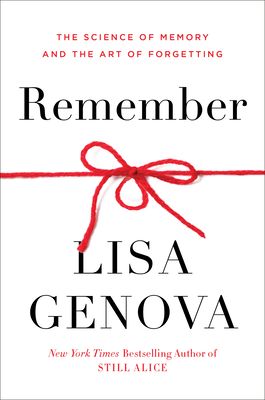
Remember Book Summary
The Science of Memory and the Art of Forgetting
Book by Lisa Genova
Feeling Lazy?Read 1 Minute Summary
Summary
In "Remember", neuroscientist Lisa Genova explores the intricacies of how we create, retain, and retrieve memories, offering fascinating insights and practical strategies to harness the power of your memory while accepting its inevitable imperfections.
1. How We Remember
Making Memories 101
How memories are made:
- Memories are formed through lasting physical changes in the brain in response to experiences. The process involves four steps:
- Encoding - translating sensory information into neurological language,
- Consolidation - linking related neural activity into a connected pattern,
- Storage - maintaining the neural pattern over time through structural changes,
- Retrieval - reactivating the stored neural pattern to recall the memory.
- The hippocampus is essential for consolidating new consciously retrievable memories by binding together disparate neural activity.
Section: 1, Chapter: 1
The Power Of Attention
Paying attention is crucial for memory formation. Some key insights:
- You can only remember what you pay attention to. Perception alone isn't enough - you must add your attention to encode something into memory.
- Attention acts like a "save button", capturing certain details to be consolidated while the rest is discarded and forgotten. What you pay attention to depends on what you find interesting, meaningful, surprising, emotional, etc.
- Distractions, stress, lack of sleep and excessive screen time all impair attention and memory. To remember more, practice mindfulness, get enough sleep, and limit distractions.
- If you forget something, like where you parked, it's often due to lack of attention, not a memory failure. You never encoded the parking spot in the first place.
Section: 1, Chapter: 2
"Why Did I Come In This Room?"
The author shares a relatable example of walking into her kitchen for her reading glasses, only to instantly forget why she went there. She looked around for cues to jog her memory, but the context of the kitchen provided no relevant clues, so she remained stumped until returning to her bedroom. There, surrounded by the cues present when she first had the thought to get her glasses, like her book on the nightstand, she instantly remembered her glasses again. This illustrates how memory relies heavily on context - we remember best when the context at retrieval matches the context at encoding.
Section: 1, Chapter: 2
The Fleeting Nature Of Working Memory
Chapter 3 covers working memory - the temporary, limited memory store for the present moment.
- Working memory only holds what you're paying attention to right now, for about 15-30 seconds. It's constantly updated as events unfold moment to moment.
- Visual working memory is like a "mental scratchpad" and auditory working memory is like a brief "mental soundtrack" or "echo".
- Working memory has a small capacity, able to hold only about 7 ± 2 "chunks" of information at a time. Chunking information into meaningful units can expand how much you can fit in working memory.
- Important information can be plucked from working memory and consolidated into long-term memory via the hippocampus if it captures your attention. The rest is quickly forgotten as working memory updates.
Section: 1, Chapter: 3
The Magic Number For Working Memory
The capacity of working memory was found to be 7 ± 2 "chunks" of information by researcher George Miller in 1956. A chunk is a meaningful unit of information. Some examples:
- Phone numbers are 10 digits but are chunked into 3 pieces (area code, first 3 digits, last 4 digits), allowing them to fit in working memory
- 12062007 is harder to hold in working memory than 12/06/2007, which chunks the numbers into a memorable date
- The letters "ALMNVYESIGIANEAOSM" exceed working memory capacity, but the same letters chunked as "MY NAME IS LISA GENOVA" are easy to retain
Section: 1, Chapter: 3
Forgetting Yo-Yo Ma's Cello
The author shares the example of celebrated cellist Yo-Yo Ma accidentally leaving his priceless cello in the trunk of a NYC taxi cab. Even for something as important as a $2.5 million instrument, working memory is still fragile. Ma likely forgot the cello because, in his rush, the cello case wasn't in his field of view when he got out of the cab, so there was no visual cue to trigger his working memory to retrieve the cello. This shows how critical cues and context are for memory retrieval. Without them, even the most important things can be forgotten in the heat of the moment.
Section: 1, Chapter: 3
Memory For Skills Vs. Facts
The difference between memory for facts and events vs. memory for skills:
- Declarative memories are consciously recalled facts (semantic memory) and personal experiences (episodic memory). They feel effortful to retrieve and are easy to forget.
- Non-declarative "muscle memories" are unconscious memories for how to perform learned motor skills (typing, bike-riding, playing an instrument, etc). They are automatic and durable, but take a lot of repetition to acquire.
- Muscle memories rely on the basal ganglia and cerebellum to consolidate, not the hippocampus, so they were spared in famous amnesic patient HM who could form new skill memories but no new declarative memories after his hippocampus was removed.
- Both types of long-term memory formation require attention and practice, but muscle memory mastery takes much more repetition than factual or event memory.
Section: 1, Chapter: 4
Becoming An Expert - 10,000 Hours To Greatness
Building on the idea that muscle memory mastery requires extensive practice, the author discusses Malcolm Gladwell's famous "10,000-hour rule" from his book Outliers - that it takes 10,000 hours of deliberate practice to become an expert in any skill.
She relates this to her own history as a dancer, noting that while it may only take 4 hours of practice to master a new dance routine, her ability to do so draws on a lifetime of dance training likely adding up to 10,000+ hours. More practice leads to physical changes in the motor cortex, with more neural territory devoted to the skill. While 10,000 hours isn't a hard and fast rule, the key insight is that exceptional skill comes from a huge amount of focused practice leading to strengthened neural connections.
Section: 1, Chapter: 4
The Wikipedia Of Your Brain
Semantic memory is our memory for facts, the "Wikipedia of your brain". Semantic memories are facts you know without remembering how you learned them, like the capital of France or your birthdate
Acquiring semantic memories requires effortful studying and repetition, ideally spaced out over time vs. crammed. Self-testing is even better than restudying for strengthening semantic memory
Attaching meaning, like with mnemonics (Every Good Boy Deserves Fudge for music notes) or a personal association (Laird Hamilton the surfer is married to volleyball player Gabrielle Reece) makes facts stickier Using visual-spatial memory techniques like memory palaces can drastically improve recall of lists and strings of information in order
Section: 1, Chapter: 5
Your Autobiographical Highlight Reel
We don't remember most of what happens to us, only retaining select fragments of our personal past. Autobiographical memory is the story of your life stitched together from your most meaningful episodic memories. It's highly selective and forms the basis of your identity.
We tend to remember events that are emotional, surprising, personally significant, and self-relevant. The mundane and routine rarely make the cut. Repetition and rehearsal, like retelling stories or looking at photos, strengthens autobiographical memories, but also makes them vulnerable to distortion over time. Each recall modifies the memory.
There is a "reminiscence bump" between ages 15-30 when many of our most vividly remembered autobiographical events occur - likely because of all the memorable "firsts" in those years.
Section: 1, Chapter: 6
2. Why We Forget
3. Improve Or Impair
Related Content
Moonwalking with Einstein Book Summary
Joshua Foer
Joshua Foer chronicles his journey from covering the U.S. Memory Championship as a journalist to becoming a competitor and ultimately winning the event himself, all while exploring the history, science, and techniques of memory training and the untapped potential of the human mind.
Joshua Foer chronicles his journey from covering the U.S. Memory Championship as a journalist to becoming a competitor and ultimately winning the event himself, all while exploring the history, science, and techniques of memory training and the untapped potential of the human mind.
Memory
Psychology
Learning
Personal Development
Why We Sleep Book Summary
Matthew Walker
Sleep is the single most effective thing we can do to reset our brain and body health, yet we are in the midst of a global sleep loss epidemic that is decimating our health, longevity, productivity. Prioritizing sleep is can improve virtually every aspect of our lives, and this book provides the scientific evidence and practical strategies to make it happen.
Sleep is the single most effective thing we can do to reset our brain and body health, yet we are in the midst of a global sleep loss epidemic that is decimating our health, longevity, productivity. Prioritizing sleep is can improve virtually every aspect of our lives, and this book provides the scientific evidence and practical strategies to make it happen.
Sleep
Health
Personal Development