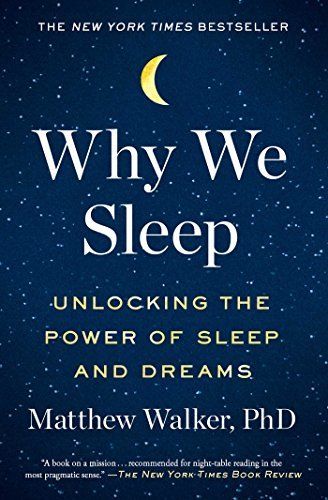
Why We Sleep Book Summary
Unlocking the Power of Sleep and Dreams
Book by Matthew Walker
Feeling Lazy?Read 1 Minute Summary
Summary
Sleep is the single most effective thing we can do to reset our brain and body health, yet we are in the midst of a global sleep loss epidemic that is decimating our health, longevity, productivity. Prioritizing sleep is can improve virtually every aspect of our lives, and this book provides the scientific evidence and practical strategies to make it happen.
1. This Thing Called Sleep
Two-thirds of Adults Don't Sleep 8 Hours
Two-thirds of adults throughout all developed nations fail to obtain the recommended eight hours of nightly sleep. Routinely sleeping less than six or seven hours a night demolishes your immune system, more than doubling your risk of cancer. Insufficient sleep is a key lifestyle factor determining whether or not you will develop Alzheimer's disease. Inadequate sleep—even moderate reductions for just one week—disrupts blood sugar levels so profoundly that you would be classified as pre-diabetic. Short sleeping increases the likelihood of your coronary arteries becoming blocked and brittle, setting you on a path toward cardiovascular disease, stroke, and congestive heart failure.
Section: 1, Chapter: 1
You Cannot "Get By" On Less Sleep Without Impairment
"The number of people who can survive on five hours of sleep or less without any impairment, expressed as a percent of the population, and rounded to a whole number, is zero."
Section: 1, Chapter: 1
Assess Your Own Sleep Sufficiency
There are two key questions to determine if you are getting sufficient sleep:
- After waking up in the morning, could you fall back asleep at 10 or 11am? If yes, you are likely not getting sufficient sleep quantity and/or quality.
- Can you function optimally without caffeine before noon? If no, then you are most likely self-medicating your state of chronic sleep deprivation. If you answer yes to either question, you should take seriously your lack of sleep and seek to address your sleep deficiency.
Section: 1, Chapter: 1
The Circadian Rhythm Changes From Childhood To Adolescence
The circadian rhythm—the internal twenty-four-hour clock of the brain that times the release of the sleep-promoting hormone melatonin—changes across childhood and into adolescence:
- In young children, melatonin is released early in the evening, allowing them to fall asleep early and wake up early
- In adolescents, the melatonin release shifts later in the evening, making it hard for teens to fall asleep early and wake up early
- Adults settle into an earlier circadian rhythm similar to children, but not as early These changes are biologically hardwired and very difficult for teens to fight, leading to chronic sleep deprivation when school schedules require early wake times.
Section: 1, Chapter: 2
Jet Lag Impairs Memory And Concentration
The circadian rhythm controls the rise and fall of core body temperature, metabolic rate, and release of many hormones. Jet travel across time zones forces the body's internal circadian clock to suddenty adjust, like an old watch being wound back or ahead. This causes cognitive deficits as the brain's deep emotional centers are thrown into disarray. Two frequent travelers anecdotally reported struggling with jet lag after returning from a trip:
- One experienced a 20% deficit in reaction time and concentration a full six days after returning from a trip from London to LA
- Another frequently missed important facts and details at meetings after traveling internationally, as the memory circuits were not functioning properly due to the jet lag
Section: 1, Chapter: 2
Tips To Minimize Impact Of Caffeine On Sleep
Caffeine can significantly disrupt sleep by blocking the action of the hormone adenosine, which promotes sleep. Here are some tips to minimize caffeine's impacts on sleep:
- Avoid caffeine in the afternoon and evening, as it takes a long time for the body to fully remove it. Even 6 hours before bed, half the dose of caffeine can still be circulating.
- Be aware that decaf coffee still contains some caffeine (about 15-30% of a regular cup)
- Everyone has a different sensitivity to caffeine based on genetics. If you are very sensitive, you may need to completely avoid it after noon or even eliminate it entirely.
Section: 1, Chapter: 2
Two Types Of Sleep: NREM And REM
There are two main types of sleep that the brain experiences:
NREM (non-rapid eye movement) sleep:
- Includes deep sleep
- The brain exhibits long-wave patterns of electrical activity
- Helps with physical restoration and memory consolidation
REM (rapid eye movement) sleep, also known as dream sleep:
- The brain is very active, similar to wake, but the body is paralyzed
- Plays a key role in emotional processing and creativity Both NREM and REM sleep alternate in a cyclical pattern through the night, with NREM dominating the first half and REM dominating the second half. Both are critical for mental and physical health.
Section: 1, Chapter: 3
Sleep Changes Across The Lifespan
The composition of sleep changes across the lifespan:
- Newborns spend most of their sleep time in REM sleep
- During childhood and adolescence, the percentage of sleep time in REM declines while time in deep NREM sleep is highest
- In early adulthood, NREM and REM sleep reach the "typical" balance of NREM dominating the early night and REM dominating the late night/early morning
- In old age, time in deep NREM and REM sleep declines, leading to more fragmented, less restorative sleep Understanding how sleep architecture changes across life highlights the critical importance of getting sufficient sleep at each life stage to support brain and body development and functioning.
Section: 1, Chapter: 3
Sleep Is Universal Across All Organisms
Virtually every organism studied to date sleeps or engages in something remarkably like it, including: Insects, including flies, bees, and cockroaches, and even very simple organisms like nematodes and jellyfish
The universality of sleep across living creatures suggests it evolved with life itself and must serve critical functions. The fact that animals will die if deprived of sleep further proves its life-sustaining importance.
Section: 1, Chapter: 4
REM Sleep Emerged Later In Mammalian Evolution
While all animals experience NREM sleep, only mammals and birds engage in REM sleep. Reptiles, amphibians, fish and insects show no signs of REM sleep. This suggests REM sleep emerged later in evolutionary history as a specialized form of sleep. Scientists believe REM sleep evolved to support brain functions that NREM alone could not achieve, such as emotional processing and creativity. REM sleep likely emerged independently in both mammalian and avian lines, suggesting it conveyed significant evolutionary advantages.
Section: 1, Chapter: 4
REM Sleep Is Essential For Brain Development In Fetuses And Infants
REM sleep plays a crucial role in brain development in utero and in early infancy:
- By the end of the second trimester, the basic structure to generate REM sleep is in place
- In the last trimester and early infancy, babies spend most of their sleep time in REM sleep
- The REM sleep acts as an electrical fertilizer, stimulating the growth and maturation of neural circuits throughout the developing brain
- Depriving infant animals of REM sleep leads to smaller brains and neural abnormalities This shows REM sleep is essential for normal brain development. Anything that restricts REM sleep in pregnancy or infancy can have detrimental impacts on brain maturation.
Section: 1, Chapter: 5
Tips To Help Establish Healthy Sleep In Infants And Children
- Develop a regular sleep schedule and bedtime routine to entrain the child's circadian rhythm
- Ensure a cool, dark sleep environment to promote melatonin release
- Avoid screen time (TV, tablets, phones) in the hour before bed - the blue light suppresses melatonin
- Don't feed babies immediately before putting them down to sleep - they will start to associate feeding with falling asleep
- Avoid late naps that make it hard for the child to fall asleep at night
Section: 1, Chapter: 5
2. Why Should You Sleep?
Sleep Is The Greatest Legal Performance-Enhancing "Drug"
"Sleep is the greatest legal performance-enhancing 'drug' that most people are probably neglecting. Scientists have discovered a revolutionary new treatment that makes you live longer. It enhances your memory and makes you more creative. It makes you look more attractive. It keeps you slim and lowers food cravings. It protects you from cancer and dementia. It wards off colds and the flu. It lowers your risk of heart attacks and stroke, not to mention diabetes. You'll even feel happier, less depressed, and less anxious. Are you interested?"
Section: 2, Chapter: 6
Sleep Before Learning Improves Your Ability To Make New Memories
Sleep before learning refreshes our ability to initially make new memories. The hippocampus acts as a short-term reservoir for accumulating new memories. But there is a limited storage capacity, like a USB memory stick. Sleep effectively "clears room" in the hippocampus for new learning by:
- Replaying and strengthening previously acquired information
- Transferring those memories to long-term storage in the neocortex A nap study showed that the more sleep spindles (bursts of brain activity) participants had during the nap, the more refreshed their hippocampus was upon awakening, allowing them to learn new facts more effectively. This shows sleep is critical before learning to prime the brain to soak up new information.
Section: 2, Chapter: 6
Dreaming About A Task Enhances Creativity And Problem Solving
The author describes an event in 1993 where he met a professional pianist at a dinner party. The pianist told him that he would often mentally struggle with a tough musical composition in the evening. Yet when he awoke the next morning, he could play the piece perfectly, as if the dream had worked out the musical puzzle. This intrigued the author and catalyzed his research into sleep and creativity.
Subsequent studies showed that going to bed with an unsolved problem often leads to creative solutions in the morning, thanks to the power of REM sleep and dreaming. The hyper-associative nature of dreaming allows the brain to make non-obvious connections and generate novel solutions. Many famous works of art, music and science were inspired by dreams.
Section: 2, Chapter: 6
3. How and Why We Dream
4. From Sleeping Pills to Society Transformed
Related Content
Four Thousand Weeks Book Summary
Oliver Burkeman
"Four Thousand Weeks" offers a radical perspective on time management, urging us to abandon the futile quest for control and embrace our finite existence. By accepting our limitations and making conscious choices, we can discover a more meaningful and fulfilling way to spend our brief time on this planet.
"Four Thousand Weeks" offers a radical perspective on time management, urging us to abandon the futile quest for control and embrace our finite existence. By accepting our limitations and making conscious choices, we can discover a more meaningful and fulfilling way to spend our brief time on this planet.
Philosophy
Personal Development