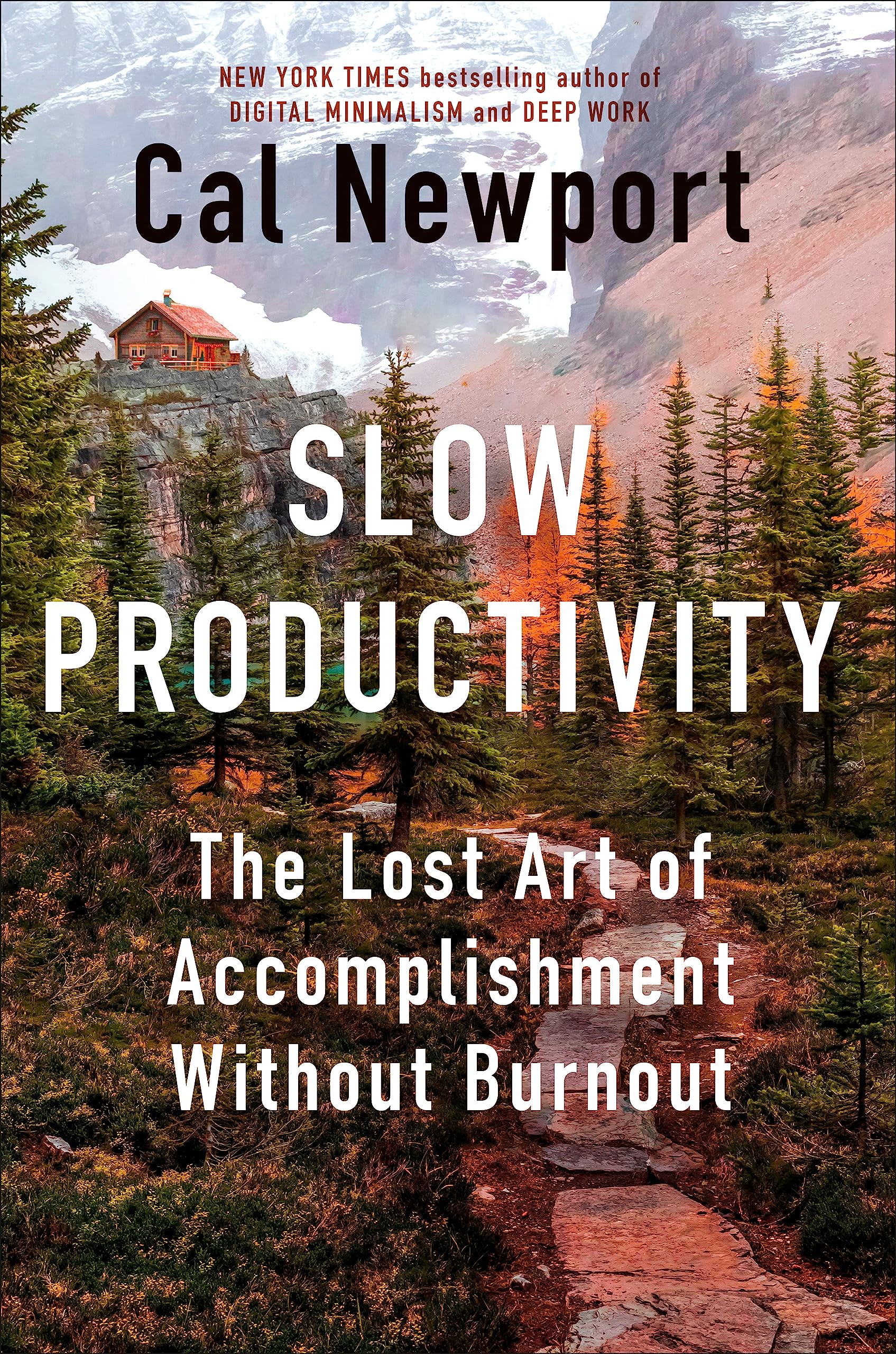
Slow Productivity Book Summary
The Lost Art of Accomplishment Without Burnout
Book by Cal Newport
Feeling Lazy?Read 1 Minute Summary
Summary
In "Slow Productivity," Cal Newport argues that the key to producing meaningful knowledge work is rejecting busyness and distraction in favor of a more deliberate approach that prioritizes quality, focus, and a sustainable pace.
Part 1: Foundations
John McPhee's Creative Process Embodies Slow Productivity
The book opens with the story of writer John McPhee, who in 1966 spent two weeks lying on a picnic table in his backyard, staring up at an ash tree, trying to figure out how to structure a complicated article he was struggling to write. This languid, unhurried approach to his creative process exemplifies the core principles of slow productivity that the book will explore. McPhee's career demonstrates that meaningful accomplishment does not require constant busyness and frantic intensity.
Section: 1, Chapter: 1
Slow Productivity Definition
The book presents slow productivity as an alternative philosophy for organizing knowledge work in a more sustainable and meaningful way. Its three core principles are:
- Do fewer things
- Work at a natural pace
- Obsess over quality
By following these principles, the book argues, knowledge workers can escape the epidemic of overload and produce work they're proud of without grinding themselves down in the process.
Section: 1, Chapter: 1
Slow Productivity Rejects Busyness
Slow productivity rejects busyness, seeing overload as an obstacle to producing results that matter, not a badge of pride.
Section: 1, Chapter: 1
Productivity Is Hard To Define In Knowledge Work
Productivity is a well-defined concept in sectors like agriculture and manufacturing, where outputs and processes are concrete. But in knowledge work, which emerged as a major economic force in the mid-20th century, the nature of productivity is much more ambiguous.
Managers didn't know how to measure or improve productivity for these more cognitively-complex jobs. In response, they defaulted to using visible activity, like hours spent in the office or messages sent, as a proxy for productivity. The more activity you see, the more you assume an employee is contributing.
Section: 1, Chapter: 1
Technology Supercharged Pseudo-Productivity
The rise of digital communication tools like email and instant messaging in the 1990s and 2000s turned the proxy of visible activity into an arms race of electronic busyness. Knowledge workers could now signal their "productivity" by sending messages at all hours, leading to an onslaught of low-value communication that left everyone feeling overwhelmed but still under pressure to keep up the charade of looking busy.
This state of affairs, which Newport terms "pseudo-productivity," is neither sustainable nor conducive to getting the right things done. But it remains the dominant way work is organized and evaluated in many organizations.
Section: 1, Chapter: 1
The Rise of Psuedo-Productivity
In the absence of more sophisticated measures of effectiveness, we also gravitate away from deeper efforts toward shallower, more concrete tasks that can be more easily checked off a to-do list.
Section: 1, Chapter: 1
Slow Productivity Focuses On Meaningful Accomplishment
Here's a key tenet of slow productivity - what matters is the ultimate result, not the appearance of staying busy. As you evaluate your own work habits, consider where you may be conflating the two. Are you spending time on things that look or feel productive but don't meaningfully advance your most important projects? See if you can shift more of your time and attention to the efforts that make the biggest difference, even if they unfold at a slower pace. Don't use busyness as a proxy for effectiveness.
Section: 1, Chapter: 1
The Slow Food Movement Was A Reaction Against Fast Living
In 1986, Carlo Petrini launched the Slow Food movement in Italy as a response to the arrival of McDonald's and American fast food culture. Rather than just complaining, Slow Food presented an appealing alternative - a return to traditional, communal meals made with local ingredients and eaten at a leisurely pace.
The movement celebrated the pleasure of slow, intentional dining as an antidote to the alienation of modern speed and homogenization. This exemplifies two key strategies for creating cultural change - offer an attractive alternative and leverage time-tested wisdom.
Section: 1, Chapter: 2
The Slow Movement Expanded Beyond Food
Following the success of Slow Food, a variety of other slow movements emerged to advocate for more intentional, human-friendly approaches to travel, parenting, education, reading and more.
While the specific practices differ, they share a common sensibility - that doing things at a more natural pace, often informed by cultural tradition, yields a richer experience than defaulting to the hectic norms of modernity. These movements demonstrate that the core ideas behind Slow Food can be translated to many different domains.
Section: 1, Chapter: 2
Hunter-Gatherer Societies Show The Naturalness Of Fluctuating Work Intensity
Anthropological studies of the few remaining hunter-gatherer societies show that their "work" of acquiring food unfolds at a fluctuating pace. Periods of intense effort, like a long hunting trip, are typically followed by stretches of rest and socializing. This contrasts with the artificially constant intensity demanded by industrial and knowledge work.
The studies suggest that our evolutionary heritage is better adapted to a work rhythm that ebbs and flows rather than maintaining an unsustainably high static level. Slow productivity aims to restore this more natural cadence to our efforts.
Section: 1, Chapter: 2
Part 2: Principles
Related Content
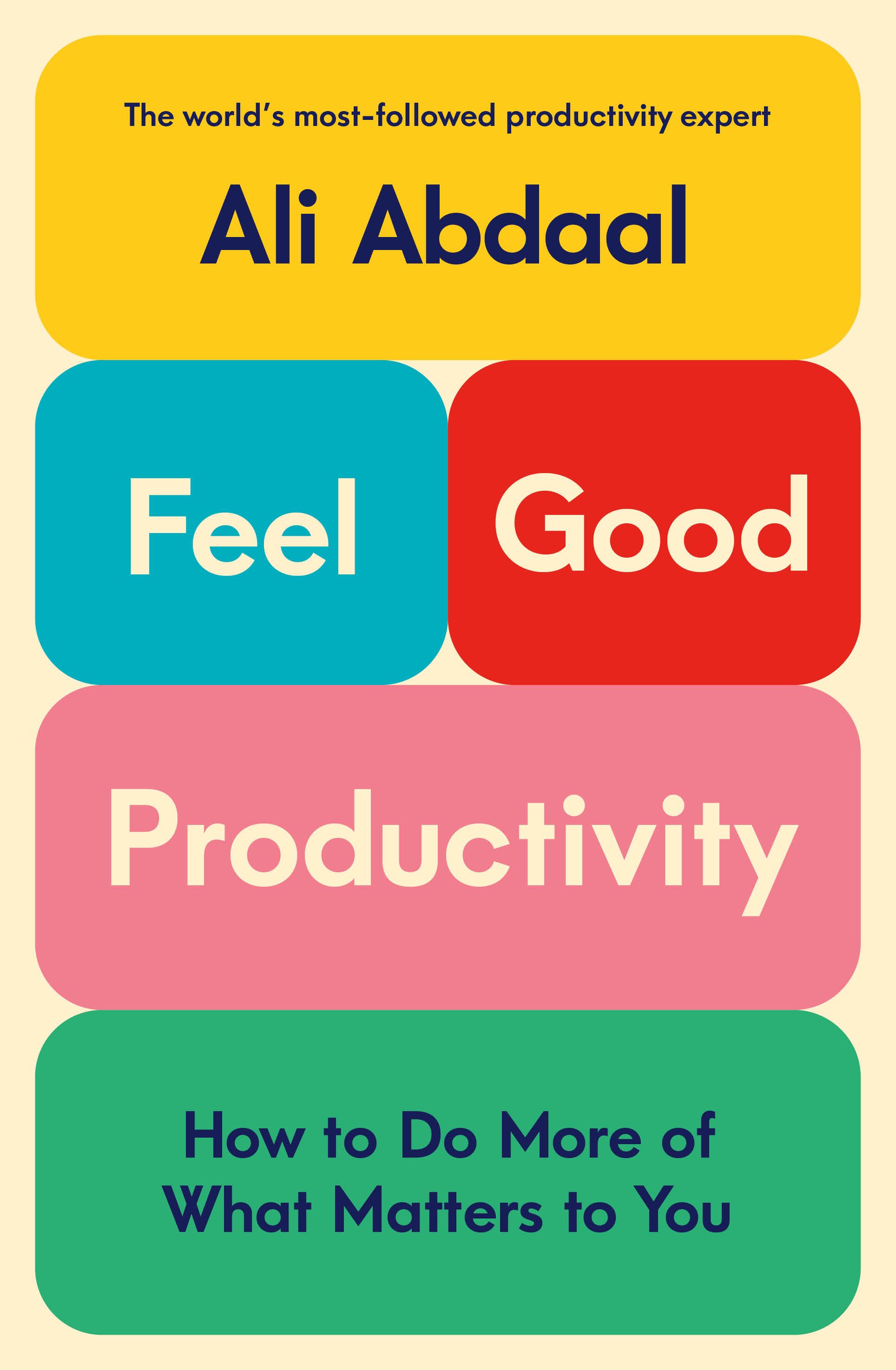
Feel Good Productivity Book Summary
Ali Abdaal
"Feel-Good Productivity" by Ali Abdaal is a transformative guide that teaches us how to harness the power of positive emotions, overcome mental roadblocks, and achieve sustainable success by aligning our actions with our values.
"Feel-Good Productivity" by Ali Abdaal is a transformative guide that teaches us how to harness the power of positive emotions, overcome mental roadblocks, and achieve sustainable success by aligning our actions with our values.
Personal Development
Productivity
Goal Setting
Habits
Happiness
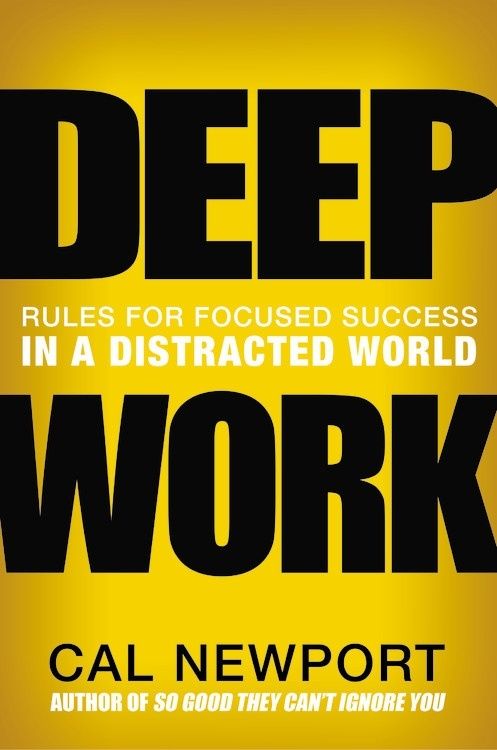
Deep Work Book Summary
Cal Newport
In "Deep Work", Cal Newport argues that the ability to focus intensely on cognitively demanding tasks is becoming increasingly rare yet increasingly valuable in our economy, and provides a training regimen to cultivate this skill through the application of four rules: work deeply, embrace boredom, quit social media, and drain the shallows.
In "Deep Work", Cal Newport argues that the ability to focus intensely on cognitively demanding tasks is becoming increasingly rare yet increasingly valuable in our economy, and provides a training regimen to cultivate this skill through the application of four rules: work deeply, embrace boredom, quit social media, and drain the shallows.
Productivity
Personal Development
Time Management