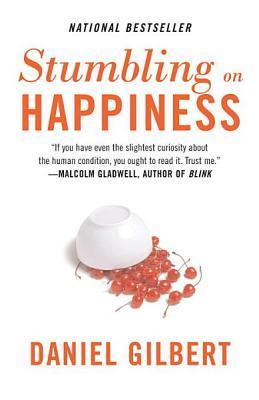
Summary
Harvard psychologist Daniel Gilbert takes readers on a whirlwind tour of the human brain, exploring how our unique ability to imagine the future often leads us astray in predicting what will make us happy. Gilbert argues that the futures we envision are often distorted by our current emotions, our flawed memories, and our psychological blind spots - but recognizing these limitations, we can learn to more accurately forecast our feelings and maximize our well-being.
The Human Brain Is The Only Time Machine
The human brain is unique in the animal kingdom in its ability to mentally travel through time - to imagine the future in great detail before it happens. This allows humans to preview different futures and make decisions in the present to steer themselves toward the best possible tomorrow. Imagination is one of the most powerful gifts evolution has given to humans.
Section: 1, Chapter: 1
"All Men Seek Happiness"
"All men seek happiness. This is without exception. Whatever different means they employ, they all tend to this end. The cause of some going to war, and of others avoiding it, is the same desire in both, attended with different views. The will never takes the least step but to this object. This is the motive of every action of every man, even of those who hang themselves." - Blaise Pascal
Section: 1, Chapter: 1
Happiness Is Hard To Define
While people universally seek happiness, the word "happiness" itself is very hard to define precisely. Happiness refers to a subjective feeling, a personal experience. We can't point to happiness as an objective thing in the external world. And your experience of happiness is impossible for anyone else to access directly. When we talk about happiness, we're referring to an internal state that we know when we feel it, but struggle to put into words.
Consider the real-life case of conjoined twins Lori and Reba Schappell. Most people assume conjoined twins must be very unhappy being physically attached to each other for life. But Lori and Reba report being quite happy and wouldn't want to be separated. Is their experience of happiness the same as what non-conjoined people feel? There's no way to directly compare subjective experiences between individuals. We can't get "inside" their minds to feel what their version of happiness is like compared to ours.
Section: 2, Chapter: 2
We Fill In Details When Remembering And Imagining
Both when remembering the past and imagining the future, the human brain tends to "fill in" missing details that weren't originally stored, in order to construct a coherent scene or narrative.
- In memory, we don't store every detail of a past event. When we later retrieve that memory, the brain fills in plausible details to flesh it out, but these details may be inaccurate.
- When imagining a future event, the brain constructs a scene with many assumed details that may not match the actual details that will exist in that future moment.
In both cases, we aren't aware in the moment that our brain is "making up" details that feel real to us. We tend to trust that the details in our remembered and imagined scenes are accurate.
Section: 2, Chapter: 2
Outside Looking In
Keep in mind that you can never fully know what a subjective experience, like happiness, feels like for someone else. Even when people tell you they are happy, you are relying on their self-report, with no ability to verify their inner state.
When a friend reports being very happy or unhappy about something, resist the urge to assume you know exactly what that feeling is like for them. Instead, express empathy and compassion without claiming to fully understand their experience. Acknowledge that their happiness is unique to them.
Section: 2, Chapter: 3
Our Brains Edit Our Experiences
The human brain acts like a clever "editor" of our life experiences, not a perfect transcriptionist. Both in the present moment and when recalling memories, the brain unconsciously tweaks and fills in details to construct a cohesive narrative.
For example, in the present, the brain filters out details to focus on what it deems important. In memory, it reconstructs past events with plausible details to flesh out a clear story. The key is that this editing happens unconsciously - we aren't aware of it and tend to fully believe the edited version our brains present to us.
Section: 2, Chapter: 3
In the Blind Spot of the Mind's Eye
When we imagine future events, our brains are prone to making certain mistakes that we aren't consciously aware of in the moment:
We tend to fill in details of imagined events based on our current circumstances, rather than adjusting for how our circumstances may change in the future.
We tend to imagine the most salient details of an event (e.g. the moment of winning an award) but gloss over less exciting details (e.g. the boring acceptance speech).
We tend to imagine events in isolation and neglect to consider how they'll fit into the context of other events in our lives.
Because of these flaws, the way we imagine future events is often not accurate to how we'll actually experience those events if they come to pass. But we tend to trust our imaginations and make decisions accordingly.
Section: 3, Chapter: 4
Imagined Details Feel Real
In one study, students were asked to predict how much they would enjoy a bicycle trip depending on various factors like weather, scenery, and breakfast options.
When asked to predict their enjoyment, the students automatically imagined details like cool sunny weather and a delicious breakfast. These imagined details led them to predict a very enjoyable trip.
In reality, the actual details of the trip would undoubtedly differ from what any one student specifically imagined. Their enjoyment would depend on the real details, not their imagined ones. But the imagined details felt real to them and heavily influenced their predictions.
Section: 3, Chapter: 4
Related Content
Thinking Fast and Slow Book Summary
Daniel Kahneman
Kahneman explores the two systems that drive the way we think: the intuitive, automatic System 1 and the deliberate, analytical System 2. It explores how these systems shape our judgments, decisions, and biases, revealing the surprising power of intuition and the pitfalls of overconfidence.
Kahneman explores the two systems that drive the way we think: the intuitive, automatic System 1 and the deliberate, analytical System 2. It explores how these systems shape our judgments, decisions, and biases, revealing the surprising power of intuition and the pitfalls of overconfidence.
Psychology
Personal Development
Business