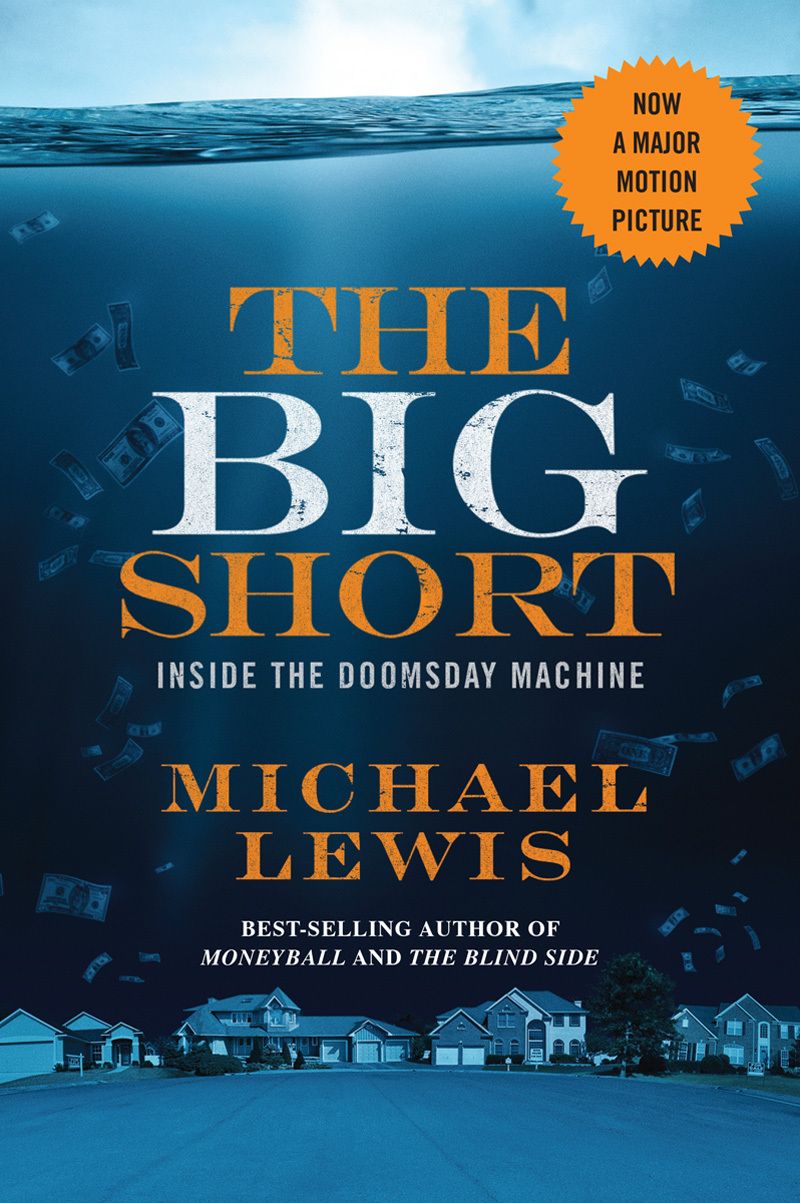
The Big Short Book Summary
Inside the Doomsday Machine
Book by Michael Lewis
Summary
In "The Big Short," Michael Lewis tells the story of the contrarian investors who predicted the subprime mortgage crisis and made a fortune betting against the bubble, exposing the greed, delusion, and perverse incentives that nearly brought down the global financial system.
The Secret Origin Of The Subprime Mortgage Crisis
In the early 2000s, Steve Eisman, an equity analyst covering consumer finance companies, started noticing troubling trends in the subprime mortgage industry. Lenders like Household Finance were making increasingly risky loans to lower-income borrowers. With the help of his analyst Vinny Daniel, Eisman dug into the details and realized the entire industry was a house of cards built on unsustainable lending practices. They started shorting the stocks of subprime lenders.
Section: 1, Chapter: 1
Exploiting The Rating Agencies' Flawed Models
To maximize profits, lenders and investment banks exploited flaws in the rating agency models:
- Using "thin-file" FICO scores from borrowers with limited credit history
- Focusing on floating-rate loans the agencies favored vs fixed-rate
- Offsetting high-risk loans with safer ones to game the averages
This allowed them to get high ratings on subprime mortgage bonds and CDOs that were far riskier than they appeared. Wall Street insiders knew the game, but the rating agencies were oblivious.
Section: 1, Chapter: 1
How To Turn Lead Into Gold
Here's how Wall Street alchemized risky subprime loans into "triple-A" gold:
- Make increasingly risky loans to subprime borrowers
- Package loans into mortgage bonds, slice into "tranches"
- Build CDOs out of lower-rated tranches of mortgage bonds
- Get rating agencies to bless 80% of CDOs as triple-A
- Sell triple-A CDOs to investors as nearly risk-free
- Repeat steps 1-5 using unsold lower CDO tranches
Most investors were oblivious, but people like Eisman, Burry and Lippmann spotted the opportunity to short.
Section: 1, Chapter: 2
Burry's Unique Background And Investing Style
Michael Burry was a misfit in the investing world. A medical doctor with little formal finance training, he had a penchant for exhaustive research and a willingness to go against the grain. Burry's unique perspective as an industry outsider allowed him to spot the flaws in subprime mortgage bonds that Wall Street insiders were blind to. His story showcases the value of unconventional backgrounds and contrarian thinking in investing.
Section: 1, Chapter: 2
Betting Against The Housing Bubble
Ways to bet against the housing market before the crash:
- Shorting stocks of subprime lenders and homebuilders
- Buying credit default swaps on subprime mortgage bonds
- Buying puts or shorting subprime mortgage bond indices
The key was spotting the bubble early and finding asymmetric ways to bet against it with limited downside risk. This allowed investors like Eisman and Burry to make huge profits when it popped.
Section: 1, Chapter: 3
Cornwall Capital's Unconventional Origins
Cornwall Capital, a tiny hedge fund started by Charlie Ledley and Jamie Mai, was an unlikely player in the subprime trade. Operating out of a Berkeley garage with $100k in starting capital, they were the definition of a shoestring operation. But their outsider status and willingness to look where others weren't allowed them to spot the opportunity in subprime mortgage bonds. Cornwall's story shows you don't need an elite pedigree or billions in capital to make it on Wall Street - just original thinking and relentless drive.
Section: 1, Chapter: 3
The "Event-Driven" Investing Approach
Cornwall Capital's strategy for finding mispricings:
- Look for potential catalysts that could move a security's price
- Determine if the market is mispricing the probability/impact
- Structure a trade with asymmetric risk/reward if catalyst occurs
- Aim for "small loss if wrong, huge gain if right" payoff
- Avoid overpaying for the "option" on the event occurring
This approach led them to buy cheap credit default swaps on subprime mortgage bonds, which paid off big when defaults spiked.
Section: 1, Chapter: 3
Related Content
The Tipping Point Book Summary
Malcolm Gladwell
The Tipping Point reveals the hidden forces that cause social epidemics - from fashion trends to crime waves - to spread like viruses, and shows how to start and control positive epidemics of our own.
The Tipping Point reveals the hidden forces that cause social epidemics - from fashion trends to crime waves - to spread like viruses, and shows how to start and control positive epidemics of our own.
Psychology
Personal Development
Sociology
Economics
Thinking Fast and Slow Book Summary
Daniel Kahneman
Kahneman explores the two systems that drive the way we think: the intuitive, automatic System 1 and the deliberate, analytical System 2. It explores how these systems shape our judgments, decisions, and biases, revealing the surprising power of intuition and the pitfalls of overconfidence.
Kahneman explores the two systems that drive the way we think: the intuitive, automatic System 1 and the deliberate, analytical System 2. It explores how these systems shape our judgments, decisions, and biases, revealing the surprising power of intuition and the pitfalls of overconfidence.
Psychology
Personal Development
Business