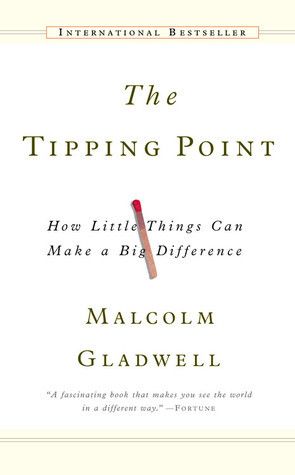
The Tipping Point Book Summary
How Little Things Can Make a Big Difference
Book by Malcolm Gladwell
Summary
The Tipping Point reveals the hidden forces that cause social epidemics - from fashion trends to crime waves - to spread like viruses, and shows how to start and control positive epidemics of our own.
The Three Rules Of Epidemics
Gladwell introduces the concept of social epidemics - that ideas, products, messages and behaviors spread like viruses. The book will explain the three rules that cause them to "tip" into widespread popularity:
- The Law of the Few: a handful of exceptional people play an outsize role in spreading ideas
- The Stickiness Factor: there are specific ways to make a message memorable and "sticky"
- The Power of Context: epidemics are sensitive to the conditions and circumstances of the times and places they occur
These three elements can cause rapid, dramatic changes in society - often unexpectedly and inexplicably.
Section: 1, Chapter: 1
How New York's Crime Epidemic Tipped
In the mid-1990s, crime in New York City plummeted rapidly and dramatically - the murder rate fell by 2/3 in 5 years. Gladwell argues this epidemic of crime reduction tipped due to a combination of small, subtle factors:
- Fixing broken windows and cleaning up graffiti - sending a signal of order
- Cracking down on fare-beating in the subways
- Rebuilding the organizational structure and management of the police
These changes in environment and context made people more likely to obey the law. The decline was too rapid to be explained by big slow variables like the economy, drug use, etc. "The Power of Context says that human beings are a lot more sensitive to their environment than they may seem."
Section: 1, Chapter: 1
It Only Takes A Few To Start An Epidemic
The Law of the Few states that social epidemics are driven by a small number of exceptional people. In disease epidemics, often 20% of people do 80% of the transmission.
The same applies to social changes: "In the case of Hush Puppies, the great mystery is how those shoes went from something worn by a few fashion-forward downtown Manhattan hipsters to being sold in malls across the country.
What was the connection between the East Village and Middle America? The Law of the Few says the answer is that one of these exceptional people found out about the trend, and through social connections and energy and enthusiasm and personality spread the word about Hush Puppies just as people like Gaetan Dugas were able to spread HIV."
Section: 1, Chapter: 1
Little Changes Can Cause Big Effects
The Stickiness Factor reminds us that small, seemingly trivial changes in the presentation or structuring of information can make a big difference in how much impact it makes. Don't underestimate the power of subtle "tweaks" to make your message or product more memorable, actionable, and compelling. Look for those tiny changes that can energize or reengineer your idea and make it tip. Examples in the book include:
- Adding a map to an anti-smoking ad made it much more effective
- Putting mirrors in a workplace cut employee theft
- Sesame Street became a hit by constantly tinkering with small elements of the show to maximize viewer attention and retention
Section: 1, Chapter: 1
Connectors, Mavens, And Salesmen
The Law of the Few relies on three key types of people who are critical to social epidemics:
- Connectors are people with a special gift for bringing the world together. They have extraordinarily large social networks and are great at making friends and acquaintances. Examples include Paul Revere and the popular girl in high school who knows everyone.
- Mavens are information specialists. They accumulate knowledge and are eager to share it with others. They start word-of-mouth epidemics due to their knowledge, social skills, and ability to communicate. Examples include a friend who knows all about the latest gadgets or restaurants.
- Persuaders are charismatic people with powerful negotiation skills. They exert "soft" influence rather than direct persuasion. Examples include successful salespeople and advertisers.
Any social epidemic tips because of the involvement of Connectors, Mavens, and Persuaders. They are the ones who make things happen.
Section: 1, Chapter: 2
Six Degrees Of Separation
Stanley Milgram's famous experiment showed that most people are connected by about 6 links in a chain. A few key points:
- A very small number of people are connected to everyone else in just a few steps, while the rest of us are linked to the world through those special few.
- In a social epidemic, Connectors spread ideas to a wide range of people, Mavens provide the message itself, and Persuaders convince people to act on that message.
- Paul Revere was a Connector, spreading the word "The British are coming!" His social connections enabled him to tip public opinion and mobilize resistance.
"Six degrees of separation doesn't mean that everyone is linked to everyone else in just six steps. It means that a very small number of people are linked to everyone else in a few steps, and the rest of us are linked to the world through those special few."
Section: 1, Chapter: 2
The Diffusion Model
Researchers have studied how new ideas and innovations spread through a population, known as the diffusion model:
- Innovators are adventurous people who eagerly try new ideas
- Early Adopters are influential, respected, careful choosers
- Early Majority are thoughtful people who accept change more quickly than average
- Late Majority are skeptical people who adopt new ideas after the majority
- Laggards are traditional, conservative people who are last to change
Geoffrey Moore noted a "chasm" between the Early Adopters and Early Majority. Epidemics only tip once you reach the Early Majority. To do that, the idea has to be translated from something specialized and difficult to understand to something accessible to the mainstream. That's the job of Connectors, Mavens, and Persuaders - to bridge the chasm.
Section: 1, Chapter: 2
Sesame Street: The Stickiness Factor In Action
Sesame Street succeeded because it learned how to make TV sticky for kids:
- It discovered that kids don't watch TV passively but actively engage if the content is compelling
- It pioneered making learning fun and accessible with entertaining characters, storylines and music
- It constantly tested which elements held kids' attention and which caused them to tune out
- It made small, subtle tweaks to make the educational content as memorable and impactful as possible
"If you paid careful attention to the structure and format of your material, you could dramatically enhance stickiness. But is it possible to make a show even stickier than Sesame Street?"
Section: 1, Chapter: 3
Making Messages Memorable And Actionable
To make your message "sticky," pay close attention to its structure and format, not just its content:
- Break it down into the simplest possible terms so people can understand and absorb it
- Tell stories, use humor, and create curiosity to engage people's emotions
- Provide specific, concrete calls to action so people know exactly what to do
- Don't overwhelm with information; be succinct and prioritize the core message
- Constantly test and refine your approach based on feedback and results
The goal is to package your message in a way that makes it impossible to ignore and easy to spread.
Section: 1, Chapter: 3
The Power Of Television Advertising
According to studies, most people need to see an ad at least 6 times before they remember it. Procter & Gamble and other consumer goods giants spend billions "hammering home" simple messages again and again until they stick.
In one famous study, a scientist tried to persuade college students to get tetanus shots with a campus booklet and only 3% did. When he added a map of the campus clinic's location and times shots were available, the vaccination rate jumped to 28%. That tiny tweaks made the message actionable and enabled it to tip.
Section: 1, Chapter: 3
Related Content
Where Good Ideas Come From Book Summary
Steven Johnson
Steven Johnson argues that breakthrough innovations arise from connected environments that enable the serendipitous collision of slow hunches, happy accidents, and novel combinations of existing ideas, rather than isolated eureka moments of lone genius.
Steven Johnson argues that breakthrough innovations arise from connected environments that enable the serendipitous collision of slow hunches, happy accidents, and novel combinations of existing ideas, rather than isolated eureka moments of lone genius.
History
Innovation
Science
Outliers Book Summary
Malcolm Gladwell
Outliers looks into the lives of exceptional individuals, uncovering the often-overlooked factors that contribute to their success. It challenges the notion of the "self-made" individual, highlighting the crucial role of opportunity, cultural legacies, and hidden advantages in shaping the path to achievement.
Outliers looks into the lives of exceptional individuals, uncovering the often-overlooked factors that contribute to their success. It challenges the notion of the "self-made" individual, highlighting the crucial role of opportunity, cultural legacies, and hidden advantages in shaping the path to achievement.
Psychology
Performance
Personal Development
Rebel Ideas Book Summary
Matthew Syed
Matthew Syed reveals the vital ingredient missing from our understanding of success: cognitive diversity. Rebel Ideas shows how bringing together different insights, perspectives and thinking styles turbocharges creativity, problem-solving and decision-making, to improve performance in today's complex world.
Matthew Syed reveals the vital ingredient missing from our understanding of success: cognitive diversity. Rebel Ideas shows how bringing together different insights, perspectives and thinking styles turbocharges creativity, problem-solving and decision-making, to improve performance in today's complex world.
Psychology
Innovation
Business
Leadership