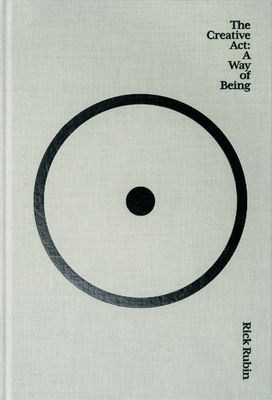
The Creative Act Book Summary
A Way of Being
Book by Rick Rubin
Summary
In "The Creative Act: A Way of Being," Rick Rubin shares insights from a lifetime of making art, distilling the creative process into a spiritual practice accessible to anyone, where ideas are channeled from the collective unconscious and shaped into meaningful works through the artist's unique filter, ultimately connecting us back to our shared humanity.
Creativity Is Our Birthright
The book opens by emphasizing that creativity is a fundamental part of being human, not a rare ability. We create every day through conversations, solutions to problems, and the way we perceive and compose our reality. Living as an artist is about paying attention, being sensitive, and making attuned choices. Our entire life is a form of self-expression and a work of art.
Section: 1, Chapter: 1
Tune In To The Cosmic Timetable
- The universe functions on rhythms that we don't control, like the seasons. Artists are on this "cosmic timetable" just like nature.
- Ideas ripen and find expression through makers on a schedule. If you have an exciting idea but don't act on it, it may manifest through someone else.
- The best artists are the ones most sensitive to picking up on what wants to emerge at a particular time. Attune yourself to these rhythms.
Section: 1, Chapter: 2
Expand Your Awareness To Receive More
A practice is repeating an exercise to cultivate an open, aware state.
- Build rituals into your day to expand awareness, like taking deep breaths upon waking, eating meals mindfully, going on nature walks, etc.
- The purpose is to evolve how you see the world outside of these practices, to live in constant openness to receiving.
- Awareness needs constant refreshing. Keep the practice alive by reinventing it.
Section: 1, Chapter: 3
How to Make a Life
"We make a living by what we get, we make a life by what we give." - Winston Churchill
Section: 1, Chapter: 4
Nature Provides Endless Inspiration
The most absolute, enduring works we can experience are in nature. Endless awe and beauty can be found in the changes of light, the seasons, the moon and stars. We don't need to understand nature to appreciate it. Communing with nature connects us to our own nature. Notice when your breath is taken away by the natural world. Let it enrich your life and set an example for your own creations.
Section: 1, Chapter: 5
Cultivate Beginner's Mind
The book shares the story of the AI AlphaGo beating the world champion at the ancient Chinese game Go. By learning the game from scratch, without human biases, AlphaGo made a totally unique move no human ever had in thousands of years, which led to its groundbreaking win. This exemplifies "beginner's mind" - approaching something with fresh eyes, not limited by conventions. As artists, strive to see the extraordinary in the mundane, without preconceived ideas constraining you. What new possibilities emerge?
Section: 1, Chapter: 6
Flaws Make Us Human
- All artists deal with self-doubt. The sensitivity that allows you to make art also makes you vulnerable.
- Flaws in your work reflect your humanity. If insecurity is part of who you are, your art will be more truthful for it.
- Reframe insecurities as a guiding force. They only hinder you if they stop you from sharing your heart.
- Your desire to create must be greater than your fear. Accept the self-doubt as part of the process rather than trying to eliminate it.
Section: 1, Chapter: 7
Set The Stakes Low To Play Freely
See your work as an experiment you can't predict the outcome of. There is no right or wrong, just free play. Aiming for perfection gets in the way of fun. Find comfort in the process, not the results. Setting the bar low frees you to explore without attachment. Active experimentation leads to happily surprising yourself.
Section: 1, Chapter: 7
Distraction As A Creative Strategy
Distractions like driving, walking, swimming, etc. can keep part of your mind busy while freeing the rest to receive ideas. When stuck, step away from a project to allow solutions to emerge. Hold the problem lightly in the back of your mind while doing something else. Physical movement can help shake ideas loose. Engage in activities you can do on autopilot. Distraction is not procrastination. It's a deliberate technique to support the work.
Section: 1, Chapter: 8
Test Every Idea
There's a gap between imagination and reality. An idea that seems brilliant in your mind may not work in practice, and vice versa. The only way to know if an idea works is to test it out, especially the ones that seem unlikely.
- Look for polarities and see how they impact the work. When working with others, demonstrate ideas rather than just discussing them. Words don't do ideas justice.
- Give yourself permission to be wrong and be surprised. Follow the work where it wants to go.
Section: 1, Chapter: 12
Related Content
Think Again Book Summary
Adam Grant
Think Again is a compelling exploration of the power of knowing what you don't know, and how embracing the joy of being wrong and actively questioning your opinions can help you make better decisions
Think Again is a compelling exploration of the power of knowing what you don't know, and how embracing the joy of being wrong and actively questioning your opinions can help you make better decisions
Psychology
Business
Personal Development
Rebel Ideas Book Summary
Matthew Syed
Matthew Syed reveals the vital ingredient missing from our understanding of success: cognitive diversity. Rebel Ideas shows how bringing together different insights, perspectives and thinking styles turbocharges creativity, problem-solving and decision-making, to improve performance in today's complex world.
Matthew Syed reveals the vital ingredient missing from our understanding of success: cognitive diversity. Rebel Ideas shows how bringing together different insights, perspectives and thinking styles turbocharges creativity, problem-solving and decision-making, to improve performance in today's complex world.
Psychology
Innovation
Business
Leadership