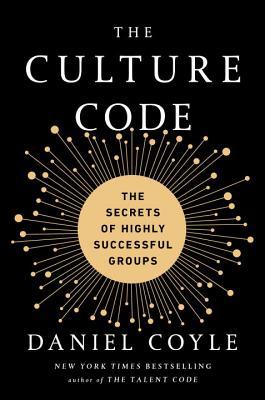
The Culture Code Book Summary
The Secrets of Highly Successful Groups
Book by Daniel Coyle
Summary
The Culture Code reveals the secrets of highly successful groups, showing that the key to unleashing a team's full potential lies in creating a culture of safety, shared vulnerability, and purpose.
1. Build Safety
Safety Is The Foundation Of Strong Culture
The overarching insight from Chapter 1 is that psychological safety is the foundation on which all strong cultures and successful groups are built. People's brains are constantly assessing their environment and asking "Are we safe here? What's our future with these people? Are there dangers lurking?" When people feel safe and connected to others in a group, it unlocks neural pathways that enable cooperation, creativity and high performance. Conversely, when safety is absent, people become anxious, guarded and self-protective, and group performance suffers dramatically. Building safety is therefore the leader's top priority and essential for group success.
Section: 1, Chapter: 1
Belonging Cues Light Up The Brain
MIT's Human Dynamics Lab, led by Professor Alex Pentland, used sociometric badges to measure the behavioral signals exchanged in successful groups. They found that high-performing groups consistently displayed a set of subtle cues that generate feelings of belonging and safety:
- Close physical proximity (often in circles)
- Profuse amounts of eye contact
- Lots of short, energetic exchanges (no long speeches)
- High levels of mixing; everyone talks to everyone
- Few interruptions
- Intensive, active listening
- Humor, laughter
Pentland found that belonging cues were the single greatest predictor of group performance, more important than all the individual skills and intelligence of the group's members. These cues trigger the release of oxytocin and activate neural pathways of trust and cooperation, enabling the group to sync their behaviors and act as one.
Section: 1, Chapter: 1
Seek Out Belonging Cues To Create Psychological Safety
Building safety is a fluid, improvisational skill, akin to learning to pass a soccer ball to a teammate during a game. It requires you to recognize patterns, react quickly, and deliver the right signal at the right time to show your people they are valued and connected.
Displaying belonging cues (such as affirmative body language and spotlighting our own vulnerability) consistently over time will get the "static out of the way" and allow your people to do their best work together. As NYU professor Jay Van Bavel says, "A mere hint of belonging is not enough; one or two signals are not enough. We are built to require lots of signaling, over and over."
Section: 1, Chapter: 1
Mental Mountains Are Made Out Of Many Small Moments
In May 2002, an engineer at Google named Jeff Dean abandoned his own work for an entire weekend to fix a struggling side project - the AdWords engine, which was failing to match appropriate ads to search queries, jeopardizing the product's future.
Dean's fix unlocked a breakthrough that catapulted AdWords to wild success, generating billions in revenue for Google over the next few years.
The key insight is that Dean's decision didn't arise out of nowhere - it was enabled by thousands of small moments, exchanges and belonging cues that made him feel safe to take a risk. Google's early culture was rich in vulnerability, openness and connection - from Larry Page's "These ads suck" note pinned in the shared kitchen, to the frequent all-hands debates and social activities like roller hockey games.
Section: 1, Chapter: 2
Sorry About The Rain
In another study, people asking to borrow a stranger's phone were 422% more likely to get a "yes" response if they preceded their request with the words "I'm so sorry about the rain!" That one simple acknowledgement of shared experience increased compliance more than five-fold. Expressing vulnerability or invoking common ground activates the human impulse to cooperate, even between people with no existing relationship.
Section: 1, Chapter: 2
The Christmas Truce
On Christmas Eve 1914, in the midst of brutal trench warfare, German and British troops along the Western front spontaneously stopped fighting and interacted peacefully with each other, even emerging into "no man's land" to exchange gifts, share meals and play soccer together.
The Christmas Truce seems miraculous, but it actually arose from a steady buildup of small vulnerabilities and moments of connection in the preceding weeks. The physical proximity of the trenches meant the soldiers could hear each other's conversations, songs and daily routines. They developed a sense of shared identity and empathy as they realized their supposed "enemies" were not so different from themselves. Informal truces emerged around daily rituals like meals and resupply.
Section: 1, Chapter: 3
From 50% Attrition To 250% Retention
WIPRO, a successful Indian call center, was facing a costly problem - 50-70% of its employees quit within a year of being hired. Traditional incentives and perks had no impact on retention. So WIPRO ran an experiment - they divided new hires into three groups:
- Group 1 heard stories about WIPRO's accomplishments and star performers. At the end they received a fleece sweatshirt with the WIPRO logo.
- Group 2 was asked to share their own strengths, proud moments, and times they had made a difference. At the end they received a fleece sweatshirt with their name and WIPRO's logo.
- Control group went through the normal orientation with no extra session.
The results were stunning - Group 2 had a 250% higher retention rate than Group 1 and 157% higher than the control group. By investing one hour to make people feel personally recognized and valued, with specific reflections on their own potential, WIPRO was able to massively boost their emotional commitment to the organization.
Section: 1, Chapter: 3
The First Follower Transforms A Lone Nut Into A Leader
The "first follower" principle has many applications, but a key one is to build psychological safety on your team:
- When someone shares a dissenting opinion or crazy idea in a meeting, publicly thank them and engage with their view, even (especially) if you disagree. Doing so will encourage others to voice unorthodox thoughts as well.
- If a team member admits a mistake or failure, appreciate their honesty and vulnerability. Demonstrating that it's safe to take interpersonal risks will inspire others to do the same.
- When you notice someone going out of their way to support or include others, shine a spotlight on their actions so it becomes a model for the group.
Section: 1, Chapter: 3
Embrace The Discomfort
One of the hardest parts of building a cohesive culture is learning to tolerate the discomfort, inefficiency and messiness of open, honest conversations. Giving and receiving real-time candid feedback, admitting mistakes, confronting conflicts, and reflecting on tough challenges is awkward and painful.
But the leaders in this book emphasize that you have to push through that resistance. The pain isn't a problem but a sign of progress. You will realize that the hard, scary conversations are the real work of building a great team. Some ways to embrace the productive discomfort:
- Institute regular AARs (after-action reviews) to reflect on successes and failures
- Hold open forums where people can ask leaders anything, no matter how sensitive
- Practice sharing unfinished, imperfect work to get feedback from peers
- When conflicts arise, resist the urge to smooth things over; support the team to confront the tensions head-on
Section: 1, Chapter: 4
The Allen Curve
In the 1970s, MIT professor Thomas Allen set out to discover why some engineering teams were more productive and innovative than others. What he found - the best predictor of team success was not skill level, resources, or experience, but simple physical proximity.
- When people sit within 8 meters of each other, communication and collaboration skyrocket, with an exponential increase the closer you get
This pattern is known as the Allen Curve. It reveals the huge impact of proximity on behavior and output. The simple act of being able to see and talk to people in an instant, without barriers or formality, is an incredible accelerator of trust and creative problem-solving. To apply this principle:
- Organize your physical space around an open central area that enables "collisions" between people
- Designate team spaces for informal hangouts (couches, snacks, games, etc.)
- Reduce private offices and increase shared spaces
Section: 1, Chapter: 5
2. Share Vulnerability
3. Establish Purpose
Related Content

Crossing the Chasm Book Summary
Geoffrey Moore
"Crossing the Chasm" unveils the hidden challenges of launching disruptive technologies and provides a proven roadmap for navigating the treacherous gap between early adopters and mainstream markets, enabling companies to achieve market leadership and sustainable growth.
"Crossing the Chasm" unveils the hidden challenges of launching disruptive technologies and provides a proven roadmap for navigating the treacherous gap between early adopters and mainstream markets, enabling companies to achieve market leadership and sustainable growth.
Business
Management
Technology

Think Again Book Summary
Adam Grant
Think Again is a compelling exploration of the power of knowing what you don't know, and how embracing the joy of being wrong and actively questioning your opinions can help you make better decisions
Think Again is a compelling exploration of the power of knowing what you don't know, and how embracing the joy of being wrong and actively questioning your opinions can help you make better decisions
Psychology
Business
Personal Development