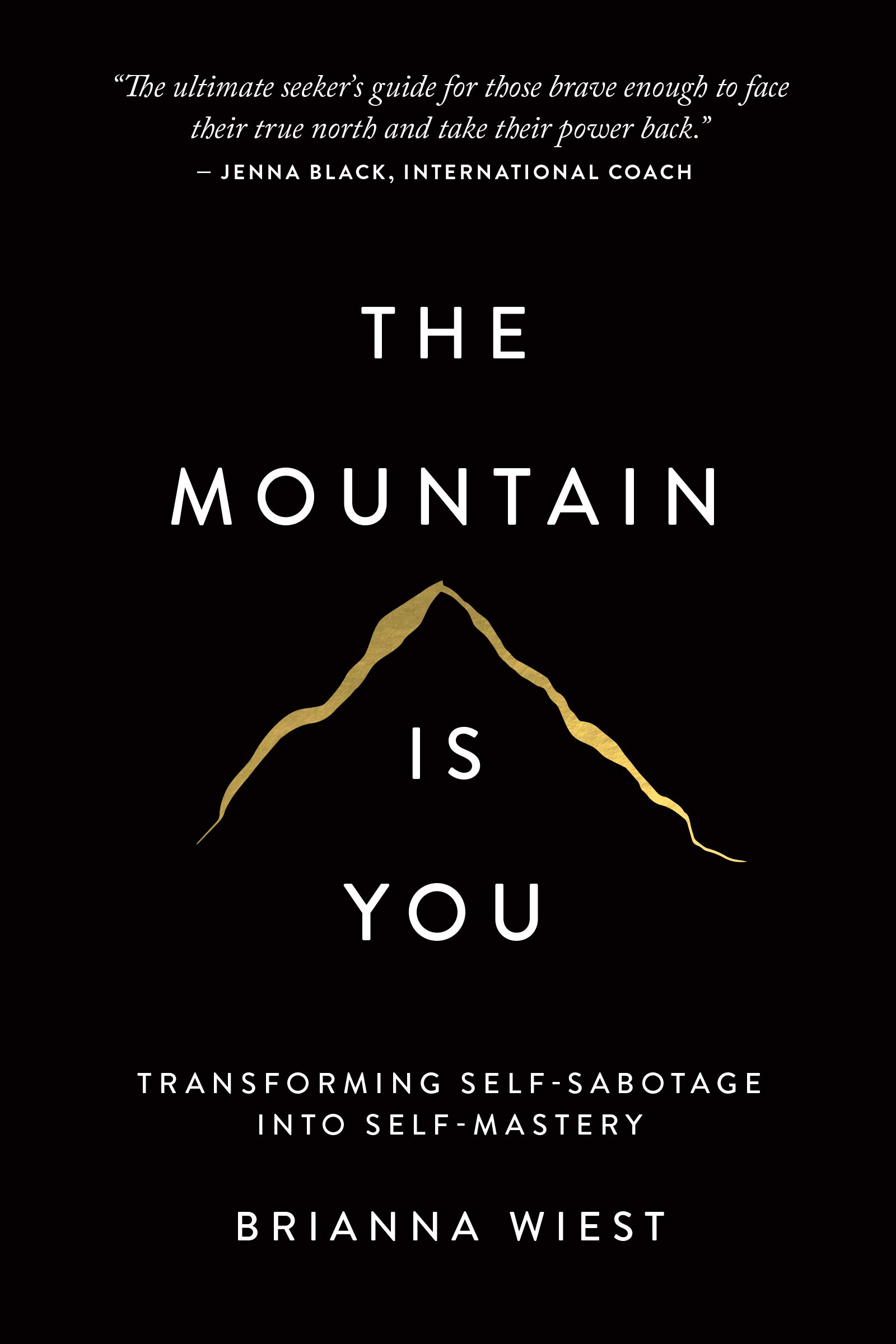
The Mountain Is You Book Summary
Transforming Self-Sabotage Into Self-Mastery
Book by Brianna Wiest
Summary
For centuries, the mountain has been used as a metaphor for the big challenges we face, especially ones that seem impossible to overcome. To scale our mountains, we actually have to do the deep internal work of excavating trauma, building resilience, and adjusting how we show up for the climb. In the end, it is not the mountain we master, but ourselves.
Your Mountain Is You
In the end, it is not the mountain that you must master, but yourself.
Section: 1, Chapter: 1
The Mountain Is A Metaphor
Just as a mountain is formed when two sections of ground are forced against one another, your mountain will arise out of coexisting but conflicting needs. Your mountain requires you to reconcile two parts of you: the conscious and the unconscious, the part of you that is aware of what you want and the part of you that is not aware of why you are still holding yourself back.
Historically, mountains have been used as metaphors for spiritual awakenings, journeys of personal growth, and insurmountable challenges. The objective of being human is to grow, and our problems often serve as catalysts for this growth.
Section: 1, Chapter: 1
Rock Bottom Is Where The Path Begins
If you know that change needs to be made in your life, it is okay if you are far away from your goal or if you cannot yet conceive how you will arrive. It is okay if you are at the beginning, at rock bottom, or at the foot of your mountain having failed before.
Rock bottom becomes a turning point because it is only at that point that most people think: I never want to feel this way again. This thought is not just an idea but a declaration and resolution - the foundation upon which you build everything else.
Most people don't actually change their lives until not changing becomes the less comfortable option. When you really want to change, let yourself be consumed with determination: not toward others or the world, but within yourself. Focus on one thing only: that you will not go on as you are.
Section: 1, Chapter: 1
Self-Sabotage Is A Coping Mechanism
Self-sabotage is what happens when we refuse to consciously meet our innermost needs, often because we do not believe we are capable of handling them.
We sabotage relationships because what we really want is to find ourselves, though we're afraid to be alone. We sabotage professional success because what we really want is to create art. We sabotage our healing journey by psychoanalyzing our feelings to avoid experiencing them. We sabotage our self-talk because if we believed in ourselves, we'd feel free to take risks and be vulnerable.
In the end, self-sabotage is very often just a maladaptive coping mechanism, a way we give ourselves what we need without having to actually address what that need is.
Section: 1, Chapter: 2
Understanding Core Commitments
Self-sabotage often stems from what are called core commitments - your primary unconscious objectives or intentions for your life. These are what you want more than anything else, though you're often unaware of them.
Your core commitments are actually cover-ups for core needs. If your subconscious commitment is to be in control, your core need is trust. If your commitment is to be needed, your need is to know you are wanted. If your commitment is to be loved by others, your need is self-love.
The less you feed your core need, the "louder" your commitment symptoms will be. For example, if you need trust but are committed to staying in control, the less supported you feel, the more your negative coping mechanisms like disordered eating or hypervigilance will flare up.
Section: 1, Chapter: 2
Disconnect Between Action And Feeling
The final and most important lesson to overcome self-sabotage is learning to disconnect action from feeling. We are not held back in life because we're incapable of change; we're held back because we don't feel like making change, and so we don't.
Our feelings are essentially wired as comfort systems, producing "good" feelings when we do what we've always done. Even achievements that make us happy are those we perceive as offering greater safety. If an achievement puts us at risk or exposes us to something unfamiliar, we won't initially feel happy about it, even if it's positive.
The key is to take action before you feel like doing it. Taking action builds momentum and creates motivation. You must guide your life with logic and reason, not emotionality, and train yourself to prefer behaviors that are good for you.
Section: 1, Chapter: 2
Defining Health On Your Own Terms
One of the most common ways people sabotage themselves is by maintaining unhealthy habits that actively keep them from their goals. To overcome this, define health on your own terms - what does a healthy life look like for you personally?
It's difficult to rely solely on someone else's definition of healthfulness because we all have different needs, preferences, and schedules. Figure out what makes you feel best and what combination of healthy eating, exercise, and sleep works for your life.
Establish healthy habits gradually rather than forcing dramatic changes. Instead of committing to an hour at the gym at 6 AM, try 15 minutes or swap for a class you enjoy. Make it easy for yourself to succeed by preparing meals in advance or keeping water at your desk. Gradually recondition yourself to prefer habits that actually work for your lifestyle.
Section: 1, Chapter: 2
Upper Limit Problems
There is only a certain amount of happiness that most of us will allow ourselves to feel. Gay Hendricks calls this your "upper limit" - essentially the amount of "good" that you're comfortable having in your life.
When you begin to surpass your upper limit, you start to unconsciously sabotage what's happening to bring yourself back to what's familiar. This can manifest physically as aches, pains, headaches, or tension. For others, it manifests emotionally as resistance, anger, guilt, or fear.
We are not wired to be happy; we are wired to be comfortable, and anything outside our comfort zone feels threatening until we become familiar with it. To resolve upper limit problems, slowly acclimate yourself to your new "normal" rather than shocking yourself with big changes.
Section: 1, Chapter: 2
Perfectionism vs. Progress
When we expect our work must be perfect the first time we do it, we get trapped in a cycle of perfectionism. Contrary to popular belief, perfectionism isn't a good thing - it sets up unrealistic expectations about what we're capable of and holds us back from showing up and trying.
Perfectionism prevents us from doing the important work of our lives. When afraid of failing or feeling vulnerable, we avoid the work required to actually become skilled. We sabotage ourselves because it's the willingness to show up repeatedly that brings us to mastery.
To resolve this, stop worrying about doing it well and just do it. Don't worry about writing a bestseller, just write. Don't worry about making a Grammy-winning hit, just make music. Focus on progress, not perfection. Get things done, then improve them later.
Section: 1, Chapter: 2
Resistance As Self-Sabotage
Resistance is what happens when we have a new project we need to work on and simply can't bring ourselves to do it. It's when we get into a great new relationship and keep bailing on plans. It's when we have an amazing idea for our business and then feel tension when it comes time to actually work.
Interestingly, we often feel resistance in the face of what's going right in our lives, not what's going wrong. Resistance is your way of slowing down and making sure it's safe to get attached to something new and important.
To overcome resistance, refocus on what you want and why you want it. Identify unconscious beliefs holding you back, and step back into the work when inspired. Wanting is the entryway to showing up after resistance.
Section: 1, Chapter: 2
Signs You're In A Self-Sabotage Cycle
You may be in a cycle of self-sabotage if:
- You're more aware of what you don't want than what you do want
- You spend more time trying to impress people who don't like you than with people who love you
- You're putting your head in the sand about basic facts of your life
- You care more about convincing others you're okay than actually being okay
- Your main priority is being liked, even at the expense of being happy
- You're more afraid of your feelings than anything else
- You're blindly chasing goals without asking why you want them
- You're treating your coping mechanisms as the problem rather than addressing the underlying needs
- You value your doubt more than your potential
- You're trying to care about everything instead of prioritizing what matters most
Section: 1, Chapter: 2
Related Content
The Comfort Crisis Book Summary
Michael Easter
In "The Comfort Crisis," Michael Easter investigates how our modern culture of constant comfort may be making us less resilient, more prone to illness, and robbing us of the very experiences that make us feel most alive.
In "The Comfort Crisis," Michael Easter investigates how our modern culture of constant comfort may be making us less resilient, more prone to illness, and robbing us of the very experiences that make us feel most alive.
Personal Development
Society
Psychology

Mindset Book Summary
Carol Dweck
Mindset reveals the power of our beliefs to shape our lives, and shows how adopting a growth mindset - the belief that abilities can be developed through dedication and hard work - can help us achieve more than we ever thought possible in every area of life.
Mindset reveals the power of our beliefs to shape our lives, and shows how adopting a growth mindset - the belief that abilities can be developed through dedication and hard work - can help us achieve more than we ever thought possible in every area of life.
Learning
Education
Psychology
Personal Development