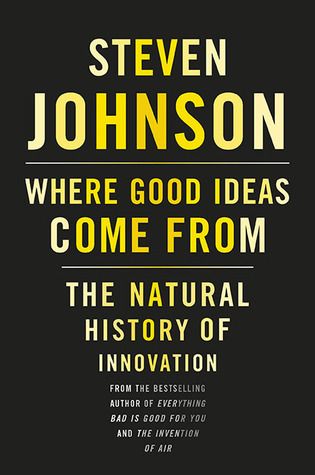
Where Good Ideas Come From Book Summary
The Natural History of Innovation
Book by Steven Johnson
Summary
Steven Johnson argues that breakthrough innovations arise from connected environments that enable the serendipitous collision of slow hunches, happy accidents, and novel combinations of existing ideas, rather than isolated eureka moments of lone genius.
Darwin's Paradox: How Coral Reefs Thrive in Nutrient-Poor Waters
Charles Darwin was puzzled by how coral reefs, teeming with diverse life, could thrive in the nutrient-poor waters of the tropics. He realized the coral polyps themselves engineer the ecosystem, building calcium carbonate skeletons that provide habitat for millions of other species. Coral reefs demonstrate how certain environments enhance innovation by connecting ideas and making novel combinations possible.
Section: 1, Chapter: 1
Superlinear Scaling: Why Cities And The Web Generate More Innovation
Research has found that cities and the Web demonstrate "superlinear scaling" in terms of innovation and creativity. As cities get bigger, the rate of innovation per capita increases, so a city of 5 million produces almost 3 times more innovation per resident than a town of 100,000. Similarly, the Web has explored the adjacent possible of its medium far faster than other communications technologies. The density of connections in these environments nurtures innovative ideas.
Section: 1, Chapter: 1
The 10/10 Rule: Major Innovations Take A Decade To Develop
Looking at the history of innovation in the 20th century, a clear pattern emerges:
- It takes roughly a decade for a major new communications technology to go from initial development to mass adoption (the "10/10 rule")
- Examples: Radio, television, VCRs, PCs, cell phones, GPS
- In contrast, web-based innovations like YouTube can go from idea to mass adoption in 1-2 years by building on pre-existing platforms
The 10/10 rule demonstrates how the pace of innovation depends heavily on the surrounding environment and available building blocks
Section: 1, Chapter: 1
Thinking Outside the Box
"No One Can Think Outside The Box Because The Box Is All There Is"
"The trick to having good ideas is not to sit around in glorious isolation and try to think big thoughts. The trick is to get more parts on the table."
Section: 1, Chapter: 1
Adjacent Possible: How Environments Constrain And Enable Innovation
Good ideas are constrained by the "adjacent possible" - the realm of options and combinations available at any given moment based on the elements present. Just as evolution proceeds by taking available resources and cobbling them together in new ways, human innovation depends on building with the materials at hand:
- The Analytical Engine failed because Babbage didn't have the right "spare parts" (electronic, not mechanical computing)
- YouTube could not have succeeded in 1995 because the Web lacked key building blocks like Adobe Flash video and widespread broadband
- Truly innovative environments make it easier to find and combine the necessary spare parts to explore the adjacent possible
Section: 1, Chapter: 1
Embrace Serendipity By Cultivating Hunches And Hobbies
To have more innovative ideas, embrace serendipity and create opportunities for hunches to collide:
- Keep a "commonplace book" to write down ideas, quotes, and thoughts, and revisit it to allow ideas to recombine
- Take on multiple hobbies to have more "spare parts" for mental recombination
- Go for walks or take "reading sabbaticals" to trigger new associations Cultivating slow hunches over time, combined with serendipitous collisions, is the key to innovation, not sudden epiphanies.
Section: 1, Chapter: 1
Liquid Networks: The Ideal Environment For Sharing And Connecting Ideas
Innovative ideas start as networks of neurons connecting in the brain. The best environments for nurturing ideas are similarly dense liquid networks that allow partial ideas to connect and complete each other. Examples include:
- The first cities, which led to an explosion of innovative ideas and technologies compared to disconnected bands of hunter-gatherers
- Coffeehouse culture during the Enlightenment, where scientists and intellectuals could serendipitously share ideas
- The Krebs Cycle in cell metabolism, which evolved because of the densely connected liquid environment inside cells
- Research labs, where group meetings around shared problems lead to breakthrough solutions
Section: 1, Chapter: 2
Related Content

Range Book Summary
David Epstein
"Range" challenges the conventional wisdom that early specialization is the key to success. Instead, Epstein argues that in our increasingly complex and unpredictable world, it is those with broad experience and diverse skills who are best equipped to thrive.
"Range" challenges the conventional wisdom that early specialization is the key to success. Instead, Epstein argues that in our increasingly complex and unpredictable world, it is those with broad experience and diverse skills who are best equipped to thrive.
Personal Development
Learning
Psychology
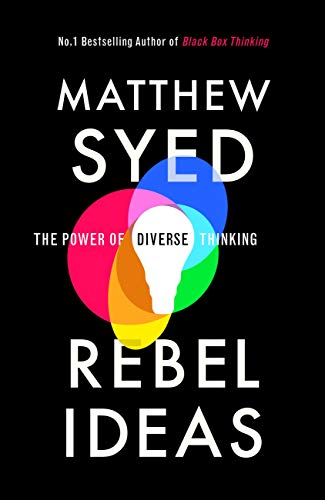
Rebel Ideas Book Summary
Matthew Syed
Matthew Syed reveals the vital ingredient missing from our understanding of success: cognitive diversity. Rebel Ideas shows how bringing together different insights, perspectives and thinking styles turbocharges creativity, problem-solving and decision-making, to improve performance in today's complex world.
Matthew Syed reveals the vital ingredient missing from our understanding of success: cognitive diversity. Rebel Ideas shows how bringing together different insights, perspectives and thinking styles turbocharges creativity, problem-solving and decision-making, to improve performance in today's complex world.
Psychology
Innovation
Business
Leadership