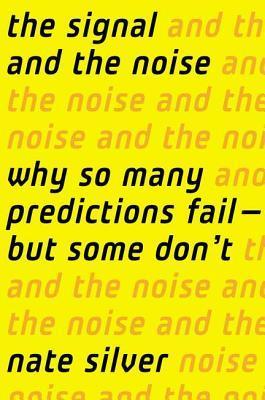
The Signal and the Noise Book Summary
Why So Many Predictions Fail—But Some Don't
Book by Nate Silver
Summary
In The Signal and the Noise, Nate Silver explores the art and science of prediction, explaining what separates good forecasters from bad ones and how we can all improve our understanding of an uncertain world.
The Catastrophic Failure Of Prediction In The 2008 Financial Crisis
he 2008 financial crisis represented a colossal failure of prediction by many of the institutions and individuals entrusted to forecast economic risk. Ratings agencies like Moody's and Standard & Poor's gave their highest AAA rating to mortgage-backed securities that were in reality extremely vulnerable to defaults. When the housing bubble burst, these securities failed at rates as high as 28%, compared to the 0.12% failure rate S&P had predicted for AAA-rated CDOs.
This predictive failure was widespread - from the ratings agencies to the banks issuing the securities to the regulators and economists who failed to sound adequate warnings. Incentive structures were poorly aligned, with entities like S&P being paid by the issuers of the securities they were rating. There was also a collective failure of imagination - an inability to consider that housing prices could decline significantly on a national basis. As a result, risks were severely underestimated, leading to the near-collapse of the global financial system when the housing bubble finally burst.
Section: 1, Chapter: 1
Nobody Has A Clue
"Nobody has a clue. It's hugely difficult to forecast the business cycle. Understanding an organism as complex as the economy is very hard." - Jan Hatzius
Section: 1, Chapter: 1
The Productivity Paradox And The Lag Between Technology And Productivity
The history of technology adoption is full of examples where the expected productivity benefits of a major innovation were slow to materialize - a phenomenon termed the "productivity paradox." In the 1970s and 1980s, for example, businesses made huge investments in computers and information technology. But productivity growth actually slowed during this period, puzzling economists.
It took a long time for businesses to figure out how to reorganize their processes and train their workforces to take full advantage of computers.
We're seeing a version of this story play out with Big Data and AI today. Despite the hype about these technologies revolutionizing every industry, hard productivity numbers have yet to catch up with the promised potential. That doesn't mean the revolution won't happen - just that it will likely take longer than expected as businesses gradually learn how to fully harness the power of these innovations.
Section: 1, Chapter: 1
The Challenges Of Economic Forecasting According To Jan Hatzius
Jan Hatzius, chief economist at Goldman Sachs, encapsulates the immense difficulties inherent to economic forecasting. He cites three main challenges:
- The economy is a dynamic, constantly evolving system with complex interrelationships and feedback loops that make it very difficult to determine cause and effect from economic data alone.
- The quality of economic data is often poor, with key indicators frequently revised months or years after they are first reported. GDP growth estimates, for example, have historically been revised by an average of 1.7 percentage points.
- Because the structure of the economy is always changing, past explanations for economic behavior may not hold in the future. Economists still debate whether the Great Recession marked a fundamental "regime change" in the economy.
As a result of these challenges, even the most sophisticated economic forecasting models have poor predictive records, routinely missing major turning points in the business cycle and failing to anticipate recessions.
Section: 1, Chapter: 2
Beware Overconfident Forecasts - Economists' Poor Track Record Of Predicting Recessions
One of the clearest lessons from economic history is to be deeply skeptical of overconfident economic forecasts, especially those that proclaim a "new era" of uninterrupted growth or that project present trends indefinitely into the future. Economists have a dismal record of predicting recessions and major turning points in the business cycle.
In the 2007-2008 financial crisis, for example, the median forecast from leading economists was that the economy would avoid recession and continue to grow. Even once the recession had already begun in December 2007, most economists still thought a recession was unlikely.
Part of the problem is incentives - bearish forecasts are often punished by markets and by clients who don't want to believe the party will ever end. There are also psychological biases at play, like recency bias (putting too much weight on recent events and performance) and overconfidence. Any projection that doesn't grapple with uncertainty and discuss the many ways the forecaster could be wrong is not worth very much.
Section: 1, Chapter: 2
Moneyball's Real Lesson
Many people interpreted the book and movie Moneyball to mean that statistics and quantitative analysis were a guaranteed path to success in baseball, while traditional subjective scouting was obsolete. But this is an oversimplification of the book's message.
In fact, the most successful MLB teams today employ a hybrid approach that synthesizes both scouting and statistical analysis. Even the famously data-driven Oakland A's have significantly increased their scouting budget under GM Billy Beane, recognizing the importance of data that can't be fully captured by stats.
The lesson of Moneyball is not that statistics are inherently superior to scouting or vice versa. It's that the best forecasts come from a thoughtful synthesis of both subjective and objective information. The key is having an open mind, considering multiple perspectives, and not being wedded to any one ideology. This applies far beyond baseball.
Section: 1, Chapter: 3
Why Scouts Were Wrong About Dustin Pedroia
Red Sox star second baseman Dustin Pedroia illustrates the limits of traditional baseball scouting and the dangers of relying on conventional wisdom. Coming out of college, most scouts saw Pedroia as too small and unathletic to be a great MLB player, despite his impressive performance.
But by using comparable players and a deeper statistical analysis, forecasting systems like PECOTA saw Pedroia's true potential. Despite his unimpressive physique, Pedroia had elite bat speed, excellent plate discipline, and a stellar track record vs top competition.
Of course, the Red Sox still had to trust their own judgment enough to give Pedroia an opportunity. The point is not that data is always right and scouts are always wrong, but that forecasters need to think for themselves, dig beneath surface-level narratives, and weigh evidence in a fair-minded way.
Section: 1, Chapter: 3
Successful Forecasts Are Probabilistic And Continuously Updated
Across a wide range of domains, the most accurate and useful forecasts share two key characteristics:
- They are probabilistic rather than deterministic. Instead of making a single point prediction ("GDP will grow 2.5% next year"), good forecasts provide a range and distribution of possible outcomes with associated probabilities. This honestly communicates the irreducible uncertainty around any forecast about the future. It also enables forecasters to be held accountable to results.
- Forecasts are updated continuously as new information becomes available. Static forecasts that never change are of limited use in a world where circumstances are constantly in flux. Good forecasters have the humility to change their minds in response to new facts. They understand that forecasting is an iterative process of getting closer to the truth, not an exercise in sticking to past positions.
By thinking in probabilities and continuously revising their estimates, these forecasters are able to substantially outperform "hedgehogs" who are overconfident in a single big-idea prediction.
Section: 1, Chapter: 3
This concept is also discussed in:
Range
Related Content
The Tipping Point Book Summary
Malcolm Gladwell
The Tipping Point reveals the hidden forces that cause social epidemics - from fashion trends to crime waves - to spread like viruses, and shows how to start and control positive epidemics of our own.
The Tipping Point reveals the hidden forces that cause social epidemics - from fashion trends to crime waves - to spread like viruses, and shows how to start and control positive epidemics of our own.
Psychology
Personal Development
Sociology
Economics
The Big Short Book Summary
Michael Lewis
In "The Big Short," Michael Lewis tells the story of the contrarian investors who predicted the subprime mortgage crisis and made a fortune betting against the bubble, exposing the greed, delusion, and perverse incentives that nearly brought down the global financial system.
In "The Big Short," Michael Lewis tells the story of the contrarian investors who predicted the subprime mortgage crisis and made a fortune betting against the bubble, exposing the greed, delusion, and perverse incentives that nearly brought down the global financial system.
Finance
Economics
Money
Biography