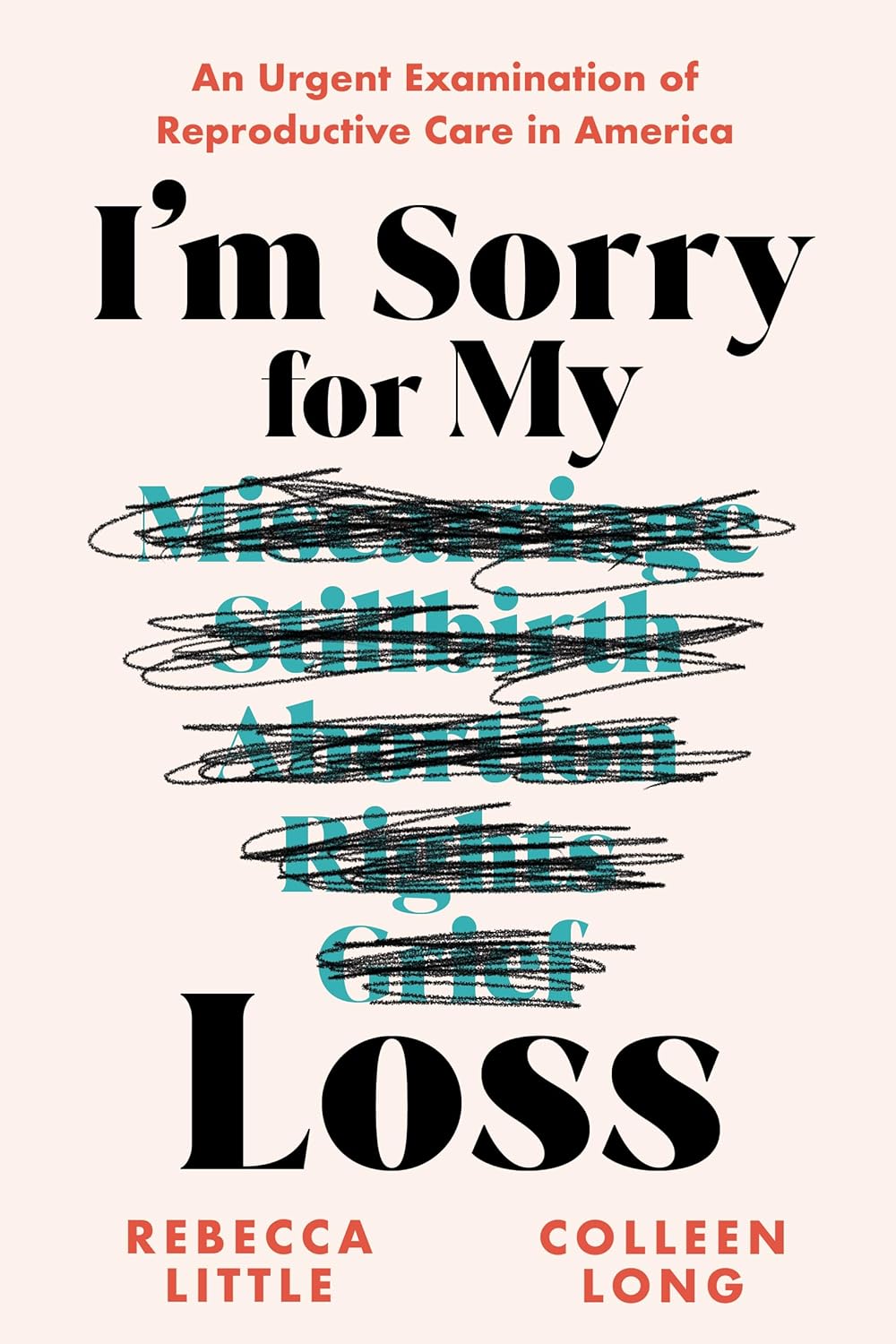
I'm Sorry for My Loss Book Summary
An Urgent Examination of Reproductive Care in America
Book by Rebecca Little, Colleen Long
Summary
"I'm Sorry for Your Loss" is a groundbreaking exploration of the cultural silence, medical myths, and legal quagmires surrounding miscarriage, stillbirth, and abortion in America, weaving together personal stories, historical context, and expert insights to envision a world where no one has to grieve alone.
How We Got here
Two Friends Unite To Tackle The Taboo Of Pregnancy Loss
Rebecca Little and Colleen Long, childhood friends who both experienced pregnancy loss, decide to write a book together about the cultural silence and stigma surrounding miscarriage, stillbirth, and abortion in America. Despite 1 in 4 pregnancies ending in loss, it remains a topic shrouded in secrecy and shame. The authors aim to bring together medical experts, historians, linguists, therapists, and those who have experienced loss to envision a more compassionate system of care.
Section: 1, Chapter: 1
The Minefield Of Language Around Pregnancy And Loss
The chapter explores how the lack of adequate language and the political baggage of existing terms make it difficult to discuss pregnancy loss. Key issues include:
- Lack of agreement on when life/personhood begins (conception, quickening, viability, birth)
- Clinical terms like embryo and fetus lack emotional resonance
- Colloquial terms like baby are emotionally loaded but politically fraught
- No good term for a "pre-baby entity with some emotions attached"
- Providers encouraged to mirror patient's language ("baby" vs "fetus")
- Patients often confused/upset by clinical terms like "abortion" or "products of conception"
The language choices, while seeming benign, are indicative of intent, emotion and politics. This rhetorical knot leaves those experiencing loss adrift.
Section: 1, Chapter: 1
Obstetric Nightmares - How Gynecology Used The Bodies Of Poor & Minority Women
In the 1840s, Dr. Marion Sims, the "father of gynecology," performed experimental fistula surgeries on enslaved women without anesthesia. One 17-year-old girl, Anarcha, endured 30 surgeries over 4 years. Sims subscribed to the racist belief that Black people didn't feel pain like white people. He later experimented on poor Irish immigrants. The field of gynecology was built on the bodies of society's most vulnerable women, a legacy that continues to impact care disparities today.
Section: 1, Chapter: 2
The Rise Of The "Medicalization Of Miscarriage" In The 19th Century
In the mid-1800s, miscarriages started shifting from a private event managed at home to a medical issue as more poor women delivered in charity hospitals. Fetal specimens collected from these losses were displayed in doctor's offices as proof of their scientific prowess, in contrast to midwives. This "medicalization of miscarriage" coincided with:
- Advancing fields of embryology and anatomy
- Proliferation of all-male medical schools needing cadavers
- Campaigns to outlaw midwifery and abortion
- Nativist fears about falling white birth rates
Women's personal experiences, as revealed in diaries, showed a range of emotions from relief to grief. The notion of miscarriage as a shameful personal failure didn't arise until the 20th century.
Section: 1, Chapter: 2
Mothers Blamed Either Way In The 1950s
In the 1950s, medical advances meant women were more likely than ever to survive childbirth, as were their babies. However, cultural attitudes took a darker turn, with motherhood defined by impossible standards and contradictions:
- Working mothers were vilified, but many had to work to support their families
- Childhood issues from delinquency to autism were blamed on mothers
- Mothers were told to get electroshock therapy if they weren't completely fulfilled by motherhood
- Women who sought abortions were considered mentally ill
A miscarriage or two was tolerated as long as a woman eventually had children. If she had too many, psychologists suggested it was due to unconscious rejection of motherhood. Women were "neurotic" if they didn't love every minute of mothering but also neurotic if they miscarried. A cultural setup for failure.
Section: 1, Chapter: 3
The Fallacy Of Control - How Reproductive Advances Changed Views On Miscarriage
The ability to choose whether and when to get pregnant through birth control and legal abortion in the 1960s-70s led to the notion that if a woman chose to stay pregnant, it should end with a healthy baby. When it didn't, it was seen as her failure.
Actionable Insight: Be aware of how the cultural view of pregnancy as completely controllable can compound guilt after loss. Remind yourself that miscarriage and stillbirth are still common (occurring in up to 1 in 4 pregnancies) and usually unpreventable, even with modern medicine. Resist the urge to blame yourself for a sad outcome when you did everything "right." Loss is not a personal failure.
Section: 1, Chapter: 4
Cute Fetus, Gross Fetus - The Duality Of Fetal Imagery In Politics
The anti-abortion movement has masterfully employed fetal imagery to further its cause since the 1980s. Fetal development is depicted as a seamless journey from conception to cherubic newborn. The fetus is shown as an independent being, with the woman's body erased. The humanity of the fetus is highlighted or downplayed as needed for maximum emotional impact.
The overall effect has been to change hearts and minds on fetal personhood. This makes sense, as the authors note, "Frequency of language use and imagery matters. The more frequent the language use or imagery, the more strengthening occurs." The fetus is now a symbol more than a biological reality.
Section: 1, Chapter: 5
The Dissonance Of Ultrasound - Medical Miracle Meets Moral Dilemma
Routine ultrasounds, available since the 1980s, have allowed parents to "meet" their babies earlier than ever before. However, their cultural impact has been mixed.
Ultrasounds operate in both medical and emotional registers simultaneously. They can bring joy or grief, provide vital diagnostic information or be used as political theater (as with pre-abortion "heartbeat checks"). They complicate our understanding of life before birth.
Section: 1, Chapter: 5
Sick Mothers
The Dangers Of Excluding Pregnant Women From Studies
Pregnant women have historically been excluded from clinical trials and research due to ethical concerns about fetal harm and liability. However, this knowledge gap makes their care more dangerous:
- Medication dosages based on male bodies may be incorrect for women
- No data on drug interactions with pregnancy
- Women with conditions like epilepsy or cancer have fewer treatment options
- Racial disparities in research participation and outcomes
The chapter argues there are ethical ways to include pregnant people in research via observation, analysis of existing real-world data, and carefully designed studies. Doing so could save lives and improve care.
Section: 2, Chapter: 6
The Legal Morass
The Making of Meaning
Related Content
Invisible Women Book Summary
Caroline Criado Perez
Invisible Women exposes the gender data gap that underlies our male-default world, revealing the hidden ways in which the failure to collect data on women's lives leads to bias, discrimination, and disadvantage in everything from healthcare to the workplace to public policy - and offers a roadmap for closing this gap to build a more equitable future for all.
Invisible Women exposes the gender data gap that underlies our male-default world, revealing the hidden ways in which the failure to collect data on women's lives leads to bias, discrimination, and disadvantage in everything from healthcare to the workplace to public policy - and offers a roadmap for closing this gap to build a more equitable future for all.
Society
Feminism
Technology

Lean In Book Summary
Sheryl Sandberg
In Lean In, Sheryl Sandberg examines the barriers women face in achieving leadership roles and offers compelling, research-based advice on what women can do to overcome these obstacles and achieve their full potential in both their professional and personal lives.
In Lean In, Sheryl Sandberg examines the barriers women face in achieving leadership roles and offers compelling, research-based advice on what women can do to overcome these obstacles and achieve their full potential in both their professional and personal lives.
Leadership
Feminism
Business
Biography