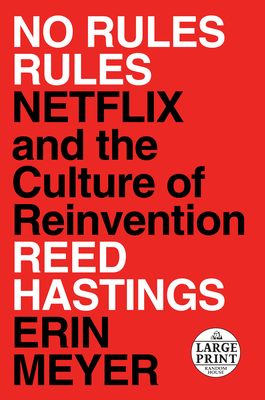
No Rules Rules Book Summary
Netflix and the Culture of Reinvention
Book by Reed Hastings, Erin Meyer
Summary
Unlock the secrets behind Netflix's phenomenal success with 'No Rules Rules'. Discover how a culture built on talent density, radical candor, and removing controls fuels innovation, speed, and adaptability in the face of constant change.
Why Netflix Succeeded Where Blockbuster Failed
In 2000, Blockbuster was a $6 billion giant, while Netflix was a tiny, loss-making startup. Blockbuster declined Netflix's $50 million acquisition offer. By 2010, Blockbuster was bankrupt, unable to adapt to streaming, while Netflix thrived, producing award-winning content globally.
The key difference wasn't resources or initial vision; Blockbuster had both. Netflix succeeded because of its unique culture: valuing people over process, emphasizing innovation over efficiency, and having very few controls. This focus on talent density and leading with context, not control, allowed Netflix to continually adapt and grow.
Section: 1, Chapter: 0
The Foundation: Freedom And Responsibility (F&R)
Netflix aimed to foster flexibility and innovation, avoiding the stifling rules common in growing companies. The core idea evolved into 'Freedom and Responsibility'. Instead of control processes, Netflix focused on:
- Building up talent density: Hire and retain only high performers, removing the need for rules designed to manage mediocrity.
- Increasing candor: Encourage constant, honest feedback loops so employees hold each other accountable and improve performance.
- Reducing controls: With high talent and candor, remove policies (vacation, expenses) and approvals, trusting employees to act responsibly.
Section: 1, Chapter: 0
The Power Of Talent Density
A crisis in 2001 forced Netflix to lay off a third of its staff, keeping only the top performers. Surprisingly, the remaining smaller team achieved more, faster, and with higher morale. This revealed the power of talent density.
A company filled solely with high performers creates an environment where everyone is motivated, learns more from colleagues, and achieves more. One or two adequate performers can drain energy, lower discussion quality, reduce efficiency, and signal that mediocrity is acceptable, ultimately bringing down the entire team's performance.
Section: 1, Chapter: 1
Stunning Colleagues Are The Best Perk
Forget fancy gyms or free sushi. The greatest workplace perk is the joy of being surrounded by stunning colleagues. High performers thrive and are motivated when they work alongside other talented, collaborative people who push them to be better.
As a leader, your primary goal should be to build and maintain the highest possible talent density. This means having the courage to let go of 'adequate' performers, even nice ones, because they invariably drag down the team's overall performance and efficiency.
Section: 1, Chapter: 1
Candor: Say What You Really Think
Embracing candor, inspired by marriage counseling, transformed Netflix's internal dynamics. Encouraging everyone to say exactly what they thought (with positive intent) reduced politics, backstabbing, and allowed the company to move faster. Openly voicing opinions and giving feedback became a cornerstone.
The guiding principle became: 'Only say about someone what you will say to their face'. When employees raise concerns directly with colleagues instead of complaining to managers, issues get resolved faster and performance improves across the board.
Section: 1, Chapter: 2
Feedback: The 4A Guidelines
Netflix explicitly teaches employees how to give and receive feedback effectively using the '4A' framework:
Giving Feedback:
* Aim to Assist: Feedback must be given with positive intent, to help the individual or the company, not to vent or harm.
* Actionable: Focus on what the recipient can tangibly do differently.
Receiving Feedback:
* Appreciate: Fight the natural defensive reaction. Listen openly and show appreciation.
* Accept or Discard: Listen and consider all feedback, but the recipient ultimately decides whether to act on it.
Section: 1, Chapter: 2
Tell The Emperor When He Has No Clothes
Leaders receive less feedback the higher they climb, increasing the risk of obvious errors ('coming to work naked'). To combat this, promote upward feedback.
- Regularly put feedback for the boss on the agenda for one-on-one meetings.
- When receiving feedback, leaders must respond with gratitude and 'belonging cues' – gestures indicating the feedback is valued and the employee's position is safe.
- Publicly thank employees for their courage in giving upward feedback.
Section: 1, Chapter: 2
Get Rid Of The Brilliant Jerks
A culture of candor cannot thrive if 'brilliant jerks' are tolerated. These are highly talented individuals who use their brilliance to demean or dismiss colleagues, often masking their behavior as 'just being candid'.
No matter how brilliant, the cost of jerkiness to teamwork is too high. They erode trust and hinder open communication. If you want candor, you must remove the brilliant jerks, signaling that respectful collaboration is non-negotiable.
Section: 1, Chapter: 2
Removing The Vacation Policy
In the information age, what matters is achievement, not hours clocked. Recognizing the inconsistency of tracking vacation days but not hours worked, Netflix removed its vacation policy entirely in 2003. Salaried staff can take off whenever they feel appropriate, for however long, without prior approval or tracking.
This signals trust, boosts responsibility, reduces bureaucracy, and helps attract talent. However, it only works effectively if leaders model taking significant vacations and managers set clear context about expectations and team impact.
Section: 1, Chapter: 3
Set Context When Removing Vacation Rules
Simply removing a vacation policy isn't enough; it creates ambiguity. Managers must actively set context to guide employee behavior.
- Discuss appropriate times to take vacation (e.g., avoiding critical periods like month-end close for accountants).
- Establish team parameters (e.g., 'only one person out at a time', 'ensure coverage before booking').
- Provide guidelines on notice periods for different lengths of time off.
Clear context prevents chaos and ensures freedom doesn't negatively impact team performance.
Section: 1, Chapter: 3
Related Content

Blue Ocean Strategy Book Summary
W. Chan Kim and Renee Mauborgne
Forget battling sharks in bloody red oceans. Blue Ocean Strategy shows you how to create your own uncontested market space, making the competition irrelevant and opening a sea of opportunities for profitable growth.
Forget battling sharks in bloody red oceans. Blue Ocean Strategy shows you how to create your own uncontested market space, making the competition irrelevant and opening a sea of opportunities for profitable growth.
Business
Strategy
Product Management
The Culture Code Book Summary
Daniel Coyle
The Culture Code reveals the secrets of highly successful groups, showing that the key to unleashing a team's full potential lies in creating a culture of safety, shared vulnerability, and purpose.
The Culture Code reveals the secrets of highly successful groups, showing that the key to unleashing a team's full potential lies in creating a culture of safety, shared vulnerability, and purpose.
Leadership
Management
Business
Company Of One Book Summary
Paul Jarvis
In "Company of One," Paul Jarvis makes a compelling case for staying small and questioning growth in business, arguing that by staying lean, agile, and customer-focused, you can build a sustainable and fulfilling business on your own terms.
In "Company of One," Paul Jarvis makes a compelling case for staying small and questioning growth in business, arguing that by staying lean, agile, and customer-focused, you can build a sustainable and fulfilling business on your own terms.
Business
Entrepreneurship
Leadership
Personal Development